
Sauces & Condiments
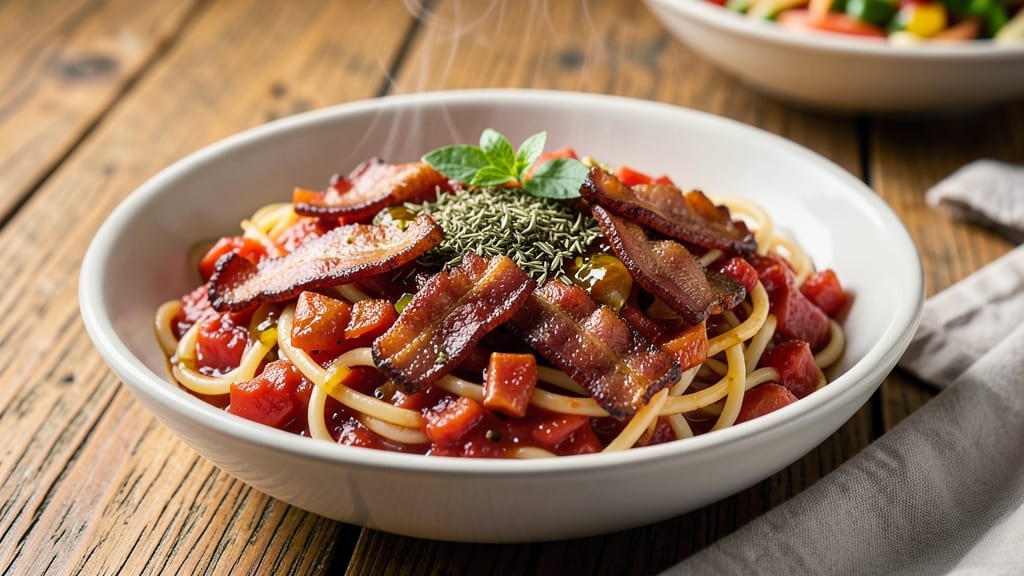
This bacon spaghetti sauce recipe transforms simple pantry staples into a rich, smoky masterpiece that elevates any meal. The secret lies in crispy bacon rendered to perfection, its fat infusing every spoonful with deep, savory notes.
Unlike traditional tomato sauces, this version builds layers of flavor through slow simmering and careful balancing of sweet, salty, and umami elements—no blender required.
What sets this sauce apart is the technique: browning the bacon until it's crispy (not burnt) creates a flavor base that carries through the entire cooking process. We're talking about a sauce that's velvety yet robust, with just enough sweetness from caramelized onions to complement the smoky bacon.
The result? A sauce so versatile it works over pasta, as a dip for bread, or even as a topping for burgers and grilled meats.
By the time you're done, you'll have a pot of sauce that's rich enough to stand alone but balanced enough to let other flavors shine. The texture is perfect—smooth with just enough body to cling to noodles or meat, while the aroma alone will have everyone asking what's for dinner.
This isn't just a sauce; it's a flavor experience that turns simple ingredients into something extraordinary.
The best part? It comes together in one pot with minimal cleanup, making it ideal for weeknights or meal prep. Store it in the fridge for up to 5 days or freeze for months—because once you taste this, you'll want to make it again and again. Let's get cooking!
Ingredients for bacon spaghetti sauce
Six ounces of bacon and a handful of pantry staples—this sauce builds flavor in one pot.
| Ingredient | Amount | Notes |
|---|---|---|
| Thick-Cut Bacon 🥓 | 6 oz | Cut into 1/2-inch pieces |
| Yellow Onion 🧅 | 1 whole | Diced small for caramelizing |
| Garlic Cloves 🧄 | 4 cloves | Minced for aromatic base |
| Canned Crushed Tomatoes 🍅 | 28 oz | San Marzano preferred |
| Tomato Paste 🍅 | 2 tbsp | For thick, rich texture |
| Dried Oregano 🍃 | 1 tsp | Italian preferred |
| Dried Basil 🌿 | 1 tsp | Or 1 tbsp fresh basil |
| Ground Black Pepper 🌶️ | ½ tsp | Freshly cracked |
| Brown Sugar 🍯 | 1 tbsp | Balances smoky flavors |
| Extra-Virgin Olive Oil 🫒 | 1 tbsp | For deglazing pan |
The bacon is non-negotiable here. Thick-cut gives you that perfect crisp without burning, and 6 oz is enough to render plenty of fat for richness. I always grab Oscar Mayer or Applewood smoked from the grocery store deli section—both crisp up beautifully. The onions? Yellow caramelizes better than red, and dicing them small (about 1/4-inch pieces) means they cook down fast. Garlic should be minced, not powdered—the difference is huge. For the tomatoes, San Marzano is worth the splurge if you can find it; otherwise, any high-quality canned crushed tomatoes work.
No thick-cut bacon? Regular bacon cut into small pieces works, but watch it closely—it burns faster. Short on brown sugar? Honey or maple syrup at half the amount keeps things balanced. The tomato paste can be skipped if you're using extra-thick crushed tomatoes, but I like the extra depth it adds. Fresh basil? Use twice the dried amount—it's a game-changer. If you've got balsamic vinegar, toss in 1 teaspoon at the end for a tangy kick. The olive oil is just for deglazing, but don't skimp—it carries the bacon bits and caramelized onions when you scrape them up.
This sauce tastes even better the next day as flavors meld. Keeps in the fridge for 5 days or freeze for 3 months. I always make a double batch—one for dinner, one for lunches. Store it in glass jars with a tight seal to keep the aroma locked in. Reheat gently on the stove with a splash of water if it thickens too much. Leftovers? Toss with cooked pasta or use as a marinade for grilled chicken.
Why You'll Love This Recipe
- Fewer Ingredients, More Flavor: I swear by this—just five pantry staples (plus bacon) transform into something rich and smoky. No fancy herbs or hidden spices; it’s all about that deep, caramelized onion base and the way thick-cut bacon renders into crispy bits that melt into the sauce.
- 20-Minute Hands-Off Time: Honestly, the hardest part is waiting for the bacon to crisp. After that, it’s stir, simmer, and forget—no babysitting required. I’ll often start it while I’m folding laundry or scrolling through my phone, and by the time I’m ready to eat, it’s ready.
- Game for Any Night: Between us, this sauce works for everything. Toss it with spaghetti for a weeknight dinner, slather it over grilled chicken for a hearty lunch, or even use it as a pizza topping. The crushed tomatoes and tomato paste give it enough body to stand alone or play backup.
- Leftovers That Taste Better: I make a double batch on Sundays because the flavor actually deepens overnight. The bacon fat keeps it luscious, and reheating it just warms up the smoky notes—no sad, watery sauce here. Plus, it’s cheap enough that I don’t feel guilty freezing half for next month.
Step-by-step instructions for smoky sweet bacon spaghetti sauce
Here's how to build a rich, balanced sauce with layers of smoky bacon, sweet caramelized onions, and bright tomato flavors.
Cook the Bacon Until Crispy
Place the 6 oz thick-cut bacon in a large Dutch oven over medium heat. Let it cook undisturbed for 5 minutes until the edges start to crisp. Then gently break the bacon into ½-inch pieces with a wooden spoon—this prevents it from curling and ensures even cooking.
Cook for another 8-10 minutes, stirring occasionally, until the bacon is deep golden brown and the fat has rendered out. You'll have about ¼ cup of bacon fat left in the pan—this golden liquid is pure flavor. Don't drain it; it's the foundation of your sauce. Once crispy, remove the bacon with a slotted spoon and set aside, leaving all the fat in the pan.
Caramelize the Onion and Garlic
Add the 1 whole yellow onion (diced small) to the bacon fat in the Dutch oven. Cook over medium heat for 10 minutes, stirring occasionally, until the onions soften and begin to turn golden brown—this caramelization adds natural sweetness to balance the smokiness.
After 10 minutes, add the 4 cloves garlic cloves (minced) and cook for another 1 minute until fragrant. Watch carefully—garlic burns quickly. If the onions start to brown too quickly, reduce heat slightly. You're looking for onions that are deep golden with some crispy edges, not burnt. This step builds the aromatic base that carries through the entire sauce.
Build the Sauce Base
Stir in the 2 tbsp tomato paste and cook for 1 minute to cook off the raw taste. Then pour in the 28 oz canned crushed tomatoes, scraping up any browned bits from the bottom of the pan. Add the 1 tbsp brown sugar, 1 tsp dried oregano, 1 tsp dried basil, and ½ tsp ground black pepper. Stir well to combine.
Bring the sauce to a gentle simmer over medium-low heat. Let it cook uncovered for 20 minutes, stirring occasionally. The sauce will thicken as it reduces, and you'll see a beautiful deep red color developing. This simmering step develops the flavors and ensures the sauce coats properly when tossed with pasta.
Finish with Bacon and Olive Oil
Return the crispy bacon to the sauce and stir to combine. Add the 1 tbsp extra-virgin olive oil and cook for another 5 minutes to let all the flavors meld together. Taste and adjust seasoning—you might want to add a pinch more salt or pepper depending on your preference.
The sauce should be thick enough to coat the back of a spoon but still saucy enough to cling to pasta. If it's too thick, add 2-4 tablespoons of water to loosen it. Let the sauce sit off heat for 5 minutes before serving—this resting period allows the flavors to fully develop. Serve immediately over cooked spaghetti, topped with extra bacon bits if desired.
Pro Tips For Making Bacon Spaghetti Sauce
- CRISP THE BACON LOW: I learned this the hard way—thick-cut bacon needs patience. Cook it slow over medium-low heat until the edges curl and the fat renders just enough to coat the pan. Rushing it turns the sauce greasy, and nobody wants a soggy spaghetti mess.
- SWEAT THE ONIONS FIRST: Skip the sizzle. Start onions in a cold, dry pan and let them cook on low heat for 8-10 minutes until translucent but not browned. This builds flavor without burning, and it’s the foundation for everything else—trust me, your sauce will taste deeper.
- STIR THE TOMATO PASTE: Don’t just dump it in. Mix the paste into the onions while they’re still sweating to break up clumps, then toast it for 2-3 minutes until it darkens slightly. This step makes a real difference—it adds richness and prevents a pasty texture in your sauce.
- SALVAGE THE GARLIC: If your garlic burns, you’ve already lost. Smash the cloves with the flat of your knife first, then add them to the pan when onions are soft (not browned). Cook them for 30 seconds max—just until fragrant, not golden. Overcooking turns them bitter, and that’s a flavor crime in this sauce.
Serving suggestions for this recipe
Pasta Pairings
This sauce is a match made in heaven with spaghetti, but don't limit yourself! Try it over linguine for a wider surface area to catch the sauce, or bucatini for that classic Italian feel.
For a heartier option, rigatoni or penne work beautifully—their ridges hold onto the rich, smoky sauce. I've even used it with farfalle for a fun, bowtie-shaped twist that kids love. 🍝
Bread & Dips
Warm, crusty garlic bread is the ultimate companion—dip those buttery slices into the sauce for a flavor explosion. For a no-cook option, spread it on toasted baguette slices with a sprinkle of Parmesan cheese.
The sauce also makes an incredible dip for fried mozzarella sticks or chicken tenders. I love serving it with crudités like bell pepper strips and carrot sticks for a fresh contrast. 🥖
Protein Upgrades
Turn this sauce into a full meal by tossing it with grilled chicken breast or Italian sausage. The smoky bacon flavors complement the richness of ground beef or meatballs perfectly.
For a vegetarian option, stir in mushrooms or white beans for extra heartiness. I often serve it over polenta or mashed potatoes for a comforting twist. 🍗
Breakfast Twist
Yes, you read that right! This sauce is fantastic on breakfast burritos or breakfast sandwiches. Spread it on English muffins with scrambled eggs for a savory brunch.
The sweetness from the caramelized onions balances the smokiness beautifully. I've even used it as a pancake topping—trust me, it's a game-changer. 🍳
Leftovers Reinvented
Transform leftover sauce into bacon spaghetti pizza by spreading it on pre-made pizza dough and topping with mozzarella and cherry tomatoes. For a quick lunch, stuff it into sandwiches with provolone cheese and arugula.
I also love using it as a marinade for grilled shrimp or chicken thighs. The possibilities are endless! 🍕
Garnish Like a Pro
Finish your dish with crispy bacon bits, grated Parmesan, or fresh basil for a pop of color. A drizzle of balsamic glaze adds a tangy contrast, while red pepper flakes bring the heat.
For extra richness, top with goat cheese or ricotta dollops. I always keep a small bowl of garlic butter on the side for dipping. ✨
Nutrition facts
Frequently asked questions
Can I use turkey bacon instead of regular bacon?
Yes, but expect a milder flavor. Turkey bacon has less fat and a different texture, so you may need to add 1 extra tablespoon of olive oil to compensate. Cook it 2-3 minutes longer since it stays softer longer. The sauce will still be delicious, just with a lighter smoky profile.
How do I make this sauce thicker for pasta?
Simmer the sauce uncovered for an extra 10-15 minutes to reduce it naturally. If it's still too thin, mix 1 tablespoon cornstarch with 2 tablespoons water, stir it in, and cook for 2 more minutes until thickened. For a richer texture, stir in 1 tablespoon tomato paste at the end.
What if I don't have brown sugar?
Use ½ teaspoon maple syrup or ½ teaspoon honey instead—they'll add just enough sweetness to balance the smokiness. If you're avoiding sugar completely, omit it entirely and add ½ teaspoon balsamic vinegar for depth. The sauce will still be flavorful, just with slightly different notes.
Can I make this sauce in a slow cooker?
Cook the bacon as directed, then transfer everything (including the bacon fat) to a slow cooker. Add all ingredients and cook on Low for 6-8 hours or High for 3-4 hours. Stir occasionally and add water if it gets too thick. The slow cooking enhances the flavors even more—perfect for meal prep!
Why does my sauce taste bitter?
Bitter flavor usually comes from burnt onions or garlic.