
Sauces & Condiments
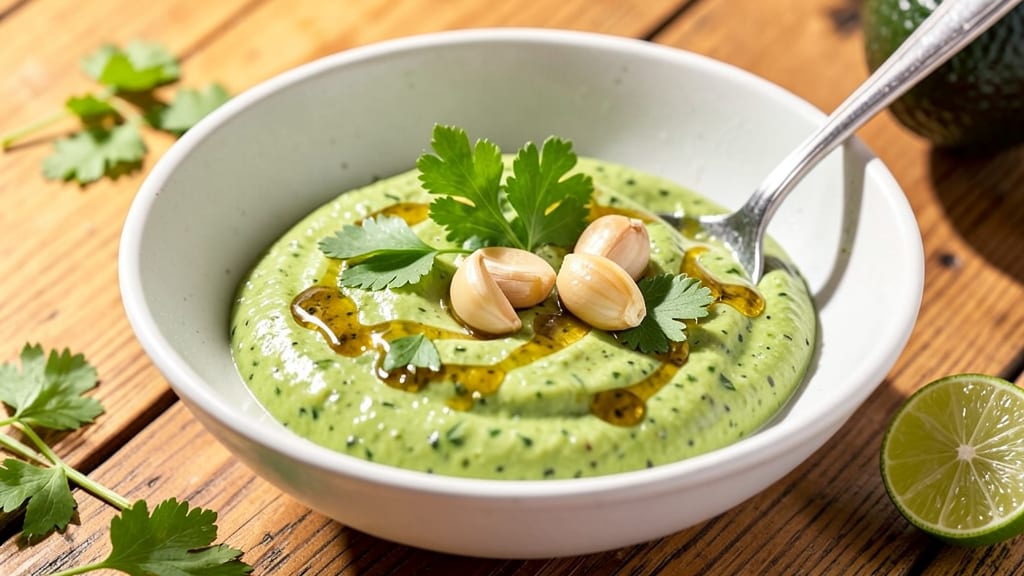
This avocado chimichurri sauce recipe transforms traditional chimichurri into a velvety, herb-infused condiment with creamy avocado depth. The perfect balance of bright parsley, zesty garlic, and rich avocado creates a sauce that elevates grilled meats, veggie bowls, and even toasted bread.
I developed this version after craving something fresher than store-bought chimichurri—one that stays vibrant for days in the fridge.
The secret lies in blending fresh herbs with ripe avocado, which adds natural creaminess without heavy mayo. A touch of lime juice brightens the flavors, while olive oil ties everything together into a silky, spreadable sauce.
Unlike traditional chimichurri, this version maintains its texture even after refrigeration, making it ideal for meal prep. It’s versatile enough for tacos, salads, or as a dip for crudités.
What makes this sauce stand out is its foolproof simplicity—just blend, taste, and adjust. The avocado keeps it rich while the herbs deliver that signature chimichurri punch. Store it in an airtight container for up to 5 days, or freeze for longer shelf life.
Whether you’re serving grilled shrimp, steak, or vegan dishes, this sauce adds a fresh, herby twist that’s impossible to resist.
Ready in 10 minutes, this recipe proves you don’t need complicated steps for restaurant-quality results. The key is using fresh, high-quality ingredients—no shortcuts here. Once you try it, you’ll never go back to the traditional version. Let’s make this sauce!
Ingredients for avocado chimichurri sauce
Ten ingredients blend into a velvety sauce that's fresher than traditional chimichurri.
| Ingredient | Amount | Notes |
|---|---|---|
| Ripe Avocados 🥑 | 2 whole | Pitted, flesh scooped out |
| Fresh Parsley Leaves 🌿 | 1 ½ cups | Stems removed, tightly packed |
| Fresh Cilantro Leaves 🌱 | ½ cup | Stems removed, loosely packed |
| Garlic Cloves 🧄 | 4 cloves | Peeled, roughly chopped |
| Extra-Virgin Olive Oil 🫒 | ½ cup | High-quality, fruity variety |
| Fresh Lime Juice 🍋 | 3 tbsp | Freshly squeezed, strained |
| Red Wine Vinegar 🍷 | 1 tbsp | Dry, aged variety preferred |
| Sea Salt 🧂 | 1 ½ tsp | Diamond Crystal preferred |
| Ground Black Pepper 🌶️ | ½ tsp | Freshly ground preferred |
| Red Chili Flakes 🔥 | ½ tsp | Adjust for heat preference |
Avocados are the game-changer here—Hass variety works best, but any ripe avocado will do. Look for ones that yield slightly to gentle pressure, not mushy. Whole Foods or Trader Joe's usually have the freshest selection, but any grocery store will work. The parsley is non-negotiable for that signature chimichurri brightness, but farmers markets often have the freshest, most flavorful bunches. If you're using cilantro, opt for the bright green stems—avoid the yellowing ones. Garlic should be firm and odorless, not sprouting. For the olive oil, California extra-virgin brands like Corto or Lucini elevate the flavor without overpowering.
No ripe avocados? Use 1/4 cup avocado oil instead, but the texture will be thinner. Short on parsley? Substitute with mint or basil at half the amount, though the flavor will differ. Fresh lime juice is ideal, but bottled works in a pinch—just add a pinch more salt. The red wine vinegar adds depth; substitute apple cider vinegar if needed, though the flavor profile shifts slightly. For heat, hot sauce or cayenne powder can replace chili flakes. The key to balance is tasting as you go—adjust salt, lime, or vinegar to your preference. If the sauce seems too thick after blending, add 1-2 tbsp water or olive oil to reach desired consistency.
This sauce keeps beautifully—5 days in the fridge if stored in an airtight container with a thin layer of olive oil on top to prevent browning. For longer storage, freeze in ice cube trays—thaw and blend briefly to restore texture. The avocado may darken slightly over time, but the flavor remains rich. For meal prep, portion into small containers so you can grab just what you need. The sauce tastes even better the next day as flavors meld, making it perfect for batch cooking. If you make a big batch, freeze half immediately for future use.
Why You'll Love This Recipe
- No Pulse Required: I just blend it—no food processor? Use a sturdy knife and a bowl. The avocado’s creaminess smooths out any uneven chopping, and honestly, the parsley-cilantro combo forgives a lot. My lazy Sundays thank me.
- Garlic Confidence Boost: That raw garlic smell? It disappears into something ridiculously good—bright, herby, with just enough bite. The olive oil ties it all together, making it taste like you spent hours when it took five minutes. (Yes, even on a Tuesday night.)
- Dip, Drizzle, Repeat: Works on toasted bread, grilled fish, or straight from the jar with chips. I’ve even used it as a sandwich spread—trust me, the avocado keeps it from getting soggy. It’s the kind of sauce that makes you want to label three jars at once.
- Leftovers That Lie: This stuff keeps for days in the fridge, and no one will guess it’s been sitting there. The avocado turns a little darker, but the flavor? Still spot-on. Between us, I’ve “accidentally” made extra just to have it on hand.
Step-by-step instructions for avocado chimichurri sauce
This vibrant sauce blends creamy avocado with bright herbs and zesty citrus for a fresh twist on classic chimichurri.
Prepare the Herb and Garlic Base
In a food processor, combine the 1.5 cups fresh parsley leaves and 0.5 cup fresh cilantro leaves. Pulse briefly to chop finely but not purée. Add the 4 cloves garlic cloves and pulse again until everything is uniformly chopped—you want a coarse texture that still retains some texture and bite. The herbs should look like confetti rather than a smooth paste at this stage.
Here's the thing—don't over-process. You're creating a textural contrast with the creamy avocado later. If the mixture looks too fine, pulse just a few more times. The goal is bright, fresh herbs that will brighten the sauce without overpowering it.
Add Acid and Oil for Balance
With the food processor running, slowly drizzle in the 0.5 cup extra-virgin olive oil through the feed tube. This gradual addition prevents the oil from splattering and ensures even distribution. After the oil is incorporated, add the 3 tablespoon fresh lime juice and 1 tablespoon red wine vinegar. The mixture should look like a thick, vibrant green pesto at this point.
Taste the mixture now—it should be bright, tangy, and herbaceous. If it's too acidic, you can balance it later with more avocado. If it needs more depth, add a pinch of sea salt now. The acidity from the lime and vinegar is crucial; it cuts through the richness of the avocado and prevents the sauce from tasting flat.
Incorporate the Avocado Creaminess
Add the flesh from the 2 whole ripe avocados to the food processor. Pulse until the avocado is fully combined but still maintains some texture—you want ribbons of avocado throughout, not a completely smooth sauce. The avocado should create a creamy, velvety base that contrasts with the bright herbs.
This is where the magic happens. The avocado adds richness and helps bind the sauce together. If the mixture seems too thick, add 1 teaspoon of water at a time until it reaches a spreadable consistency. You want it to coat the back of a spoon but still be thick enough to cling to proteins or toast.
Season and Adjust for Perfection
Transfer the mixture to a bowl and stir in the 1.5 teaspoon sea salt, 0.5 teaspoon ground black pepper, and 0.5 teaspoon red chili flakes. Taste and adjust the seasoning—this is where you fine-tune the balance. You might need a bit more lime juice for brightness, a pinch more salt for depth, or a splash of water if it's too thick.
Real talk: the chili flakes can be adjusted based on heat preference. If you're serving this to a crowd with varied tastes, set out a small bowl of extra flakes on the side so everyone can customize their portion. The sauce should be herby, tangy, and slightly spicy with a creamy finish from the avocado.
Rest and Serve
Cover the sauce and let it rest at room temperature for 15-20 minutes before serving. This resting period allows the flavors to meld and the sauce to thicken slightly, making it easier to spread or drizzle. The avocado will darken slightly, which is normal and indicates oxidation—it doesn't affect the flavor.
Serve immediately over grilled meats, fish, or toasted bread. The sauce pairs beautifully with anything that benefits from a bright, fresh topping. If storing, keep it refrigerated in an airtight container for up to 2 days, but add a splash of lime juice before serving to prevent browning and maintain freshness.
Pro Tips For Making Avocado Chimichurri Sauce
- PIT THE AVOCADOS: Cut the avocados in half, scoop out the flesh with a spoon, then twist the pits to loosen the remaining flesh—it’s easier than you’d think. I used to waste good avocado by scraping too hard; this method gets every last bite without bruising the fruit.
- CHOP HERBS COARSE: Stack parsley and cilantro, roll them tightly, and slice with a sharp knife—this keeps the texture bright and chunky. Fine herbs turn chimichurri into a paste; you want visible green flecks in every bite.
- SALT THE GARLIC: Toss minced garlic with a pinch of salt before adding it to the avocado—it softens the bite and prevents that harsh, raw garlic flavor. I learned this the hard way after making a batch that tasted like a punch to the throat.
- PULSE DON’T BLITZ: Use a food processor to pulse the mixture, not blend it smooth—you’re aiming for a rough, saucy texture, not guacamole. Stop when it’s just combined, then taste and adjust. Over-blending kills the freshness.
Serving suggestions for leftovers
Grilled Meat Pairings
This creamy chimichurri shines on grilled steaks and chicken—especially ribeye or skirt steak. I like to grill the meat to medium-rare (130°F internal temp) and let it rest for 10 minutes before slicing against the grain.
The avocado base clings beautifully to charred surfaces, while the herbs cut through the richness. For grilled shrimp, toss them with 1 tbsp olive oil and ½ tsp smoked paprika before grilling for 2-3 minutes per side. 🔥
For fish lovers, try this sauce over grilled salmon or halibut. The acidity in the chimichurri prevents the fish from tasting dry. I recommend grilling the fish for 4-5 minutes per side (depending on thickness) and serving it immediately with the sauce spooned on top.
The avocado adds a luxurious texture that pairs perfectly with flaky fish.
Vegan & Vegetarian Bowls
Transform your grain bowls with this sauce as the star. Spread ½ cup quinoa or farro on a plate, then top with roasted sweet potatoes, black beans, and avocado slices.
Drizzle generously with the chimichurri and finish with pickled red onions for tangy contrast. The creamy avocado ties everything together beautifully. 🥗
For toasted bread, slather this sauce on sourdough or ciabatta and broil for 2-3 minutes until golden. Add sliced heirloom tomatoes and burrata for an elevated bruschetta. The avocado keeps it rich while the herbs add freshness.
I also love using it as a dip for crudités like cucumber slices, bell pepper strips, or jicama sticks.
Breakfast & Brunch
Elevate your breakfast tacos by spreading this sauce on corn tortillas and topping with scrambled eggs, black beans, and crumbled feta. The avocado adds a creamy element that balances the brightness of the chimichurri.
For avocado toast, mash ½ ripe avocado on sourdough, then drizzle with the sauce and sprinkle with flaky sea salt. It’s a game-changer for lazy weekend mornings. 🍳
Try it on pancakes or waffles for a savory twist. The herbs add a fresh, herby note that cuts through the sweetness, while the avocado keeps it rich. I like to serve it with crispy bacon or sautéed mushrooms for a hearty brunch.
The sauce also works as a dipping sauce for fried eggs or hash browns—trust me, it’s delicious!
Global Fusion Twists
Add a Mexican flair by serving this sauce with tostadas topped with shredded cabbage, radishes, and crumbled cotija cheese. The avocado chimichurri adds a creamy, herby contrast to the crunchy toppings.
For an Italian-inspired dish, drizzle it over grilled polenta with sautéed mushrooms and fontina cheese. The textures and flavors come together perfectly. 🌎
For a Middle Eastern twist, serve it with warm pita bread and hummus. The chimichurri’s brightness pairs beautifully with the earthy flavors of hummus and tahini.
You can also use it as a marinade for grilled lamb chops—let them marinate for 30 minutes before grilling for medium-rare (140°F internal temp). The sauce caramelizes slightly on the grill, adding another layer of flavor.
Nutrition facts
Frequently asked questions
Can I make this sauce without avocado?
The avocado creates the signature creamy texture, but you can substitute ¼ cup avocado oil or ½ cup Greek yogurt for a similar richness. The sauce will be thinner and less velvety, but still packed with herbaceous flavor. For a vegan version, use ¼ cup silken tofu blended until smooth.
How do I prevent the avocado from browning in the fridge?
Store the sauce in an airtight container with a thin layer of olive oil on top—this creates a barrier that slows oxidation. For extra protection, add ½ teaspoon lemon juice before sealing. The sauce will keep its vibrant color and flavor for 5 days in the fridge.
What’s the best way to use up leftover chimichurri?
Freeze in ice cube trays for easy portioning—thaw and blend briefly to restore texture. Use it as a marinade (great for grilled chicken or fish), a dip for veggie sticks, or mix into pasta dishes. The flavors actually improve after resting, so don’t hesitate to use it up within a week.
Can I make this sauce spicier?
Add ½ teaspoon cayenne powder or 1 chopped serrano pepper to the food processor for extra heat. For adjustable spice, serve extra chili flakes on the side. The avocado’s creaminess balances the heat beautifully, making it perfect for spicy food lovers.
Why does my chimichurri taste flat after refrigeration?
This usually happens when the acid (lime/vinegar) isn’t balanced with enough fat (olive oil/avocado). Before storing, add 1 extra tablespoon lime juice or 1 teaspoon olive oil to restore brightness. Always taste before serving—adjust with salt or acid as needed.