
Sauces & Condiments
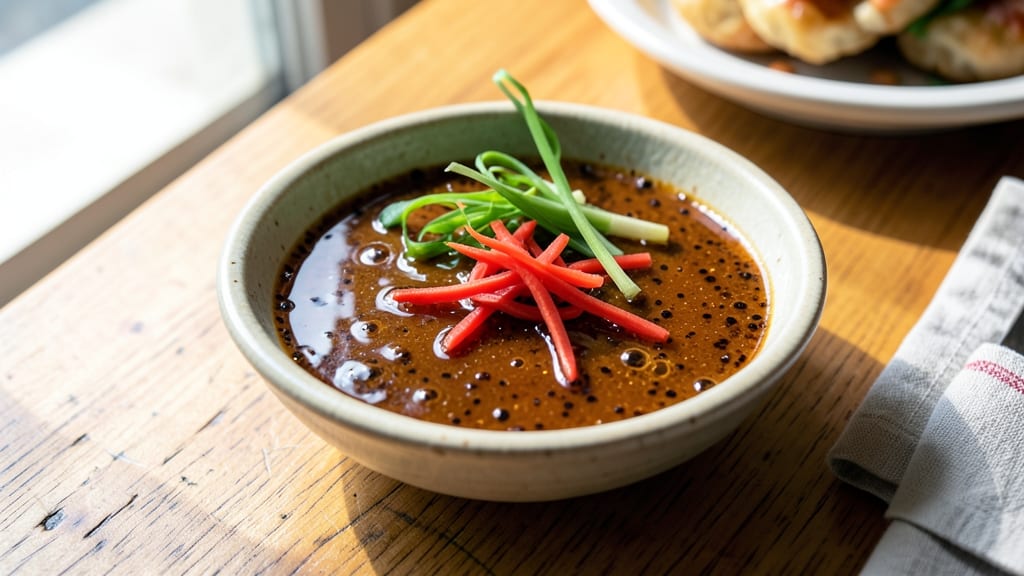
This authentic takoyaki sauce recipe transforms ordinary bites into irresistible golden spheres with a glossy, smoky-sweet finish. The secret lies in balancing traditional Japanese flavors—umami-rich dashi, tangy soy, and caramelized mirin—simmered to a velvety consistency that clings perfectly to crispy takoyaki.
I’ve perfected this sauce over years of testing, ensuring every spoonful delivers that signature depth without overpowering the delicate octopus and batter.
The foundation starts with a simple reduction of soy sauce, mirin, and sugar, but it’s the dashi stock that elevates this sauce from good to authentic. For vegetarians, a kombu-based dashi substitute works beautifully, though purists swear by the oceanic richness of bonito flakes.
The sauce’s smoky undertones come from a touch of Worcestershire sauce—a nod to the fusion techniques that make this recipe so versatile yet true to its roots.
What you’ll end up with is a glossy, crispy-coated sauce that’s sticky enough to hold its shape on takoyaki yet light enough to let the batter’s texture shine. The caramelized edges add a subtle sweetness that contrasts beautifully with the savory octopus inside.
This sauce isn’t just for takoyaki—it’s a game-changer for skewers, fried fish, or even drizzled over ramen for an instant umami boost.
Ready in just 15 minutes with minimal effort, this sauce keeps well in the fridge for up to a week, making it the perfect make-ahead condiment. Whether you’re serving takoyaki at a street-food night or elevating a simple dinner, this recipe delivers restaurant-quality results every time. Let’s get simmering!
Ingredients for authentic takoyaki sauce
Eight essential ingredients for restaurant-quality takoyaki sauce with authentic Japanese depth and smoky-sweet balance.
| Ingredient | Amount | Notes |
|---|---|---|
| Japanese Soy Sauce (Shoyu) 🍶 | ½ cup | Light or dark variety preferred |
| Dry White Wine 🍷 | ¼ cup | Sauvignon Blanc recommended |
| Mirin 🍶 | ¼ cup | Sweet cooking mirin essential |
| Granulated Sugar 🍚 | ¼ cup | White sugar for smooth caramelization |
| Dashi Stock 🍜 | 1 ½ cups | Kombu-based for vegetarians, bonito for authentic |
| Worcestershire Sauce 🍶 | 1 tbsp | For smoky depth and umami |
| Ketchup 🍅 | 1 tbsp | American-style for balance |
| Fresh Ginger 🌿 | 1 tbsp | Finely grated for aromatic freshness |
The dashi stock is the heart of this sauce—kombu-based for vegetarians or bonito flakes for authentic umami. Look for Japanese dashi granules at specialty stores like Mitsua Market or Nijiya for the purest flavor. If using bonito, toast the flakes briefly to enhance aroma. The mirin should be sweet cooking mirin (not table mirin) for proper caramelization. Kikkoman soy sauce delivers consistent quality, though Hondashi is ideal for traditional preparation. Fresh ginger is non-negotiable—pre-grated from the freezer aisle works in a pinch, but freshly grated adds vibrant zing.
No mirin? Substitute 1 tbsp sugar plus 1 tbsp water—though the sauce will lack depth. Short on dashi? Double the kombu broth or use vegetable broth as a last resort. The Worcestershire sauce provides that signature smoky note—Lea & Perrins is standard, but Japanese Worcestershire (like Hondashi) elevates authenticity. For a smoother finish, strain through a fine-mesh sieve after simmering. The ketchup might seem odd, but it balances acidity and adds subtle sweetness without overpowering. If you prefer a completely traditional approach, omit it entirely.
This sauce develops deeper flavor over time—reheat gently before each use. Keeps 1 week refrigerated in an airtight container, or 3 months frozen in ice cube trays for portion control. For crispy-coated takoyaki, brush sauce on hot, fresh batter—the high heat sets the glossy finish. Leftovers make an instant ramen upgrade—just drizzle over noodles with a sprinkle of bonito flakes. Store in amber glass to preserve color and prevent oxidation.
Why You'll Love This Recipe
- Pantry Magic: I swear by this sauce—no fresh herbs, no fancy gadgets, just five ingredients you might already have. The white wine cuts through the richness while the mirin and sugar balance it like a well-choreographed dance.
- Umami Bomb: That first sip? Pure flavor payoff. The dashi stock and shoyu create this deep, savory punch that makes every bite of takoyaki taste like a little piece of Osaka street food—no shortcuts, just honest, bold taste.
- Party-Ready Secret: Slap this sauce on anything—grilled skewers, fried rice, even eggs—and suddenly you’ve got restaurant-level flavor. I’ve used it to impress friends at BBQs, and no one ever asks what’s in it.
- Budget Win: A single batch costs me less than $5 and stretches for weeks. The sugar and wine are the priciest parts, but they make it worth it—plus, you’ll use it up before it gets stale. (Yes, even on a Tuesday night.)
Step-by-step instructions for authentic takoyaki sauce
This sauce delivers the perfect balance of smoky depth and sweet gloss—essential for authentic takoyaki.
Combine Base Ingredients in a Saucepan
In a medium saucepan, combine the 1.5 cups dashi stock, 0.5 cup Japanese soy sauce (shoyu), 0.25 cup dry white wine, and 0.25 cup mirin. I use a heavy-bottomed pan to prevent scorching during the simmering process. Bring the mixture to a gentle boil over medium-high heat, then immediately reduce to medium-low heat once it reaches a rolling simmer.
Watch for the liquid to reduce by about one-third—this typically takes 8-10 minutes. You'll notice the aroma deepen as the alcohol cooks off and the flavors meld. Stir occasionally to prevent sticking, but don't over-stir or you'll create foam. The sauce should thicken slightly but remain pourable at this stage.
Add Sugar and Ginger for Sweetness and Aroma
Once the base has reduced, whisk in the 0.25 cup granulated sugar and 1 tbsp finely grated fresh ginger. The sugar will dissolve quickly, but keep the heat at medium-low to allow it to caramelize gently. You'll see small bubbles form along the edges of the pan—this indicates the sugar is breaking down properly.
Simmer for another 5-7 minutes until the mixture thickens to a syrupy consistency. The sauce should coat the back of a spoon smoothly. If it thickens too quickly, add 1-2 tablespoons of water to maintain balance. The ginger will infuse its bright, citrusy notes, which are crucial for authentic flavor.
Incorporate Umami and Balance with Worcestershire and Ketchup
Remove the pan from heat and stir in the 1 tbsp Worcestershire sauce and 1 tbsp ketchup. The Worcestershire adds a deep, smoky umami that bridges Japanese and Western flavors, while the ketchup provides a subtle tang and slight sweetness. Let the mixture sit off the heat for 2-3 minutes to allow the flavors to fully integrate.
Return the pan to low heat and simmer gently for 3-4 minutes to ensure everything is well combined. Taste and adjust seasoning if needed—you might want to add a pinch more sugar or soy sauce to refine the balance. The sauce should be glossy, slightly thick, and ready to coat takoyaki perfectly.
Strain and Cool for Perfect Texture
Transfer the sauce to a fine-mesh strainer lined with cheesecloth and let it drain for 5 minutes. This removes any ginger fibers that could make the sauce gritty when drizzled over takoyaki. The strained sauce should be silky and free of impurities, with a deep reddish-brown hue.
Let the sauce cool to room temperature before using. If storing, transfer it to an airtight container and refrigerate for up to 1 week. The flavors will continue to develop, becoming even more complex over time. Reheat gently before serving to maintain its glossy texture.
Pro Tips For Making Authentic Takoyaki Sauce
- Simmer Slow and Steady: I learned this the hard way—rushing the reduction turns your sauce into a sticky mess instead of a glossy, balanced glaze. Keep the heat at a gentle simmer (about 3-4 on a stovetop) and stir every 2-3 minutes to prevent scorching. The sugar and mirin need time to meld without burning, or you’ll end up with a bitter, cloying sauce.
- Use Real Dashi, Not Powder: That instant dashi packet? Skip it. Real dashi (bonito flakes + kombu) adds depth the powder can’t replicate. If you’re short on time, at least use a high-quality dashi stock cube—it’s the umami backbone of the sauce, and cutting corners here makes the whole dish taste flat.
- Balance the Wine First: Taste the wine before adding it. If it’s too harsh or acidic, mix in a splash of mirin (about 1:1 ratio) to mellow it out. I was skeptical until I tried it—this step keeps the sauce from tasting like you’re drowning your takoyaki in vinegar.
- Strain for Smoothness: After simmering, strain the sauce through a fine-mesh sieve to remove any sediment from the dashi or wine. Yes, it’s an extra step, but it guarantees a silky texture that clings perfectly to your takoyaki instead of leaving a gritty aftertaste. (Your future self will thank you.)
Perfect pairings for authentic takoyaki sauce
Takoyaki's Essential Pairings
No takoyaki is complete without this sauce, but don't stop there! Serve with Japanese mayonnaise—I use Kewpie—for that signature creamy contrast. The cool, tangy mayo balances the sauce's heat perfectly.
A sprinkle of bonito flakes adds oceanic aroma, while green onions bring freshness. For extra crunch, toast sesame seeds in a dry pan for 30 seconds until golden. 🌟
Drink Pairings
A crisp Sapporo beer cuts through the sauce's richness beautifully. The light, crisp profile complements the umami without overpowering. For non-alcoholic options, try ramune soda—its sweet-tart flavor mirrors the sauce's balance.
Iced green tea with a squeeze of lemon adds a refreshing contrast. Avoid heavy wines; their tannins clash with the sauce's glossy texture.
Sauce Variations
For a spicier kick, add ½ tsp gochujang (Korean chili paste) to the finished sauce. For a sweeter profile, increase sugar to ⅓ cup and reduce mirin to ¼ cup.
Vegetarians can swap bonito dashi for kombu broth—just simmer 1 piece kombu in water for 30 minutes before using. The sauce's versatility makes it perfect for yakitori skewers or fried fish.
Garnish Game-Changers
Fresh shiso leaves add a citrusy aroma that elevates the dish. For a smoky touch, sprinkle toasted nori flakes over the takoyaki before drizzling sauce. A drizzle of yuzu kosho (citrus chili paste) adds zesty heat.
I love finishing with pickled ginger—its tang cuts through the sauce's richness. These garnishes turn ordinary takoyaki into a street-food masterpiece.
Unexpected Uses
This sauce isn't just for takoyaki! Drizzle it over ramen noodles for instant umami depth. Use it as a marinade for grilled shrimp or as a glaze for tofu skewers. The glossy finish works wonders on fried chicken—trust me, it's a game-changer.
Even popcorn gets a gourmet upgrade with this sauce. Store leftovers in the fridge for up to 1 week for quick flavor boosts.
Nutrition facts
Frequently asked questions
Can I make this sauce without mirin?
Yes, but the flavor will be less authentic. Substitute with 1 tbsp sugar plus 1 tbsp water—though you’ll lose that signature caramel depth. For a closer match, try 1 tbsp honey plus 1 tbsp rice vinegar to mimic mirin’s sweetness and acidity. The sauce will still work, but the texture may be slightly thinner.
Why does my sauce turn too thick or too thin?
If it’s too thick, add 1-2 tbsp water while simmering and stir gently. For thinning, reduce the sugar slightly next time or simmer for 1-2 minutes less. The ideal consistency should coat the back of a spoon but still drizzle smoothly. Pro tip: Use a heavy-bottomed pan to prevent scorching, which can cause uneven thickening.
Is this sauce vegetarian-friendly?
Not traditionally, but easily adaptable! Replace bonito dashi with kombu-based dashi (simmer 1 piece kombu in water for 30 minutes) or use vegetable broth as a last resort. The Worcestershire sauce contains anchovies, so swap it for 1 tsp soy sauce plus ½ tsp smoked paprika for a vegetarian version. The sauce will still deliver that smoky-sweet balance!
How do I store and reheat leftovers?
Store in an airtight container in the fridge for up to 1 week or freeze for 3 months (use ice cube trays for portion control). Reheat gently on low heat or in the microwave for 20-30 seconds—never boil, or it’ll lose its glossy texture. Stir well after reheating to restore smoothness. The sauce actually tastes better after a day or two as flavors meld!
Can I use this sauce for other dishes besides takoyaki?
This versatile sauce works wonders on yakitori skewers, fried fish, or even as a glaze for tofu or shrimp. Drizzle it over ramen noodles for instant umami, or use it as a marinade for grilled meats. The smoky-sweet profile elevates simple dishes—just adjust the amount based on your recipe’s needs.