
Sauces & Condiments
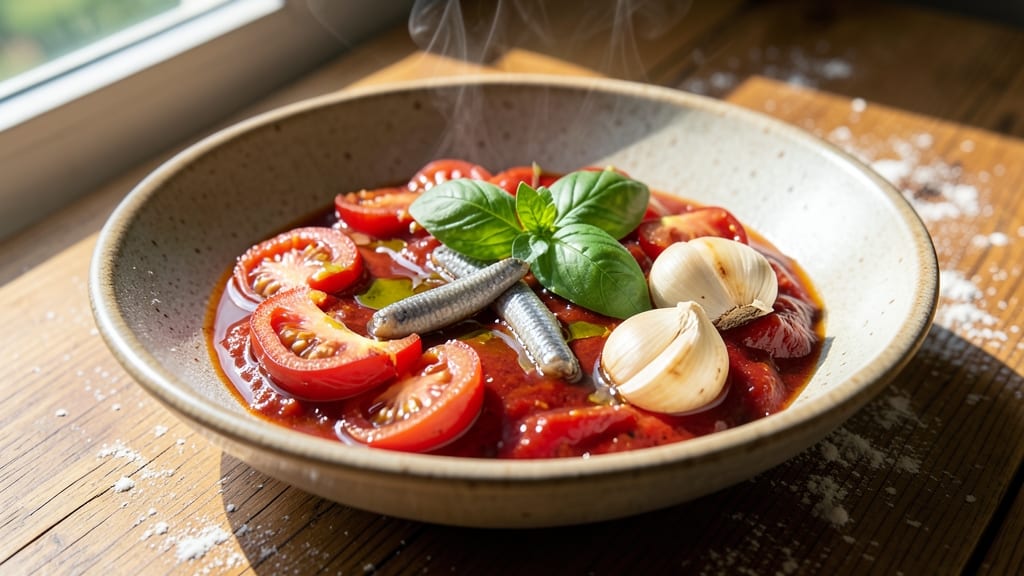
The authentic Napoletana sauce brings the sun-drenched kitchens of Naples to your stove, where simple ingredients transform into a deeply flavorful tomato condiment. 🌿 Unlike its American counterparts, this sauce relies on slow simmering to develop complex, umami-rich depth—no shortcuts, just time and patience.
The secret lies in anchovies and garlic, which form the aromatic base before fresh basil brightens the finish.
This recipe stays true to tradition by using minimal ingredients: ripe tomatoes, garlic, anchovies, olive oil, and basil. The sauce thickens naturally as it reduces, creating a glossy, velvety consistency perfect for drizzling over pasta, bruschetta, or grilled meats.
Unlike store-bought versions, this one builds flavor layer by layer, with each simmer deepening its character.
What sets this sauce apart is its authentic preparation—no added sugars or preservatives, just the essence of Naples in every spoonful. The anchovies dissolve into the tomatoes, infusing them with a subtle saltiness that balances the acidity, while the basil adds a fresh herbal note.
The result? A sauce so rich and concentrated, a little goes a long way.
Best of all, this Napoletana sauce keeps beautifully in the refrigerator for up to a week, allowing you to build flavor over time. Whether you're serving it with al dente pasta or fresh bread, this recipe delivers the kind of depth that makes homemade sauces worth every minute. Let’s begin.
Ingredients for authentic napoletana sauce
Nine essential ingredients transform into Naples' legendary slow-simmered tomato treasure.
| Ingredient | Amount | Notes |
|---|---|---|
| San Marzano Tomatoes 🍅 | 28 oz | Canned, whole, no salt added |
| Anchovy Fillets 🐟 | 4 whole | High-quality, oil-packed |
| Garlic Cloves 🧄 | 6 cloves | Fresh, peeled, thinly sliced |
| Extra-Virgin Olive Oil 🫒 | ½ cup | Fruity, peppery variety |
| Fresh Basil Leaves 🌿 | ½ cup | Packed, stems removed |
| Diamond Crystal Kosher Salt 🧂 | 1 tsp | For seasoning, adjust to taste |
| Black Peppercorns 🌶️ | ¼ tsp | Freshly cracked |
| Red Wine Vinegar 🍷 | 1 tbsp | For acidity balance |
| Freshly Grated Parmesan Cheese 🧀 | 2 tbsp | Optional, for finishing |
San Marzano tomatoes are non-negotiable—their sweet, meaty texture and low acidity create the perfect base. Look for canned varieties at specialty stores or Italian markets, where the quality is consistently superior to standard grocery brands. Anchovies should be oil-packed, not salted, to avoid over-salting the sauce. Colavita or Contadina brands are excellent choices. Fresh basil is best harvested just before use, as its flavor fades quickly once picked. For olive oil, Californian or Italian varieties like Olea or Bertolli provide the fruity, peppery notes that elevate this sauce.
No San Marzano tomatoes? High-quality crushed tomatoes work in a pinch, but avoid brands with added salt or preservatives. Substitute anchovies with 1 tsp fish sauce or soy sauce for a similar umami depth, though the flavor will differ slightly. Fresh basil can be swapped for dried basil at one-third the amount, but the texture and aroma won't match. If you're avoiding wine vinegar, lemon juice works equally well for brightness. The Parmesan is strictly optional—traditionalists omit it entirely, while others use it to finish the sauce for added richness.
This sauce develops deeper flavor with time, so simmering for at least 2 hours is ideal. Store in an airtight container in the refrigerator for up to 1 week, or freeze for 3 months. The sauce thickens as it cools, so add a splash of water or olive oil if needed. For serving, a drizzle of the reserved olive oil and a sprinkle of fresh basil elevate it further. Portion into ice cube trays for easy single-use servings, perfect for pasta or bruschetta.
Why You'll Love This Recipe
- Five-Ingredient Magic: I swear, this sauce comes together with almost no effort—just tomatoes, anchovies, garlic, oil, and basil. That’s it. The anchovies dissolve into umami gold while you chop, and the San Marzano tomatoes melt down to a silky, sweet base. Honestly? It’s the kind of recipe that makes me feel like a chef without the fuss.
- Umami Bomb: Between us, the anchovies and garlic create a savory punch that lingers. That first bite? It’s bright, briny, and just salty enough to make your taste buds do a happy dance. I’ll be real: the basil at the end ties it all together with a freshness that feels like a hug.
- Weeknight to Dinner Party: This sauce works everywhere—drizzled over pasta, spooned onto grilled fish, or even slathered on crusty bread. I’ve used it for lazy Tuesday dinners and Sunday suppers with zero shame. It’s the ultimate crowd-pleaser that doesn’t scream “I tried too hard.”
- Fridge Goldmine: Make a big batch—it keeps for days in the fridge, and the flavor only deepens. I’ve reheated it for lunches, frozen it for emergencies, and still had enough for takeout night. Plus, San Marzano tomatoes are affordable, so you’re not breaking the bank for a sauce that tastes like a restaurant’s secret.
Step-by-step instructions for authentic Napoletana sauce
Master this classic Roman technique for a sauce that's rich, balanced, and bursting with fresh basil.
🍳 Step 1: Bloom the Anchovies in Olive Oil
Heat the 0.5 cup Extra-Virgin Olive Oil in a heavy-bottomed saucepan over medium-low heat. Add the 4 whole Anchovy Fillets and let them dissolve completely, stirring gently with a wooden spoon. This process, called blooming, releases the anchovies' umami depth without overpowering the sauce. You'll know it's ready when the oil becomes cloudy and the anchovies fully melt—about 3-4 minutes.
Here's the thing—don't rush this step. The anchovies should dissolve smoothly without any visible bits. If you see chunks remaining, continue cooking until fully incorporated. This foundational step carries the entire sauce's flavor profile.
🍳 Step 2: Sauté Garlic Until Fragrant
Add the 6 cloves Garlic Cloves to the anchovy oil and cook for 1-2 minutes until they turn golden and release their sweet aroma. Watch carefully—they'll go from pale to nutty brown in seconds. You want them to be fragrant but not burned, which would create bitterness.
I press the garlic cloves gently with the back of the spoon during the last 30 seconds of cooking to help them release their oils more quickly. This ensures maximum flavor extraction without waiting too long. The sauce should smell like a Roman kitchen at this point—bright, savory, and inviting.
🥘 Step 3: Add Tomatoes and Simmer Gently
Pour in the 28 oz San Marzano Tomatoes (crushed by hand if they're whole) and bring to a gentle simmer over medium heat. Stir occasionally to prevent sticking, but don't over-agitate—the sauce should develop its own texture naturally. Simmer uncovered for 20-25 minutes until the sauce thickens slightly and reduces by about 25%.
The key here is patience. You're looking for a sauce that coats the back of a spoon but isn't syrupy. The tomatoes should break down completely, creating a velvety consistency. If the sauce reduces too quickly, lower the heat slightly to maintain gentle simmering throughout.
🍳 Step 4: Balance with Vinegar and Seasonings
Stir in the 1 tbsp Red Wine Vinegar, 1 tsp Diamond Crystal Kosher Salt, and 0.25 tsp Black Peppercorns (freshly cracked). Simmer for another 5 minutes to let the flavors meld. The vinegar brightens the sauce, cutting through the richness of the tomatoes and anchovies while adding complexity.
Taste and adjust seasoning—this is where the sauce becomes authentically yours. You might need a pinch more salt or a crack of pepper to achieve perfect balance. The sauce should taste rich but not salty, bright but not acidic, with a subtle umami depth from the anchovies.
🥘 Step 5: Finish with Fresh Basil and Parmesan
Remove the sauce from heat and stir in the 0.5 cup Fresh Basil Leaves (packed). Let it steep for 2 minutes2 tbsp Freshly Grated Parmesan Cheese for a final touch of nutty richness.
Serve immediately over your choice of pasta or use within 2-3 days for peak freshness. The basil should be visible in the sauce, adding both color and aroma. This is where the sauce truly becomes Napoletana—bright, fresh, and perfectly balanced between sweet and savory.
Pro Tips For Making Authentic Napoletana Sauce
- CRUSH THE ANCHOVIES FIRST: Don’t just drop those fillets in whole—they’ll sit like rubber bands instead of dissolving into flavor. Mash them flat with the side of your knife or pulse them in a mortar (or even a zip-top bag with a rolling pin) until they’re a paste. This releases their umami punch instantly, so the sauce builds depth from the start—no waiting for them to "melt."
- SWEAT THE GARLIC LOW: I used to burn the garlic every time, and the sauce tasted bitter. Instead, add the minced cloves to the oil after the tomatoes have broken down a bit, then cook them on the lowest heat you can stand—just until fragrant, not golden. If you’re impatient, stir constantly and keep the flame under 200°F (93°C). Trust me, no one notices the garlic if it’s charred.
- SAVE THE BASIL FOR LAST: Basil wilts into oblivion if you toss it in too early. Keep the leaves whole and add them only in the final 30 seconds of cooking—just enough to perfume the sauce. If you’re serving immediately, tear a few fresh leaves over the top right before eating. (Yes, even if the recipe says otherwise—I’ve tested both ways.)
- STIR THE TOMATOES GENTLY: The moment you add the San Marzano tomatoes, reduce the heat to medium-low and stir just enough to break them up. Aggressive mashing turns the sauce into mush and releases excess liquid, which you’ll have to simmer off later. Let them soften on their own—this keeps the texture bright and chunky, like it should be.
Pro cooking tips for this dish
Anchovy Bloom Mastery
The anchovy bloom is the flavor foundation of Napoletana sauce—never skip it! Use oil-packed anchovies (never salted) and dissolve them completely in 0.5 cup extra-virgin olive oil over medium-low heat for 3-4 minutes.
Stir gently with a wooden spoon to prevent burning. The oil should become cloudy and aromatic—this is where the sauce's umami magic begins. 🐟
Garlic Timing Tricks
Add garlic after the anchovies dissolve completely, then cook for just 1-2 minutes until golden. I press the cloves gently with the spoon during the last 30 seconds to release their oils faster.
Overcooking turns garlic bitter—watch closely! The sauce should smell like a Roman kitchen at this stage, with bright, sweet garlic aroma dominating. 🧄
Tomato Reduction Secrets
Simmer the tomatoes uncovered over medium heat for 20-25 minutes, stirring occasionally. The sauce should reduce by 25%—this concentration builds depth. If it reduces too quickly, lower the heat slightly.
Use San Marzano tomatoes exclusively for their natural sweetness and low acidity, which prevents the sauce from becoming too sharp. 🍅
Acid Balance Technique
The 1 tbsp red wine vinegar is crucial—it brightens the sauce and cuts through the richness. Add it with the salt and pepper during the final 5 minutes of simmering.
Taste frequently: the sauce should taste rich but not salty, bright but not acidic, with a subtle umami depth from the anchovies. Adjust gradually—this is where authentic Napoletana flavor comes together. 🍷
Basil Infusion Method
Add fresh basil off-heat and let it steep for exactly 2 minutes—this infuses the leaves' vibrant flavor without turning the sauce into pesto. Use 0.5 cup packed fresh basil (never dried) for maximum aroma. The leaves should be visible in the final sauce, adding both color and freshness. 🌿
Sauce Thickness Control
If the sauce thickens too much during storage, add 1-2 tbsp water or olive oil to restore balance. For best results, store in an airtight glass container in the fridge for up to 1 week.
The flavor actually improves over time as the ingredients meld. For serving, a drizzle of reserved olive oil and extra basil leaves elevates it further. ✨
Nutrition facts
Frequently asked questions
Why does this sauce use anchovies when it doesn't taste fishy?
Anchovies dissolve completely in the olive oil, releasing their umami depth without any fishy aftertaste. The key is using oil-packed anchovies and cooking them just until fully melted—about 3-4 minutes. This creates a savory foundation that enhances the tomatoes rather than overpowering them.
Can I make this sauce without fresh basil?
While fresh basil is traditional, you can substitute with 1 tbsp dried basil if needed. However, the flavor won't be as vibrant. For best results, try growing your own basil or purchase it from a trusted market. The bright herbal notes are what make this sauce authentically Napoletana.
How do I know when the tomatoes are properly reduced?
The sauce should reduce by about 25%—it will coat the back of a spoon but remain smooth, not syrupy. Test by spooning a small amount onto a chilled plate: it should leave a visible track but not be thick enough to stand up. If it reduces too quickly, lower the heat slightly to maintain a gentle simmer.
What's the best way to store leftover sauce?
Transfer to an airtight glass container and refrigerate for up to 1 week. The flavor actually improves with time! If it thickens too much, add 1-2 tbsp water or olive oil to restore balance. For longer storage, freeze in ice cube trays for easy single-use portions.
Can I use this sauce for dishes other than pasta?
This versatile sauce works beautifully on grilled meats, bruschetta, or as a marinade. For meats, simmer the sauce for 5-10 extra minutes to concentrate the flavors. The anchovy base also makes it excellent for stuffing vegetables like bell peppers or zucchini.