
Sauces & Condiments
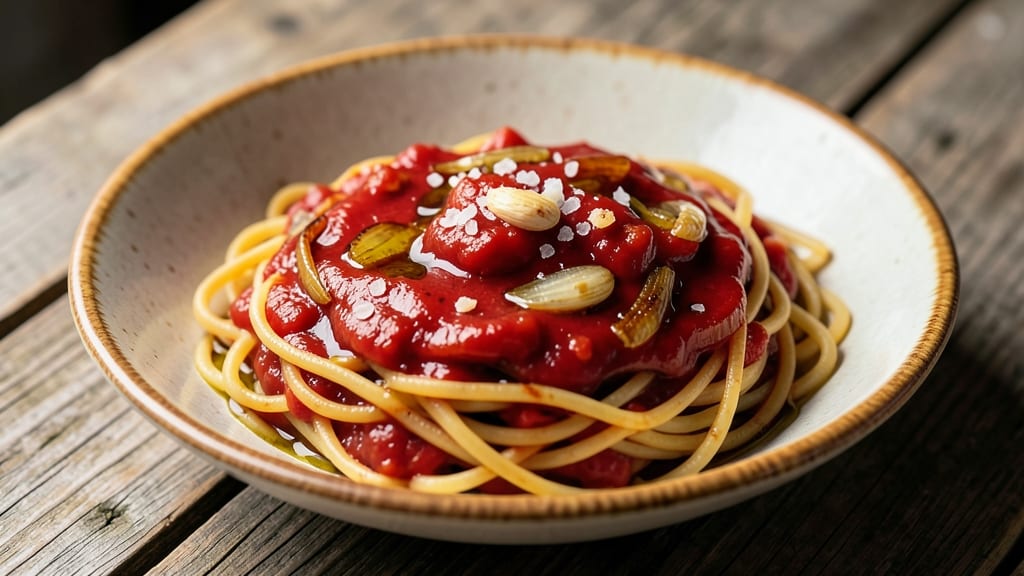
This authentic Italian red pasta sauce captures the soul of a Neapolitan trattoria in every spoonful—rich tomato depth, slow-simmered umami, and a bright basil finish that transforms simple pasta into a restaurant-worthy meal.
The secret lies in caramelizing onions and garlic until deep golden, then building layers of flavor through a long, gentle simmer that develops complex sweetness without overpowering the tomatoes.
What sets this sauce apart is the balance of acidity and sweetness, achieved through high-quality canned tomatoes, a touch of sugar, and a splash of red wine that cuts through the richness. The sauce thickens naturally as it simmers, creating a velvety consistency that clings perfectly to al dente pasta.
Fresh basil added at the end—never cooked—ensures that bright, aromatic finish that defines authentic Italian red sauce.
By the time you twirl that first forkful of pasta, you’ll taste the difference: no metallic aftertaste, no artificial sweetness, just layers of tomato flavor that build from sweet to tangy to savory.
The sauce keeps well in the refrigerator for up to five days, allowing you to make a big batch for the week, and freezes beautifully for months.
Perfect over spaghetti, penne, or even as a marinara for meatballs, this sauce proves that authenticity doesn’t require shortcuts—just patience and the right techniques. Let’s make it together.
Ingredients for authentic italian red pasta sauce
Nine essential ingredients create restaurant-quality tomato sauce with deep caramelized sweetness and bright basil finish.
| Ingredient | Amount | Notes |
|---|---|---|
| Extra-Virgin Olive Oil 🫒 | ½ cup | High-quality, fruity variety preferred |
| Yellow Onions 🧅 | 2 whole | Thinly sliced for even caramelization |
| Garlic Cloves 🧄 | 6 cloves | Minced finely for deep flavor |
| Canned San Marzano Tomatoes 🍅 | 28 oz | Whole, crushed by hand |
| Dry Red Wine 🍷 | ½ cup | Bold variety like Chianti or Sangiovese |
| Granulated Sugar 🍚 | 1 tbsp | Balances acidity naturally |
| Fresh Basil Leaves 🌿 | ½ cup | Packed, stems removed |
| Sea Salt 🧂 | 1 ½ tsp | Diamond Crystal preferred |
| Freshly Ground Black Pepper 🌶️ | ½ tsp | For subtle seasoning |
| Vegetable or Chicken Stock 💧 | ½ cup | For depth of flavor |
The onions and garlic are where flavor magic happens—caramelize them until deep golden, almost jammy. Yellow onions from the grocery store work fine, but if you can find red onions at the farmers market, they add a subtle sweetness. The San Marzano tomatoes are non-negotiable for authentic flavor; their natural sweetness and low acidity make all the difference. I always grab a few extra cans—Costco or Trader Joe's have the best prices. For the red wine, any bold, dry variety works—Cabernet Sauvignon or Merlot if you don't have Italian wines on hand, though Chianti is ideal.
No San Marzano tomatoes? High-quality crushed tomatoes in a jar work in a pinch, but you'll taste the difference. Running short on red wine? Substitute with extra vegetable stock plus a splash of balsamic vinegar—it mimics the acidity. Fresh basil is ideal, but if you're using dried, reduce to one-third the amount and add it at the very end. The sugar might seem odd, but it's crucial for balancing the natural acidity of the tomatoes—brown sugar works too. For the stock, if you're vegetarian, make sure it's vegetable-based; chicken stock adds depth but isn't traditional for this sauce.
This sauce tastes even better the next day as flavors meld. Store it in an airtight container in the fridge for up to 5 days, or freeze portions for 3-4 months. I always make a double batch—one for immediate use, one to freeze. When reheating, add a splash of water or stock to prevent thickening. The sauce thickens naturally as it cools, so don't be tempted to over-reduce while cooking. Fresh basil should be added just before serving to preserve its bright aroma—never cook it.
Why You'll Love This Recipe
- Minimal Chopping Required: I swear by this—just one onion and a few garlic cloves, finely diced in under five minutes. The San Marzano tomatoes do all the heavy lifting, so you’re not stuck peeling or prepping anything fancy.
- Wine-Infused Depth: That splash of dry red wine? It’s not just flavor—it’s transformation. The acidity cuts through the richness, and the alcohol cooks off into this smoky, umami backbone that makes every bite taste like a proper trattoria.
- Leftovers That Shine: Between us, this sauce tastes better the next day. I make a big batch on Sundays, freeze half, and reheat it straight from the fridge—no thinning, no gloopiness, just rich, concentrated flavor that still clings to pasta perfectly.
- Budget-Friendly Luxury: Honestly, this is my go-to for feeding the whole family without breaking the bank. A can of tomatoes, a bottle of wine you’d drink anyway, and olive oil that’s basically liquid gold—no splurges, just real Italian comfort at half the restaurant price.
Step-by-step instructions for slow-simmered Italian red pasta sauce
Here's how to build authentic Italian flavor layer by layer—no shortcuts, just pure technique.
Develop the Onion and Garlic Base
Heat the 0.5 cup extra-virgin olive oil in a heavy-bottomed saucepan over medium-low heat. Add the 2 whole yellow onions, sliced thinly, and cook them gently for 15-20 minutes until they're deep golden brown and caramelized. This slow process creates the sweet foundation of the sauce—don't rush it.
When the onions are nearly done, add the 6 cloves minced garlic and cook for another 1-2 minutes until fragrant but not browned. The garlic should infuse the onions without burning—this is where the authentic Italian flavor starts building. If the onions stick, stir them gently with a wooden spoon to prevent burning.
Deglaze with Wine and Incorporate Tomatoes
Pour in the 0.5 cup dry red wine and let it simmer for 3-4 minutes until it reduces by half. This step, called deglazing, captures all the caramelized onion and garlic flavors that would otherwise stick to the pan. Stir constantly to ensure even reduction.
Add the 28 oz canned San Marzano tomatoes, crushed by hand to break them up slightly. Stir in the 1 tbsp granulated sugar and 1.5 tsp sea salt. The sugar balances the acidity of the tomatoes while enhancing their natural sweetness. Bring the mixture to a gentle simmer and cook uncovered for 20-25 minutes, stirring occasionally.
Build Depth with Stock and Seasoning
After the tomatoes have broken down and the sauce begins to thicken slightly, add the 0.5 cup vegetable or chicken stock. This step adds another layer of complexity to the sauce. Stir in the 0.5 tsp freshly ground black pepper and let the sauce continue to simmer for another 15-20 minutes until it reaches your desired consistency.
You'll know it's ready when the sauce coats the back of a spoon and has thickened enough to cling to pasta. Taste and adjust the seasoning—add more salt if needed, but remember that the fresh basil will add another layer of flavor. The sauce should be rich, balanced, and full of depth.
Finish with Fresh Basil and Rest
Remove the sauce from heat and stir in the 0.5 cup fresh basil leaves, packed and stems removed. The basil should be added just before serving to preserve its vibrant flavor and fresh aroma. Let the sauce rest for 5-10 minutes off the heat—this allows the flavors to meld together perfectly.
This resting period is crucial. It lets the sauce settle and develop its full potential. When you're ready to serve, give it a final taste and adjust the seasoning if needed. The sauce should be vibrant, aromatic, and ready to elevate any pasta dish with its authentic Italian character.
Pro Tips For Making Authentic Italian Red Pasta Sauce
- Sweat the Onions Slow: Low heat is your friend here—cover the pot and let those onions turn translucent without browning, about 8-10 minutes. I learned this the hard way after burning three batches; patience keeps the sauce from tasting bitter or overcooked.
- Crush the Tomatoes by Hand: Skip the blender—use your fingers to break up the San Marzano tomatoes in the can, leaving some chunks for texture. My grandmother swore by this, and she was right: it keeps the sauce from turning into a smooth, flavorless paste.
- Deglaze with Wine Immediately: As soon as you remove the onions and garlic, pour in the red wine and scrape every last bit from the pan—don’t let it sit. The wine needs to work fast to pull up all those caramelized bits that make the sauce sing.
- Salt the Tomatoes Last: Hold off on salting the tomatoes until the very end, after they’ve cooked down. Too early, and the acidity will make them release water like a sad sponge—you want a thick, velvety sauce, not a soup.
Serving suggestions for this dish
Classic Pasta Pairings
This sauce shines brightest with al dente spaghetti or bronze-cut rigatoni—their textures create the perfect marriage with the sauce's velvety consistency.
I always cook my pasta in well-salted water (about 1 tablespoon salt per gallon) until it's 1 minute shy of al dente, then finish cooking directly in the sauce. For a rustic touch, try bucatini or pappardelle—their hollow centers trap the sauce beautifully. 🍝
Protein Additions
For a complete meal, toss in 6-8 oz cooked meatballs or crispy pancetta just before serving. I prefer homemade meatballs made with ground beef and pork, but store-bought work in a pinch.
For vegetarian options, grilled chicken breast or sautéed mushrooms add hearty texture. Always season proteins generously with salt before adding to the sauce.
Cheese Finishes
A sprinkle of freshly grated Parmigiano-Reggiano or Pecorino Romano at the table elevates the dish instantly. I like to use a microplane for ultra-fine shavings that melt into the sauce.
For a creamy contrast, add ½ cup ricotta dollops alongside the pasta. Avoid pre-shredded cheese—the anti-caking agents make it grainy and ruin the texture.
Bread and Sides
Serve with crusty Italian bread for soaking up extra sauce—ciabatta or focaccia work perfectly. For a complete meal, add a simple arugula salad with lemon vinaigrette to cut through the richness.
The peppery bite of arugula balances the sauce's sweetness beautifully. I also love pairing this with roasted garlic bread made with the same caramelized onion base from the sauce.
Wine Pairings
A bold Chianti Classico or Sangiovese complements the sauce's acidity and depth. For white wine lovers, a crisp Vermentino from Sardinia works surprisingly well. Avoid heavy reds like Cabernet—they overpower the delicate tomato flavors.
If you prefer beer, a light Italian lager like Peroni keeps the meal refreshing without competing flavors. 🍷
Make-Ahead Serving
This sauce tastes even better the next day, so I always make a double batch. Reheat gently on the stove with a splash of water or stock to prevent thickening.
For meal prep, store sauce in glass jars in the fridge for up to 5 days or freeze in silicone molds for up to 3 months. When reheating from frozen, thaw overnight in the fridge before warming through—this preserves the sauce's texture perfectly.
Nutrition facts
Frequently asked questions
Can I use regular canned tomatoes instead of San Marzano?
While San Marzano tomatoes are ideal for their sweetness and low acidity, you can use high-quality crushed tomatoes in a pinch. Look for brands with minimal additives and add an extra ½ teaspoon sugar to balance any tartness. The sauce will still be delicious, though the depth of flavor won't be as refined.
Why does my sauce taste too acidic?
Acidity often comes from overcooking or using high-acid tomatoes. To fix it, stir in ½ teaspoon sugar or a pinch of baking soda (just a tiny amount!) while simmering. For prevention, reduce cooking time to 30-35 minutes total and use ripe, low-acid tomatoes. A splash of red wine also helps balance acidity naturally.
How do I prevent the sauce from getting too thick?
Add 1-2 tablespoons water or stock while simmering to adjust consistency. For future batches, reduce the simmering time slightly or add an extra ¼ cup stock at the beginning. The sauce will naturally thicken as it cools, so don't over-reduce it on the stove. Always taste before serving!
Can I make this sauce without wine?
Yes! Substitute the wine with ½ cup vegetable stock plus 1 tablespoon balsamic vinegar for similar depth. The vinegar mimics wine's acidity while adding complexity. If you prefer a sweeter sauce, use ½ cup apple juice instead. The flavor will be slightly different but still authentic and delicious.
What's the best way to reheat leftover sauce?
Gently warm on the stove over low heat with 1-2 tablespoons water or stock to prevent thickening. Avoid microwaving—it can make the sauce watery. For frozen portions, thaw overnight in the fridge first, then reheat slowly. The sauce should be heated just until steaming, no longer.