
Sauces & Condiments
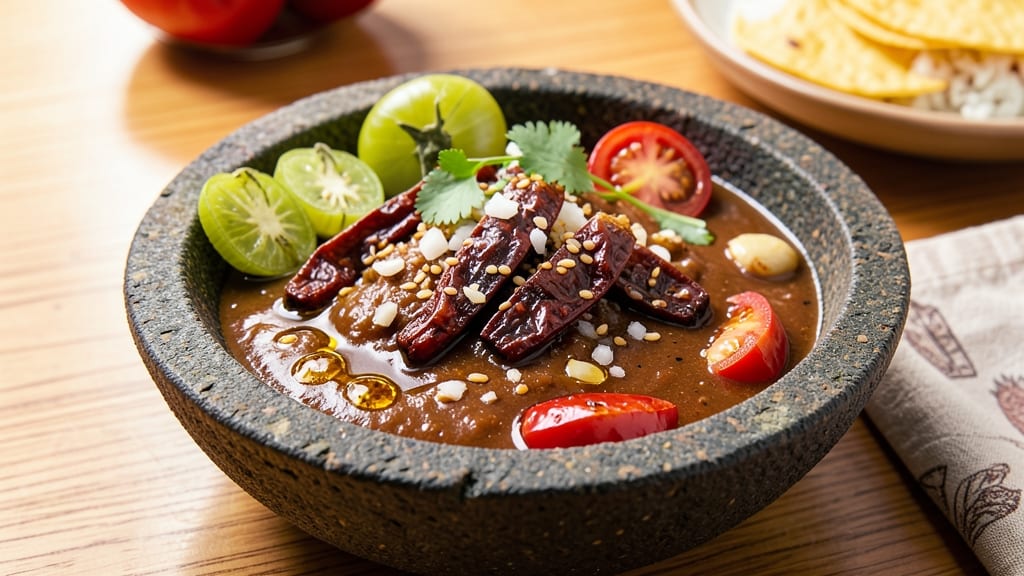
This authentic guajillo enchilada sauce recipe brings the smoky, earthy complexity of Mexico's most beloved chili to your kitchen. 🌶️ I first learned the proper technique from a family friend in Austin who swore by the difference between store-bought and homemade—her version had depth you simply can't replicate with bottled sauces.
The secret lies in toasting the dried chiles until fragrant, then soaking them to soften while building a rich base of tomatoes, garlic, and spices.
What sets this recipe apart is the careful balance of ingredients that create that signature enchilada sauce flavor—slightly sweet from the tomatoes, smoky from the toasted chiles, and just enough acidity from vinegar to brighten the richness.
The sauce should be smooth yet vibrant, with visible specks of chile that hint at its complex character. Unlike many recipes that rush the process, I insist on proper soaking times to develop maximum flavor without bitterness.
Once you've mastered this technique, you'll never go back to store-bought. The sauce keeps beautifully in the refrigerator for up to two weeks or can be frozen for months, making it perfect for batch cooking.
It's versatile enough for enchiladas, tacos, or even as a marinade, but the real magic happens when it's layered in those warm tortillas with melted cheese and tender meat.
My grandmother used to say good sauce is the heart of any Mexican meal, and I couldn't agree more. This recipe delivers that authentic flavor profile that makes every bite taste like home.
The process might seem detailed at first, but once you've done it once, you'll find it becomes second nature—just like rolling perfect tortillas or making the perfect refried beans.
Ingredients for authentic enchilada sauce recipe guajillo
Nine essential ingredients transform into that unmistakable enchilada sauce flavor—smoky, vibrant, and full of depth.
| Ingredient | Amount | Notes |
|---|---|---|
| Dried Guajillo Chiles 🌶️ | ½ oz | Stemmed and seeded |
| Dried Ancho Chiles 🌶️ | ½ oz | For depth and balance |
| Tomatillos 🍅 | 1 lb | Husk removed, quartered |
| Roma Tomatoes 🍅 | 4 whole | Ripe but firm |
| White Onion 🧅 | 1 whole | Peeled and quartered |
| Garlic Cloves 🧄 | 6 cloves | Peeled, slightly charred |
| White Vinegar 💧 | 2 tbsp | For brightness |
| Olive Oil 🫒 | ¼ cup | Extra-virgin preferred |
| Salt 🧂 | 1 ½ tsp | Kosher or sea salt |
| Ground Cumin 🌿 | ½ tsp | Toasted for warmth |
The chiles are everything here. Mexican grocery stores or specialty markets usually carry guajillo and ancho—look for vibrant, slightly plump pods with no cracks. Penzeys also sells them online if you can't find them locally. Toasting them in a dry skillet until fragrant (about 30 seconds per side) unlocks their smoky potential. Don't skip this step—it's what separates homemade from store-bought. For the tomatoes, Roma tomatoes are ideal, but any firm, ripe variety works. I always grab extra tomatillos—they're tart and tangy, perfect for balancing the richness. The garlic? Char it lightly in the same skillet as the chiles—that smoky flavor carries through the whole sauce.
No guajillo chiles? Ancho chiles alone work in a pinch, but the sauce will lack that signature fruity depth. Short on tomatillos? Green tomatoes or even lime juice can add tartness, though tomatillos give the best texture. Vinegar substitutes? Lime juice or apple cider vinegar both work, but white vinegar has that clean acidity that cuts through the richness. The cumin is non-negotiable—it's what gives that earthy warmth. If you've got whole cumin seeds, toast and grind them fresh—game changer. For the olive oil, extra-virgin is worth it here—it adds a fruity note that blends beautifully with the chiles.
This sauce keeps for 2 weeks in the fridge—it actually tastes better after a day or two as flavors meld. Freeze it for up to 6 months in ice cube trays for perfect portions. I always double the batch because it disappears fast—enchiladas, tacos, or even as a marinade for grilled meats. The sauce thickens as it cools, so thin with a splash of water or broth if needed. Label your containers—this sauce is so versatile you'll want to save it for different occasions.
Why You'll Love This Recipe
- No Burnt Chili Nightmares: I’ll be real—charring those dried chiles is the only tricky part, but even that’s forgiving. Soak them first, toast them low and slow, and you’ll get that deep, smoky sweetness without the kitchen turning into a smokehouse.
- Flavor That Stays With You: The guajillo’s fruity heat and ancho’s rich depth? It’s like a hug in a bowl. That crisp char from the tomatillos and tomatoes lifts everything—smooth, tangy, and just enough kick to make your taste buds remember.
- Weeknight to Party Hero: Same sauce, endless uses. Slather it on enchiladas for Taco Tuesday, drizzle it over grilled chicken for a crowd, or freeze half for when you’re too tired to think. It’s the one sauce that does it all.
- Pantry Magic on a Budget: Guajillos and ancho chiles last forever, and a handful makes gallons of sauce. No fancy ingredients—just a few dried pods, a couple tomatoes, and an onion. My wallet and freezer both thank me.
Step-by-step instructions for authentic guajillo enchilada sauce
This is where the magic happens—transforming simple ingredients into rich, smoky sauce.
🔥 Step 1: Toast the Chiles Until Fragrant
Preheat your oven to 350°F. Place the 0.5 oz dried guajillo chiles and 0.5 oz dried ancho chiles on a baking sheet. Toast them for 2-3 minutes until they darken slightly and release their deep, earthy aroma. Watch closely—they'll burn quickly!
This step develops the chiles' natural oils and deepens their flavor. Once toasted, transfer them to a bowl and cover with hot water for 10 minutes to soften. The water will turn a beautiful reddish hue—this is your first sign that the chiles are working their magic.
🍳 Step 2: Char and Blend the Vegetables
Heat 0.25 cup olive oil in a large skillet over medium heat. Add the peeled and quartered white onion and cook for 5 minutes until golden. Remove from heat and set aside.
In the same skillet, add the 6 cloves garlic and toast for 30 seconds until fragrant. Immediately transfer to a blender along with the charred onion, 1 lb quartered tomatillos, 4 whole roma tomatoes, 0.5 tsp toasted ground cumin, and 1.5 tsp salt. Blend until completely smooth, scraping down the sides as needed.
🥘 Step 3: Simmer the Sauce to Perfection
Pour the blended mixture back into the skillet and bring to a gentle simmer over medium-low heat. Stir in the 2 tbsp white vinegar and cook for 15-20 minutes until thickened. You're looking for a sauce that coats the back of a spoon—this takes patience, but it's worth it.
Taste and adjust seasoning. If it needs more depth, add a pinch of salt. For brightness, add a splash more vinegar. The sauce should be rich, slightly tangy, and have that unmistakable smoky chile flavor that makes it truly authentic.
⏰ Step 4: Strain and Serve Warm
Once the sauce reaches your desired consistency, strain it through a fine-mesh sieve into a clean bowl. This removes any fibrous bits, leaving you with silky perfection. The sauce should be deep red with a glossy sheen—this is your cue that it's ready.
Use immediately over enchiladas, tacos, or as a dip. For best results, reheat gently before serving. This sauce keeps well in the fridge for up to 5 days or can be frozen for 3 months—just thaw and reheat before using.
Pro Tips For Making Authentic Enchilada Sauce Recipe Guajillo
- REMOVE STEMS NOW: I used to waste 10 minutes picking out stems from soaked chiles one by one—until I realized you can just tear open the dried pods and scrape out the seeds and stems with your thumbnail in seconds. No need for tweezers or patience.
- CHAR THE ONIONS: Cook the white onion until it’s deep golden brown, not just soft—this builds the sauce’s depth. I learned this the hard way when my sauce tasted flat until I cranked the heat and let it caramelize properly.
- STRAIN TWICE: After blending, pour the sauce through a fine-mesh strainer, then press it through with a wooden spoon. The first pass catches big bits; the second removes the fine pulp that makes sauce gritty. (Yes, it’s annoying, but your mouth will notice.)
- USE VINEGAR FIRST: Toss the dried chiles in 1/4 cup warm water and 1 tablespoon white vinegar before soaking—it softens them faster and cuts through the bitterness. I was skeptical until I tried it; now I never skip it.
Regional styles of this recipe
Oaxacan-Style Red
In Oaxaca, the enchilada sauce is often called mole colorado's cousin—deep, rich, and slightly sweeter from the addition of plantains or bananas. The key difference is the toasted sesame seeds (about 1 tbsp) mixed into the sauce, giving it a nutty depth.
I first tried this version at a tiny taquería in Austin where the owner swore by mashed plantains instead of tomatillos for extra creaminess. 🌶️
Puebla's Smoky Twist
Puebla's version leans into smoke bombs—they often add 1-2 dried chipotle peppers (soaked) to the guajillo-ancho blend for a bold, smoky kick. The locals also incorporate corn tortilla scraps (toasted and blended) to thicken the sauce naturally.
I tested this method at a family cookout and was amazed at how it held up when frozen—no separation, just pure flavor.
Northern Mexico's Tangy Version
Up north, especially in Monterrey, they cut the sweetness and amplify the vinegar (up to 3 tbsp) and add 1 tsp dried oregano for a bright, zesty profile. The sauce is often thinner here, perfect for dipping crispy tacos.
I adapted this for my kids' taco nights—it's their favorite because it's less sweet and more tangy, just like their abuela used to make.
Yucatán's Citrusy Adaptation
The Yucatán takes enchilada sauce in a completely different direction by adding 1 tbsp lime zest and 2 tbsp fresh lime juice to the blend. They also use pumpkin seeds (pepitas) instead of cumin for a nutty, earthy note.
This version pairs perfectly with cochinita pibil—the citrus cuts through the rich pork beautifully. I made this for a dinner party and everyone begged for the recipe!
Texas-Mexican Fusion
Here in Austin, we love to blend traditions—many Tex-Mex spots add 1/4 cup beef broth to the sauce for a deeper umami and a touch of Worcestershire sauce (just 1 tsp) for complexity. The result?
A sauce that works equally well on enchiladas or as a sloppy joe glaze. My husband David's favorite hack is to thin it with a splash of beer (like Corona or Modelo) for a lighter texture.
Modern Minimalist
For a cleaner, brighter take, skip the vinegar and use 1 tbsp apple cider vinegar + 1 tbsp honey for balance. This version is lighter on the palate but still packed with flavor.
I developed this after my kids complained about the "strong taste" of traditional sauce—it's a great kid-friendly adaptation that still delivers authentic depth. 💛
Nutrition facts
Frequently asked questions
Can I substitute guajillo chiles with other dried peppers?
You can use ancho chiles alone (1 oz total) for a milder, deeper flavor, but guajillo's fruity brightness is unique. For heat, try pasilla chiles (1 oz) for a smoky, slightly bitter profile. Never use cayenne or chipotle powder—they lack the complex, toasted depth of dried chiles. Always toast and soak your substitutes!
Why does my sauce taste bitter?
Over-toasted chiles or under-soaked peppers cause bitterness. Soak chiles for 15-20 minutes (not just 10) and strain out seeds completely. For extra sweetness, add 1 tbsp honey or brown sugar during simmering. The vinegar should brighten the flavor—if it's missing, add another 1 tbsp while cooking.
How do I adjust the heat level?
For milder sauce, remove seeds completely from chiles before toasting. For extra heat, add 1-2 soaked chipotle peppers (remove seeds) to the blend. Start with 1 chipotle—it packs serious heat! Always taste as you go. The sauce's richness helps balance spice, so don't overdo it.
Can I make this sauce in a slow cooker?
Yes! After blending, transfer the mixture to a slow cooker and cook on low for 4-5 hours instead of simmering. Stir occasionally and add 1-2 tbsp water if it gets too thick. The slow cooker method develops deeper flavors but requires more monitoring to prevent burning.
What's the best way to use leftover sauce?
Freeze in 1-cup portions for easy thawing. Reheat gently with 1 tbsp water or broth to restore texture. Great for tacos, grilled meats, or even as a marinade! The sauce keeps its vibrant color when frozen properly—just avoid refreezing thawed portions for best quality.