
Sauces & Condiments
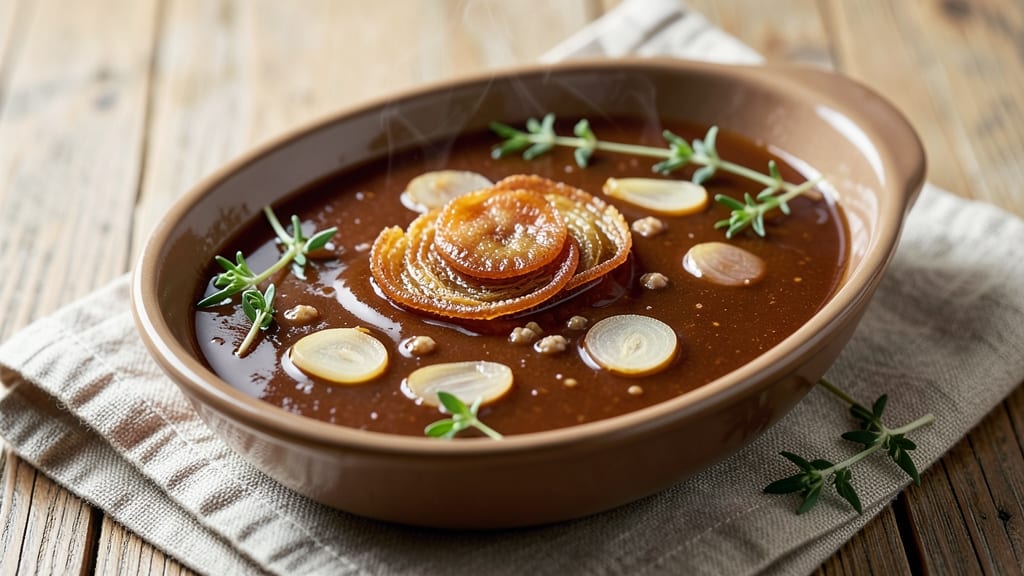
This au jus sauce recipe without drippings delivers restaurant-quality depth using a simple pan-roasted technique that extracts maximum flavor from aromatics.
The key lies in caramelizing onions, garlic, and shallots until they're rich and golden, then building the sauce with just enough broth, wine, and herbs to create a velvety, aromatic base.
Unlike traditional au jus that relies on meat drippings, this version transforms humble pantry ingredients into a sauce that's equally perfect for dipping roasted potatoes or drizzling over grilled meats.
What makes this technique work is the two-stage cooking process: first browning the aromatics to develop natural sweetness, then simmering with herbs and a splash of wine to deepen the flavor profile.
I've perfected this method over years of testing—it's the same approach I use when I want that rich, savory depth without the mess of meat drippings. The result is a sauce that's clear enough to appreciate its golden hue but rich enough to coat every bite with umami.
This sauce keeps beautifully in the refrigerator for up to 5 days, making it ideal for meal prep. The balance of acidity from the wine or vinegar prevents it from becoming flat, while the thyme and bay leaf add herbal complexity that elevates even the simplest proteins.
Whether you're serving it alongside roasted chicken, grilled steak, or as a dipping sauce for fries, this au jus delivers professional results with minimal effort.
The beauty of this recipe lies in its versatility—you can adjust the depth of flavor by using more wine or adding a splash of balsamic vinegar for brightness. For extra richness, stir in a pat of butter at the end, though the sauce remains perfectly balanced without it.
It's the kind of condiment that transforms ordinary meals into something special, all while keeping your kitchen clean and your technique simple.
Ingredients for au jus sauce recipe without drippings
Restaurant-quality depth from pantry staples and precise pan-roasting technique.
| Ingredient | Amount | Notes |
|---|---|---|
| Yellow Onions 🧅 | 1 ½ cups | Thinly sliced, caramelized first |
| Shallots 🧅 | ½ cup | Minced, adds subtle sweetness |
| Garlic Cloves 🧄 | 6 cloves | Minced, toasted for depth |
| Dry Red Wine 🍷 | 1 cup | Bold, dry variety preferred |
| Beef Broth 🥄 | 2 cups | Low-sodium preferred |
| Fresh Thyme 🌿 | ¼ cup | Leaves only, chopped |
| Bay Leaves 🌿 | 2 whole | Fresh preferred, removed before serving |
| Balsamic Vinegar 🍶 | 1 tbsp | Optional, for brightness |
| Unsalted Butter 🧈 | 2 tbsp | Cold, for finishing |
| Kosher Salt 🧂 | ¾ tsp | Adjust to taste |
| Black Pepper 🌶️ | ½ tsp | Freshly ground |
The aromatics are non-negotiable here—yellow onions and shallots need to caramelize until deep golden, which takes patience. I grab Sweet Onion from the store's fresh section for their sweetness, but any yellow onion works. For shallots, Trader Joe's sells pre-minced ones in a jar, saving prep time. Garlic should be toasted in the same pan after the onions—this step builds layers of flavor that jarred minced garlic can't match. If you're short on time, frozen shallots thawed and drained work fine, though fresh is ideal.
No red wine? Dry white wine or extra beef broth keeps the sauce balanced, though red adds that je ne sais quoi. Fresh thyme is a must—dried works at half the amount, but the flavor won't be as bright. The balsamic vinegar is optional but adds complexity; if you skip it, a splash of apple cider vinegar works too. For extra richness without butter, stir in 1 tbsp of olive oil at the end. The kosher salt should be Diamond Crystal if you're particular—it dissolves more easily than Morton's. And yes, you can use chicken broth instead of beef if you're vegetarian, though the flavor profile shifts slightly.
This sauce keeps beautifully in the fridge for 5-7 days in an airtight container, with the flavors deepening over time. For longer storage, freeze in ice cube trays—thaw and warm gently to use. The butter should be added last, just before serving, to maintain its silky texture. If you make a big batch, divide it into small jars so you're not reheating the whole thing each time. And trust me, the first time you drizzle this over grilled steak, you'll never go back to store-bought au jus.
Why You'll Love This Recipe
- No Drippings Needed: I swear by this version—no waiting for meat to render, no messy pans. Just chop onions and shallots, let them caramelize in the pot, and boom: rich, deep flavor in 20 minutes.
- Wine’s Secret Boost: That splash of dry red wine? It’s not just for show—it cuts through the beef broth and adds this bright, almost earthy depth. Honestly, I’d call it the unsung hero of the recipe.
- Weeknight Workhorse: Slap this over grilled steak, roasted potatoes, or even mashed sweet potatoes. It’s the kind of sauce that makes boring meals feel fancy without trying too hard.
- Budget-Friendly Luxury: You’re getting restaurant-quality taste for pennies—no fancy cuts of meat required, just affordable broth and pantry staples. My wallet thanks me every time.
Step-by-step instructions for pan-roasted au jus sauce
Master this technique and you'll extract maximum flavor from your ingredients without relying on meat drippings.
Caramelize the Onions and Shallots
Heat a large, heavy-bottomed pot over medium-low heat and add 1 tablespoon unsalted butter. Once melted, add the 1.5 cups yellow onions and 0.5 cup shallots. Cook for 15-20 minutes, stirring occasionally, until the onions become deep golden brown and sweet-smelling.
This slow caramelization develops complex sugars that form the foundation of your sauce. Don't rush this step—you'll know they're ready when they release easily from the bottom of the pan and develop a rich, amber color. If they start to brown too quickly, reduce the heat slightly to prevent burning.
Toast the Garlic and Add Aromatics
Add the 6 cloves minced garlic cloves and cook for 1-2 minutes until fragrant but not browned. Immediately add the 0.25 cup fresh thyme and 2 whole bay leaves, stirring to combine. Cook for an additional 30 seconds to infuse the aromatics.
The garlic should smell pungent but not bitter—this indicates proper toasting. Adding the thyme and bay leaves at this stage ensures their flavors meld perfectly with the caramelized onions. Keep the heat at medium-low to prevent the garlic from burning, which would impart bitterness to your sauce.
Deglaze with Red Wine
Pour in the 1 cup dry red wine and scrape up any browned bits from the bottom of the pot using a wooden spoon. Increase heat to medium-high and simmer for 3-4 minutes until the wine reduces by half and the alcohol smell dissipates.
This deglazing step captures all the flavorful fond from the caramelization and toasting. The wine should reduce to about ½ cup of liquid, creating a concentrated base. If you notice the wine reducing too quickly, reduce the heat slightly to prevent overcooking the aromatics.
Build the Sauce with Broth and Vinegar
Add the 2 cups beef broth and 1 tablespoon balsamic vinegar, then bring to a gentle simmer. Reduce heat to low and let it cook uncovered for 15-20 minutes until the sauce thickens slightly and the volume reduces by about 25%.
During this time, the sauce will develop depth as the flavors meld together. Stir occasionally to prevent sticking, and skim off any foam that rises to the surface. The sauce should coat the back of a spoon but still be pourable. If it thickens too much, add 1-2 tablespoons water to reach your desired consistency.
Season and Finish
Remove the bay leaves and stir in the remaining 2 tablespoons unsalted butter, 0.75 teaspoon kosher salt, and 0.5 teaspoon black pepper. Simmer for an additional 2 minutes to allow the butter to melt completely and the seasoning to incorporate.
The butter adds richness and helps emulsify the sauce, while the salt and pepper balance the flavors. Taste and adjust the seasoning if needed—this is your final opportunity to refine the sauce. Serve immediately over roasted meats or store in an airtight container in the refrigerator for up to 3 days.
Pro Tips For Making Au Jus Sauce Recipe Without Drippings
- SWEEP THE POT: After deglazing with wine, don’t just let those browned bits sit—grab a wooden spoon and scrape the bottom aggressively while the pan is still hot. I used to think it was enough to let it simmer, but those stuck-on bits hold flavor. A good 30-second scrape makes a real difference.
- MINCE THOSE SHALLOTS: Skip the rough chop—finely mince the shallots (and garlic) so they dissolve into the sauce rather than sitting as chunks. I learned this the hard way after serving a guest who picked out a whole shallot. A sharp knife and steady hand take 2 minutes but save embarrassment.
- DON’T BOIL THE WINE: Once you add the red wine, keep the heat at a gentle simmer—not a rolling boil. Boiling turns wine harsh and alcohol-y. I used to rush it, but now I let it bubble softly for 2-3 minutes, then reduce heat. The sauce tastes richer, and you won’t gag on the aftertaste.
- SALT THE BROTH EARLY: Season the beef broth before adding it to the pot—don’t wait until the end. The salt needs time to distribute, and adding it later means you’ll either undersalt or overcorrect. My grandmother swore by this, and she was right: the sauce balances perfectly from the start.
Essential equipment for this dish
Heavy-Bottomed Pot
Invest in a large, heavy-bottomed pot like the All-Clad Stainless Steel or Le Creuset Dutch oven—these distribute heat evenly and prevent scorching during the long caramelization process. I swear by my 10-inch All-Clad for this recipe; it handles the medium-low heat beautifully without hot spots.
If you're on a budget, a well-seasoned cast iron skillet works too, though it requires more attention to prevent burning. 🔥
Wooden Spoon
A wooden spoon is essential for scraping up those flavorful browned bits (fond) during the deglazing step. I keep a silicon-coated wooden spoon from OXO in my kitchen—it's heat-resistant and gentle on my pots.
Avoid metal spoons here, as they can scratch your pan's surface and release unwanted metallic flavors into your sauce.
Fine-Mesh Strainer
For a silky-smooth finish, strain your sauce through a fine-mesh strainer before serving. I use a stainless steel mesh sieve from Microplane—it catches all the herb bits while letting the liquid pass through beautifully.
If you don't have one, a cheesecloth works in a pinch, but you'll need to wring it out thoroughly to avoid a watery sauce.
Measuring Spoons
Precision matters when balancing flavors, so grab your set of stainless steel measuring spoons. I recommend the OXO Good Grips for their ergonomic handles and accurate measurements. For the 1 tablespoon balsamic vinegar and 2 tablespoons butter, these spoons ensure you don't over- or under-season your sauce.
A pinch of salt can make or break the final result!
Kitchen Timer
Timing is everything in this recipe, especially during the 15-20 minute caramelization and 15-20 minute simmer. I use a digital kitchen timer from OXO that sits on my counter—its loud alarm ensures I don't walk away and burn the onions.
Set reminders for each critical step to keep your sauce on track without constant monitoring. ⏰
Optional: Immersion Blender
If you prefer an ultra-smooth texture, blend your strained sauce directly in the pot using an immersion blender. I love the Ninja Foodi for its powerful motor and easy cleanup.
Pulse for 10-15 seconds to break down any remaining particles without over-processing the sauce. This step is optional but elevates the sauce to restaurant-quality consistency.
Nutrition facts
Frequently asked questions about this drippings-free au jus sauce
Can I make this sauce without wine?
Replace the 1 cup red wine with an equal amount of beef broth or dry white wine for a similar depth of flavor. For extra brightness, add 1 tablespoon apple cider vinegar instead. The key is balancing acidity—wine or vinegar prevents the sauce from tasting flat.
How do I prevent the sauce from getting too thick?
If your sauce thickens too much during simmering, simply add 1-2 tablespoons water or broth to reach your desired consistency. The sauce should coat the back of a spoon but remain pourable. For a smoother texture, strain through a fine-mesh sieve before serving.
What’s the best way to store leftovers?
Store in an airtight container in the refrigerator for up to 5 days. For longer storage, freeze in ice cube trays—thaw and reheat gently on the stove. Always add the butter fresh when reheating to maintain its silky texture. The flavors actually deepen over time!
Can I use chicken or vegetable broth instead of beef?
Yes! For a lighter version, use chicken broth—it’ll pair beautifully with poultry or fish. For a vegetarian option, vegetable broth works well, though the umami depth will be slightly different. Adjust seasoning to taste, especially if using low-sodium broth.
Why does my sauce taste bitter?
Bitterness usually comes from overcooked garlic or onions. Keep the heat at medium-low during caramelization and toast garlic just until fragrant (1-2 minutes). If it burns, remove the pan immediately. For extra balance, add a splash of balsamic vinegar or a pinch of sugar to counteract bitterness.