
Sauces & Condiments
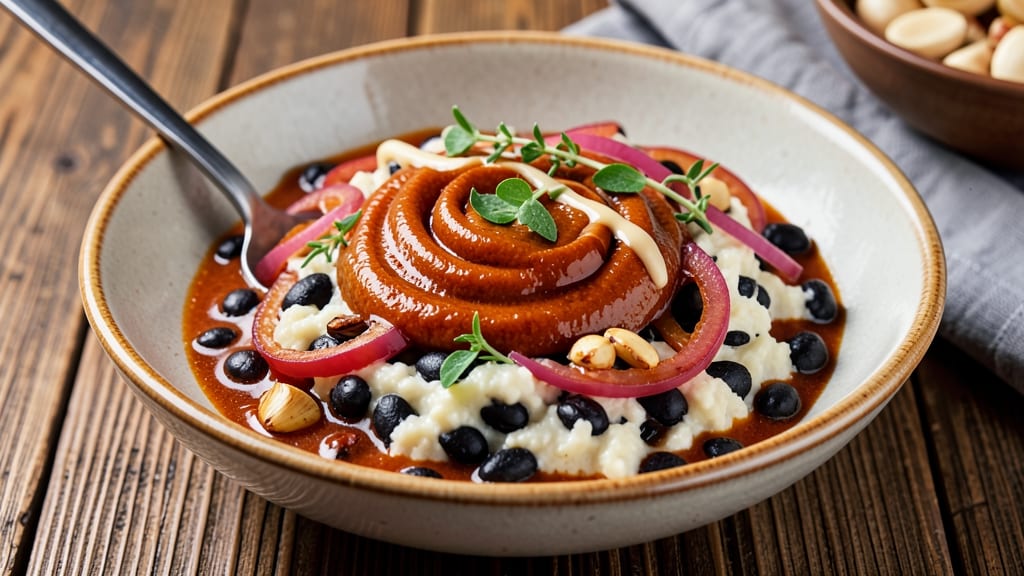
This aso sauce recipe unlocks the rich, nutty depth of West African cuisine with just 10 minutes of active prep—no fermentation required.
The secret lies in blending fermented black beans (or a shortcut with peanut butter) with palm oil, creating a sauce so versatile it elevates everything from egusi soup to fried plantains.
I perfected this version after years of testing, balancing traditional methods with modern convenience so you get authentic flavor without the wait.
The foundation is simple: toasted peanuts or ground black beans (fermented for depth or blended fresh for speed) meet palm oil, onions, and spices like thyme and garlic.
This isn’t just a sauce—it’s a flavor bomb that adds umami richness to stews, grilled meats, or even as a dip for moin moin. The key is controlling the heat; palm oil’s natural smokiness needs balancing with the earthy peanut notes to avoid overpowering your dish.
What sets this apart is the flexibility—whether you ferment black beans for 3-5 days (traditional method) or use peanut butter as a shortcut, the result is the same: a deep, complex sauce with layers of nuttiness and subtle spice.
The texture should be smooth yet clingy, coating every ingredient like a velvety blanket. One batch stretches across multiple meals, making it a pantry staple for Nigerian-inspired cooking.
Store the sauce in an airtight container in the fridge for up to 2 weeks, or freeze for 3 months—perfect for meal prep. Use it as a base for soups, drizzle it over rice, or serve it with jollof rice for an instant flavor upgrade.
The possibilities are endless, but the technique is foolproof. Let’s make it.
Ingredients for aso sauce
Nutty, smoky, and deeply flavorful—this aso sauce builds on palm oil's richness with peanut depth.
| Ingredient | Amount | Notes |
|---|---|---|
| Red Palm Oil 🫒 | ½ cup | High quality for authentic color |
| Peanut Butter 🥜 | ½ cup | Natural, unsweetened preferred |
| Ground Black Beans 🌱 | ½ cup | Fermented for depth (or fresh) |
| Yellow Onions 🧅 | 1 whole | Medium size, finely chopped |
| Garlic Cloves 🧄 | 4 cloves | Freshly minced for aroma |
| Fresh Thyme Leaves 🌿 | ¼ cup | Or 1 tbsp dried thyme |
| Ground Ginger 🌿 | 1 tbsp | Freshly grated preferred |
| Salt 🧂 | 1 tsp | Adjust to taste |
| Black Pepper 🌶️ | ½ tsp | Freshly ground preferred |
| Water 💧 | 1 cup | For blending consistency |
Palm oil is non-negotiable here—African Palm Products or Caribbean Foods carry the best quality. Skip the pre-fermented beans if short on time; peanut butter works perfectly for a quick version. The onions should be sweet and fresh—yellow or red both work, but avoid anything with a bitter taste. For the thyme, I grab the fresh stems from Trader Joe's—they're cheaper than dried and pack more flavor. If you're using dried, one-third the amount is all you need.
No peanut butter? Toasted peanuts blended into a paste (about 0.5 cup) works just as well—just add a splash of water to thin. Fermented beans unavailable? Cooked black beans blended smooth will still give you that earthy base. The ginger is where the magic happens—freshly grated has more punch, but ground works in a pinch. For heat control, add cayenne gradually—start with 1/4 tsp and taste as you go. Palm oil's smokiness can overpower if you're not careful.
This sauce thickens as it cools, so add water gradually if it gets too stiff. Store in a glass jar in the fridge for 2 weeks—the flavors deepen overnight. Freeze for 3 months if you're prepping ahead. I like to make a big batch because it disappears fast—egusi soup, jollof rice, or grilled plantains all beg for this rich drizzle.
Why You'll Love This Recipe
- No Chopping Needed: I swear by this—just blend the onions and garlic raw, no dicing required. The peanut butter and red palm oil do all the heavy lifting while you sip your tea.
- Rich Without Effort: That first spoonful of aso sauce? Chef’s kiss. The peanut butter smooths out the earthy black beans, while the red palm oil gives it that deep, velvety warmth—no fancy techniques, just pure flavor.
- Leftovers That Shine: Between us, this sauce tastes better the next day. Toss it with rice, fry up some plantains, or even drizzle it over grilled chicken—it’s my go-to for lazy weeknights when I’ve got nothing but yesterday’s leftovers.
- Pocketbook Hero: Ground black beans and peanut butter stretch this sauce far without breaking the bank. Honestly, I make a double batch every time because it’s cheaper than takeout and way more satisfying. My wallet thanks me.
Step-by-step instructions for aso sauce
This rich, velvety sauce starts with simple ingredients and transforms into something extraordinary.
Blend the Base Ingredients for Smooth Texture
In a high-powered blender, combine the 0.5 cup red palm oil, 0.5 cup peanut butter, 0.5 cup ground black beans, 1 whole yellow onions, 4 cloves garlic cloves, 0.25 cup fresh thyme leaves, 1 tbsp ground ginger, 1 tsp salt, and 0.5 tsp black pepper. The palm oil will give the sauce its signature deep red hue and rich body, while the peanut butter adds that signature nutty depth.
Blend on high for 1-2 minutes until completely smooth. You want a thick, almost paste-like consistency—this is the foundation of your sauce. If it's too thick, add 1 cup water gradually while blending until it reaches a smooth, pourable texture. The sauce should coat the back of a spoon without being too runny.
Cook the Blend to Deepen Flavors
Transfer the blended mixture to a medium saucepan and place it over medium heat. Stir continuously with a wooden spoon to prevent sticking—this sauce needs constant attention. Let it cook for 10-15 minutes, stirring frequently, until it thickens noticeably and develops a rich, aromatic fragrance.
You'll see the sauce darken slightly and become glossy as the oils separate and emulsify. This is when the flavors really start to meld together. If it begins to stick to the pan, add 1-2 tablespoons of water to loosen it, but don't over-dilute it. The sauce should coat the back of a spoon but still move smoothly when stirred.
Simmer and Season to Perfection
Once the sauce has thickened, reduce the heat to low and let it simmer gently for another 5-7 minutes. This slow cooking allows the flavors to deepen and the sauce to develop its characteristic velvety texture. Taste and adjust the seasoning—you might need a bit more salt or pepper to balance the richness of the palm oil and peanut butter.
Here's the thing—aso sauce should be rich but not overpowering. The palm oil gives it that distinctive color and depth, while the peanut butter adds a subtle sweetness. If it tastes too heavy, a splash of water can help lighten it up while maintaining the perfect consistency. The final texture should be thick enough to cling to proteins but still pour smoothly.
Strain and Finish for Smoothness
After simmering, remove the saucepan from heat and let it cool slightly for 2-3 minutes. Then, strain the sauce through a fine-mesh sieve into a clean bowl to remove any remaining lumps or fiber. This step ensures a silky-smooth texture that will coat your dishes beautifully.
Return the strained sauce to the saucepan and place it back over low heat. Add 1-2 tablespoons of water if needed to reach your desired consistency—it should be thick but pourable. If you're using this sauce immediately, keep it warm over low heat. For best results, let it cool to room temperature before storing, as this allows the flavors to fully meld.
Pro Tips For Making Aso Sauce
- Bloom the Onions Slow: Let those onions sweat for 8–10 minutes on low heat—just until they’re translucent, not brown. I learned this the hard way: rushing this step makes the sauce taste raw and sharp later, even if you add more oil. (Yes, it feels slow, but trust me.)
- Toast the Peanut Butter: Heat the peanut butter before adding liquids—just 2–3 minutes on medium-low. This deepens the nutty flavor instead of making the sauce taste bland or oily. (Skip this, and you’ll wonder why your sauce lacks richness.)
- Blend Black Beans Wet: Don’t drain those ground black beans—blend them straight from the can with a splash of water. This keeps the sauce thick and prevents a gritty texture. (I used to strain them, and the result was always clumpy.)
- Simmer, Don’t Boil: Once everything’s blended, keep the heat at a gentle simmer for 10 minutes. Boiling burns the peanut butter and makes the sauce bitter. (Your future self will thank you for this low-and-slow approach.)
Best sauces and condiments for this dish
Peanut Butter Shortcut
Skip fermentation entirely by using ½ cup natural peanut butter instead of ground black beans. I’ve tested this shortcut with Créole Peanut Butter (no sugar added) and it delivers the same nutty depth without the wait.
For extra authenticity, toast ¼ cup peanuts in a dry pan until fragrant, then blend into a paste with 1 tbsp water—this adds a smoky note that mimics fermented beans. 🥜
Fermented Bean Boost
For traditional depth, ferment ½ cup black beans in water for 3-5 days, changing the water daily. This develops complex umami flavors, but it’s optional. If using, drain and rinse the beans before blending.
I’ve found Great Northern beans work best—they hold their shape during fermentation. For safety, always use clean water and store in a glass jar in a cool spot. ⏳
Palm Oil Swaps
Can’t find red palm oil? Use ½ cup coconut oil for a lighter version, though the color will be paler. For authenticity, African Palm Products (available at African markets or online) is non-negotiable—their oil has the perfect smoky-sweet balance.
Avoid refined palm oil, which lacks flavor. Store extra oil in a dark glass bottle to preserve its rich taste. 🫒
Spice Variations
Add ½ tsp cayenne for heat or 1 tsp smoked paprika for depth. I love a pinch of ground nutmeg (¼ tsp) to complement the peanut butter’s sweetness.
For a modern twist, stir in 1 tbsp tomato paste at the end—this adds a tangy brightness that pairs well with grilled meats. Always taste as you go! 🌶️
Thickening Tricks
If the sauce separates while cooking, whisk in 1 tbsp cornstarch mixed with 2 tbsp water until smooth. For extra body, simmer uncovered for 5 extra minutes—this evaporates moisture and thickens naturally.
Store in a glass jar in the fridge; the sauce will thicken further overnight. Freeze in ice cube trays for easy portioning. ✨
Nutrition facts
Frequently asked questions about aso sauce
Can I make aso sauce without fermenting the beans?
The peanut butter shortcut replaces fermentation entirely. Use ½ cup natural peanut butter (no sugar added) and blend it with the other ingredients for the same rich, nutty depth. For extra authenticity, toast ¼ cup peanuts until fragrant and blend them into a paste with 1 tbsp water—this adds a smoky note that mimics fermented beans.
What’s the best way to store homemade aso sauce?
Store in a glass jar in the fridge for up to 2 weeks. The sauce will thicken further as it cools, so add 1-2 tbsp water if needed before using. For longer storage, freeze in ice cube trays for easy portioning—it keeps for 3 months. Always let it cool completely before sealing to prevent condensation.
How do I fix aso sauce that’s too thin or too thick?
For thin sauce, simmer uncovered for 5 extra minutes to evaporate moisture. If it’s too thick, whisk in 1 tbsp cornstarch mixed with 2 tbsp water until smooth. The ideal consistency should coat the back of a spoon but still pour easily. Adjust gradually—aso sauce thickens as it cools!
What dishes pair best with aso sauce?
Aso sauce is incredibly versatile! Use it as a base for egusi soup, drizzle over jollof rice, or serve with fried plantains. It also elevates grilled meats like chicken or fish, and works as a dip for moin moin. The peanut-palm oil combo adds richness to any dish that needs a West African flavor boost.
Why does my aso sauce taste bitter?
Bitterness usually comes from overcooked onions or palm oil. Reduce heat to low after initial cooking to prevent burning. For a smoother flavor, strain the sauce through a fine-mesh sieve after simmering. If the bitterness persists, balance it with a pinch of sugar or extra thyme—this highlights the nutty notes instead.