
Sauces & Condiments
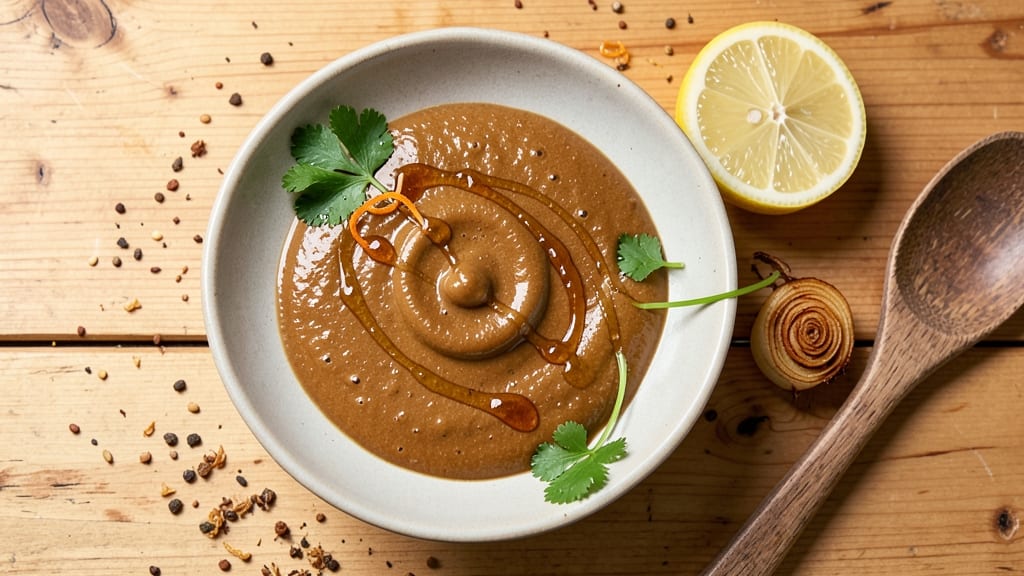
This Asian tahini sauce recipe transforms simple pantry staples into a rich, nutty sesame cream with a bright citrus kick—perfect for vegan diets. The balance of tahini’s depth, tangy acidity, and umami-rich soy creates a sauce that elevates everything from noodles to roasted vegetables.
What makes it special is how adaptable it is: thick enough to drizzle like a dressing, thin enough to use as a dipping sauce.
The secret lies in emulsifying the tahini with acid (like rice vinegar or lime juice) while keeping the texture silky smooth. A touch of maple syrup or agave balances the flavors, and optional garlic or ginger adds warmth.
Unlike store-bought versions, this sauce stays fresh in the fridge for up to a week, and you can easily adjust the consistency with water or oil.
Imagine a creamy, aromatic sauce that clings to every bite—whether you’re tossing it with soba noodles, drizzling over grilled tofu, or using it as a dip for fresh spring rolls.
The nutty tahini base provides protein and healthy fats, while the citrus brightens the richness, making it a versatile condiment for any meal.
Ready in just 10 minutes, this sauce is ideal for meal prep or last-minute flavor boosts. Store it in an airtight container, and it’ll keep its vibrant taste for days. Let’s get started—your taste buds will thank you.
Ingredients for asian tahini sauce
Nine simple ingredients create this creamy, vibrant tahini sauce with citrus brightness.
| Ingredient | Amount | Notes |
|---|---|---|
| Tahini 🥜 | ½ cup | High-quality, sesame paste |
| Rice Vinegar 🍶 | ¼ cup | White or seasoned variety |
| Lemon Juice 🍋 | ¼ cup | Freshly squeezed, bright flavor |
| Maple Syrup 🍯 | 1 tbsp | Grade B for richer flavor |
| Water 💧 | ¼ cup | Adjust for desired consistency |
| Sesame Oil 🫒 | 1 tbsp | Toasted, for aroma |
| Garlic Cloves 🧄 | 2 cloves | Minced, optional for warmth |
| Ginger Root 🌿 | 1 tsp | Freshly grated, optional |
| Salt 🧂 | ½ tsp | Sea salt, to taste |
| Black Pepper 🌶️ | ¼ tsp | Freshly ground, optional |
Tahini is the star here—look for high-quality, pasteurized versions at stores like Whole Foods or Trader Joe's for the richest flavor. Sesame oil adds depth, so grab the toasted kind (not the flavored kind). Fresh ginger and garlic are ideal, but powdered works in a pinch. For the vinegar, white rice vinegar gives the cleanest tang, but apple cider vinegar adds a fruity twist. The maple syrup balances everything—Grade B has a deeper, caramel-like flavor that pairs perfectly with tahini.
No tahini? Substitute peanut butter or cashew butter (adjust water as needed). Skip the garlic or ginger? Extra lemon juice or a pinch of red pepper flakes adds brightness. The sauce should be thick but pourable—add water for a thinner consistency or tahini for a thicker one. For extra richness, stir in a spoonful of coconut milk. Store-bought tahini often has a thin consistency—strain it through a fine-mesh sieve if it's too watery before using.
This sauce keeps beautifully—up to 1 week in an airtight jar in the fridge. The flavors actually deepen overnight, so it's perfect for meal prep. For longer storage, freeze in ice cube trays and pop out as needed. Give it a quick whisk before using if it separates. A drizzle of sesame oil just before serving adds that final aromatic punch—trust me, it makes all the difference.
Why You'll Love This Recipe
- Five-Ingredient Magic: I swear by this—just tahini, vinegar, lemon, syrup, and water. No fancy gadgets, no waiting for hours. Honestly, I’ve made it while scrolling through emails; it’s that simple.
- Umami Bomb: That tahini brings the nutty richness, while the vinegar and lemon cut through it just right. A drizzle over noodles or grilled chicken? Instant flavor upgrade—no heavy cream or weird spices needed.
- Dresses Everything: Need a quick dip for veggies? A tangy glaze for tofu? A sneaky sweet-savory twist on pasta? This sauce does it all. I keep a jar in the fridge for lazy nights and fancy dinner parties—same effort, different vibes.
- Budget-Friendly Staple: Tahini and vinegar last forever, and a little goes a long way. I stretch it over stir-fries, toss it in salads, or even mix it into marinades. Between us, it’s my go-to for making cheap meals feel special without breaking the bank.
Step-by-step instructions for Asian tahini sauce
Here's how to blend these simple ingredients into a creamy, zesty sauce that's perfect for dipping or drizzling.
Combine the Base Ingredients
In a medium bowl, whisk together the 0.5 cup tahini with the 0.25 cup rice vinegar and 0.25 cup lemon juice until smooth. The tahini will thicken as you mix, so use a whisk or fork to break up any lumps. This combination creates the tangy, nutty foundation of the sauce—don't skip the whisking, or you'll end up with a grainy texture.
Next, stir in the 1 tbsp maple syrup and 0.25 cup water gradually. The syrup adds a subtle sweetness that balances the acidity, while the water helps thin the sauce to a pourable consistency. You can adjust the water later if needed, but start with the full amount for a good baseline. The mixture should look like thick, creamy honey at this stage.
Add Aromatics and Seasonings
In a small bowl, finely mince the 2 cloves garlic and grate the 1 tsp ginger root using a microplane or fine grater. The garlic should be very finely chopped—almost paste-like—so it blends seamlessly into the sauce. Add these to the tahini mixture along with the 0.5 tsp salt and 0.25 tsp black pepper. Stir well to combine, ensuring the garlic and ginger are fully incorporated.
Now, drizzle in the 1 tbsp sesame oil while whisking continuously. The oil adds depth of flavor and a nutty aroma that ties everything together. Taste the mixture at this point—you're aiming for a balance of sweet, tangy, nutty, and slightly spicy notes. If the sauce tastes too sharp, add a pinch more maple syrup. If it needs more brightness, a splash of lemon juice will help.
Adjust Consistency and Finish
Taste the sauce again and decide if it needs thinning. If it's too thick, add water 1 teaspoon at a time, whisking after each addition until you reach a smooth, pourable consistency. You want it to coat the back of a spoon without being watery. The sauce should cling lightly to whatever you drizzle it over—think noodles, grilled meats, or fresh veggies.
Let the sauce sit for 5 minutes at room temperature before using. This resting time allows the flavors to meld together, giving you a more cohesive taste. If you're using it immediately, give it a final whisk to ensure everything is well combined. The sauce will keep in the refrigerator for up to 5 days, making it a great make-ahead option for meal prep.
Pro Tips For Making Asian Tahini Sauce
- STIR SLOWLY AT FIRST: Tahini thickens like glue when it hits liquid—especially cold water. Start with just a splash of warm water (not boiling) and whisk vigorously for 30 seconds before adding more. I learned this the hard way after trying to dump everything in at once and ending up with a lumpy mess.
- USE AGED RICE VINEGAR: Cheap vinegar tastes harsh and cuts through the tahini’s richness. Aged rice vinegar (like Kikkoman’s) has a smoother acidity and subtle sweetness that balances the maple syrup better. Skip the cheap stuff—your sauce will taste like a science experiment gone wrong.
- MEASURE MAPLE SYRUP BY WEIGHT: Liquid maple syrup is sneaky—1 tablespoon isn’t always 1 tablespoon. Use a kitchen scale for 15 grams (about 1 tbsp) to guarantee consistency. I used to eyeball it and wondered why some batches tasted cloyingly sweet while others fell flat.
- WHISK IN STAGES: Add tahini first, then water, then acid (vinegar/lemon), and finally maple syrup. This prevents curdling from sudden pH shifts. If you dump everything in at once, the sauce can split like oil and vinegar—messy and unappetizing. Patience here saves cleanup later.
Essential equipment for this dish
Whisk Attachment
Your best friend for this sauce is a hand mixer with a whisk attachment—it emulsifies the tahini perfectly without overworking it. I swear by my KitchenAid KSM150PSER with the whisk attachment, which blends the tahini and acid into a silky texture in under 30 seconds.
If you don’t have one, a handheld immersion blender works too—just blend directly in the bowl for a smoother finish. 💫
Measuring Spoons
Precision matters here, especially with the sesame oil and maple syrup. Invest in a set of stainless steel measuring spoons—I love the OXO Good Grips—to avoid spills and ensure you’re adding the exact 1 tablespoon of each.
For the garlic and ginger, a microplane (like Barbour Abrasive) is a game-changer—it grates them into a fine paste without the mess of a knife. 🧄
Small Mixing Bowl
A medium-sized glass or ceramic mixing bowl (8–10 inches wide) is ideal for whisking the tahini sauce. Glass bowls keep the sauce cool and let you see the texture as it emulsifies.
I use my Pyrex mixing bowl—it’s durable, non-reactive, and easy to clean. Avoid metal bowls, as they can react with the acidity of the lemon juice or vinegar. 🥣
Fine-Mesh Sieve
Store-bought tahini can be gritty, and that texture ruins the sauce. A fine-mesh sieve (like the Eberhardts 10-inch) strains out any lumps before you even start. Place it over a separate bowl and pour the tahini through—this step ensures your sauce is silky smooth from the get-go.
No sieve? A cheesecloth works in a pinch. 🥜
Tasting Spoon
You’ll be tasting this sauce multiple times, so keep a small, clean spoon (like a silicon spatula or a dedicated tasting spoon) handy. I keep one in my kitchen just for this purpose—it’s faster than washing a regular spoon between adjustments.
A long-handled spoon also helps if your sauce is hot or you’re working near the stove. 🍽️
Storage Containers
Once made, transfer your sauce to an airtight glass jar (like Le Parfait) for fridge storage. Glass preserves flavors better than plastic and won’t absorb odors. For longer storage, freeze the sauce in ice cube trays—just pop out a cube as needed and thaw it in the fridge.
Label your containers with the date to track freshness. ❄️
Nutrition facts
Frequently asked questions
Can I make this tahini sauce without tahini?
Yes! You can substitute peanut butter or cashew butter (unsweetened) in a 1:1 ratio, but the flavor will be less nutty. For a closer match, blend 1/2 cup toasted sesame seeds with 2 tbsp warm water until smooth, then strain through a fine-mesh sieve. The texture will be slightly lighter but still delicious.
Why did my sauce separate? How do I fix it?
Tahini-based sauces can separate if overmixed or if the tahini was too watery. To fix it, whisk in 1 tsp water at a time until smooth. For prevention, always strain store-bought tahini through a fine-mesh sieve first. If the sauce still looks grainy, blend it briefly with an immersion blender. The key is gradual whisking—don’t rush it!
What are the best ways to use this sauce?
This versatile sauce works as a drizzle over noodles (udon, soba, or ramen), a dipping sauce for spring rolls or veggie sticks, or a marinade for grilled tofu or chicken. Try it as a salad dressing with cucumbers and edamame, or mix it into cold soups like miso or shakshuka. The possibilities are endless!
Can I make this sauce spicier?
Add 1/2 tsp red pepper flakes or 1 tsp sriracha while whisking, or stir in 1 tsp chili crisp for a smoky kick. For heat without dryness, blend in 1 tsp fresh chili paste (like sambal oelek) with the garlic and ginger. Adjust to taste—start small, as tahini can mellow spice.
How do I adjust the consistency for different uses?
For a thicker sauce (like a glaze), add 1 tbsp more tahini or reduce water by 1 tbsp. For a thinner sauce (like a dipping sauce), add water 1 tsp at a time until pourable. Need it ultra-smooth? Blend with an immersion blender. Pro tip: Let it rest 10 minutes before adjusting—settling helps you gauge the right consistency.