
Sauces & Condiments
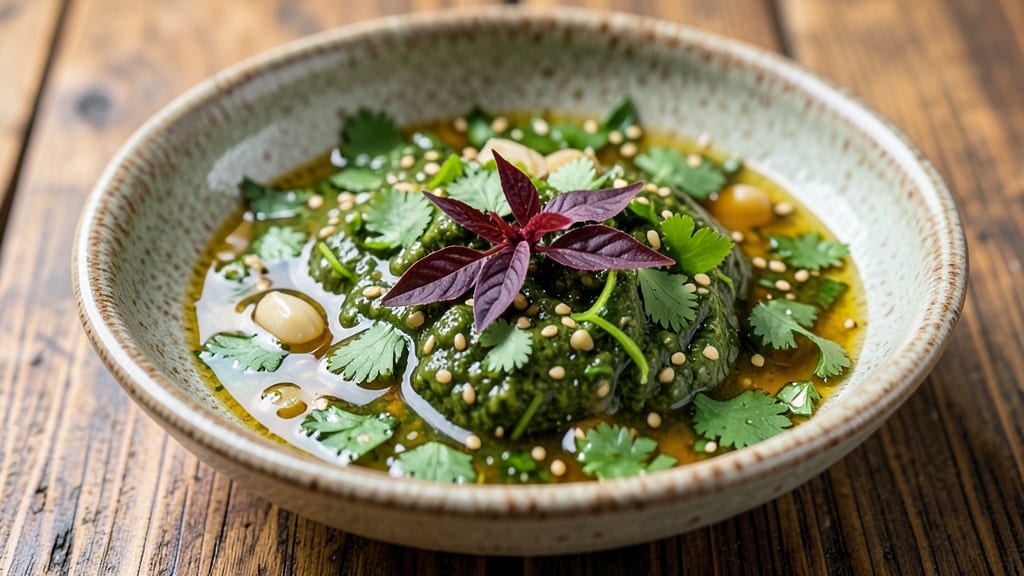
This Asian chimichurri sauce recipe transforms traditional chimichurri into a vibrant, umami-packed condiment that elevates stir-fries, grilled meats, and noodles with bold garlic-lime brightness. The fusion of fresh herbs, sesame oil, and soy sauce creates a sauce that's both tangy and deeply savory, perfect for adding depth to any dish.
I developed this recipe after craving the freshness of chimichurri but wanting the rich, complex flavors of Asian cuisine—this version delivers both.
The secret lies in balancing acidity, heat, and umami through garlic, lime, and a touch of chili paste, all tied together with sesame oil and fish sauce for that signature Asian depth.
Unlike traditional chimichurri, this version stays lush and cohesive without becoming overly thick, making it ideal for drizzling or tossing.
The sauce keeps well in the fridge for up to a week, so you can make a batch and use it throughout the week on everything from grilled chicken to cold noodle salads.
What sets this sauce apart is its versatility—it works as a marinade, a dipping sauce, or a finishing touch for dishes that need an extra layer of flavor. The garlic and lime provide a bright, zesty kick, while the sesame and soy add richness that makes every bite more satisfying.
Whether you're serving it over steamed rice, drizzling it on fresh spring rolls, or using it to brighten up a bowl of ramen, this sauce will become a staple in your kitchen.
Ready in just 10 minutes with simple ingredients, this Asian chimichurri sauce proves that fusion flavors can be both innovative and foolproof. The best part? You can adjust the heat or tang to suit your taste, making it customizable for any palate.
Let's get started on this vibrant, flavor-packed sauce that will transform your favorite dishes.
Ingredients for asian chimichurri sauce
Ten simple ingredients blend into this vibrant sauce that bridges fresh chimichurri with bold Asian flavors.
| Ingredient | Amount | Notes |
|---|---|---|
| Fresh Cilantro Leaves 🌿 | 1 cup | Stems removed, loosely packed |
| Fresh Thai Basil Leaves 🌿 | ½ cup | Bright green, stems removed |
| Garlic Cloves 🧄 | 6 cloves | Fresh, minced finely |
| Lime Juice 🍋 | ½ cup | Freshly squeezed, seeds strained |
| Sesame Oil 🫒 | ¼ cup | Toasted, for depth |
| Fish Sauce 🍜 | 2 tbsp | Red Boat preferred |
| Soy Sauce 🥢 | 2 tbsp | Light or dark, to taste |
| Red Chili Paste 🌶️ | 1 tbsp | Adjust for heat preference |
| Honey 🍯 | 1 tbsp | Balances acidity, optional |
| Salt 🧂 | ½ tsp | Kosher or sea salt |
The herbs are the heart of this sauce—cilantro for brightness, Thai basil for that signature anise note. Thai basil is key; it's sweeter and more aromatic than regular basil. Grab it in the produce section or at an Asian market—99 Ranch or Lucky Supermarket usually have it. Fresh garlic is non-negotiable here; pre-minced garlic loses its punch fast. For the sesame oil, toasted sesame oil adds depth that regular sesame oil can't match. If you can't find it, lightly toast regular sesame oil in a dry pan for 30 seconds before using.
No fish sauce? Soy sauce plus a pinch of sugar gets you close, though you'll lose some umami depth. Short on Thai basil? Regular basil plus a pinch of anise seeds works in a pinch. Too much heat from the chili paste? Swap for a mild sriracha or reduce by half. The honey balances the acidity—skip it if you're avoiding sugar, but the sauce will be sharper. For extra richness, add a dash of miso paste (about 1 tsp). The lime juice should be freshly squeezed; bottled lime juice lacks the brightness this sauce needs.
This sauce stays fresh for 1 week in the fridge, sealed tightly. Pour a thin layer of sesame oil on top before storing to preserve color. For longer storage, freeze in ice cube trays—perfect for single-use portions. Once opened, shake well before using. The flavors actually improve after 24 hours as everything melds together. I like to make a big batch and keep it on hand for quick stir-fries or grilled meats—it's always the first thing I reach for when I need a flavor boost.
Why You'll Love This Recipe
- I’ll be real: I often eyeball the cilantro and Thai basil stems—no fancy chopping, no tiny dice. Toss the whole leaves into the mortar (or blender) with garlic, lime, and a glug of sesame oil, then pulse until it’s almost smooth. That rough texture? It’s the secret—gives every bite grip.
- No-Chop Chaos Allowed: I’ll be real: I often eyeball the cilantro and Thai basil stems—no fancy chopping, no tiny dice. Toss the whole leaves into the mortar (or blender) with garlic, lime, and a glug of sesame oil, then pulse until it’s almost smooth. That rough texture? It’s the secret—gives every bite grip.
- Umami Bomb in 5 Minutes: Between us, this sauce is dangerously addictive. The Thai basil and cilantro team up with garlic for a punch that lingers, while the lime brightens it just enough to keep your taste buds hooked. Drizzle it on grilled fish, noodles, or even scrambled eggs—suddenly, everything tastes like a street-side feast.
- Your Secret Weapon for Everything: Honestly, I keep a jar in the fridge for weeks. It’s the go-to for stir-fries, marinades, or a quick drizzle over rice bowls. Even my picky teen asks for it on his plain chicken. (Yes, even on a Tuesday night.) The sesame oil adds depth, so it works with spicy, sweet, or savory dishes without overpowering them.
Step-by-step instructions for Asian chimichurri sauce
This vibrant sauce comes together in minutes with fresh herbs and bold Asian flavors.
Finely Chop the Herbs and Garlic
Place the 1 cup fresh cilantro leaves and 0.5 cup fresh Thai basil leaves on a cutting board. I like to use a sharp chef's knife for this step—chop both herbs together into small, even pieces. You're aiming for a texture that's finer than traditional chimichurri but not quite a paste.
Next, add the 6 cloves garlic and mince them finely. The garlic should be almost paste-like at this stage—this ensures it blends smoothly without any noticeable chunks. I press down firmly with the knife blade to release all the flavor from each clove. Taste a pinch of the mixture at this point; you should notice the bright, fresh herbal notes and the sharp garlic punch.
Whisk Together Wet Ingredients
In a medium bowl, combine the 0.5 cup lime juice, 0.25 cup sesame oil, 2 tablespoons fish sauce, 2 tablespoons soy sauce, 1 tablespoon red chili paste, 1 tablespoon honey, and 0.5 teaspoon salt. Start by whisking the lime juice and sesame oil together—they should emulsify slightly, creating a silky base. The sesame oil adds that nutty depth that makes this sauce distinctly Asian.
Add the remaining wet ingredients one at a time while continuing to whisk. The fish sauce and soy sauce will start to mingle with the citrusy lime, creating a complex umami foundation. The red chili paste adds heat, while the honey balances the acidity. This mixture should be smooth with no visible streaks of oil—if it looks separated, whisk more vigorously for about 30 seconds.
Combine and Blend the Sauce
Add the chopped herbs and garlic to the wet ingredients. Using a fork or small whisk, gently fold everything together. You'll notice the sauce immediately takes on a vibrant green color with deep red streaks from the chili paste. Let the mixture sit for 5 minutes—this allows the flavors to meld and the lime juice to slightly soften the herbs.
After resting, give the sauce another quick stir. The texture should be thick but pourable, like a vibrant green sauce with a slight sheen from the sesame oil. If it's too thick, add 1-2 teaspoons of water to reach your desired consistency. Taste and adjust seasoning—you might need a touch more salt or chili paste depending on your heat preference.
Rest Before Using (Optional but Recommended)
For maximum flavor development, let the sauce rest in the refrigerator for at least 30 minutes before using. This step allows all the ingredients to fully integrate, creating a more cohesive flavor profile. The herbs will soften slightly, the garlic will mellow, and the lime's acidity will mellow out.
When ready to use, give the sauce one final stir. The color should be vibrant, and the aroma should be intoxicating—bright, garlicky, with a hint of citrus and umami. This sauce keeps well in the fridge for up to 5 days, making it perfect for batch cooking. Use it as a marinade, stir-fry sauce, or dipping sauce for grilled meats.
Pro Tips For Making Asian Chimichurri Sauce
- STACK THE HERBS: Use a mortar and pestle for the cilantro and Thai basil—don’t just chop them in a bowl. The crushing releases more oils and aroma, which is the thing that matters most in this sauce.
- SALT THE GARLIC FIRST: Toss the minced garlic with a pinch of salt before adding it to the herbs. This softens it slightly and prevents that harsh, raw bite that can sneak into the sauce if you skip it.
- STOP AT 80% CHOPPED: Don’t over-blend the herbs—leave some texture. A mix of fine and coarse bits gives the sauce depth and prevents it from turning into a mushy paste that clings like glue.
- LIME JUICE LAST: Add the lime juice just before serving, not when you mix everything. The acidity brightens the flavors, but it also breaks down the herbs faster, so waiting keeps the sauce vibrant longer.
Regional styles of these flavors
Japanese-Inspired Version
Swap the Thai basil for shiso leaves and add 1 tsp grated fresh ginger to the wet ingredients. Replace the red chili paste with 1 tbsp gochujang (Korean chili paste) for a deeper, slightly sweet heat.
Use mirin instead of honey to balance the acidity—it adds a subtle floral note that complements the herbs beautifully. This version pairs perfectly with teriyaki-glazed chicken skewers or sushi rolls. 🌿
Thai-Inspired Version
Boost the Thai flavors by adding 1 tbsp fish sauce (total 3 tbsp) and 1 tsp palm sugar to replace honey. Include 1 stalk lemongrass, finely minced, along with the garlic. Garnish with thinly sliced Thai chilies for extra heat.
This version works wonderfully with grilled lemongrass pork or Thai green curry. The lemongrass adds a citrusy aroma that ties everything together beautifully. 🌶️
Korean-Inspired Version
Replace the lime juice with 0.4 cup rice vinegar and add 1 tbsp gochugaru (Korean chili flakes) for a smoky, fruity heat. Include 1 tsp toasted sesame seeds in the final mix for texture.
This version is perfect for bulgogi beef or Korean pancakes (galbi jjim). The rice vinegar adds a tangy brightness that cuts through the richness of grilled meats. 🥢
Vietnamese-Inspired Version
Use nuoc mam (Vietnamese fish sauce) instead of regular fish sauce and add 1 tsp sugar to balance the flavors. Replace the Thai basil with mint leaves and include 1 tbsp chopped cilantro stems for extra depth.
This version pairs beautifully with grilled pork (thịt nướng) or pho noodles. The mint adds a refreshing twist that’s perfect for hot summer days. 🌿
Chinese-Inspired Version
Replace the lime juice with 0.4 cup rice wine vinegar and add 1 tsp shaoxing wine to the wet ingredients. Include 1 tsp grated daikon radish for a subtle crunch.
This version works wonderfully with char siu pork or stir-fried noodles. The shaoxing wine adds a deep, savory complexity that elevates the sauce to new heights. 🍚
Nutrition facts
Frequently asked questions
Can I make this sauce without Thai basil?
Thai basil is key for that signature anise flavor, but you can substitute 1/4 cup regular basil plus 1/4 teaspoon anise seeds for a similar effect. If you're avoiding anise, try mint leaves instead—they add brightness that still complements the lime and garlic beautifully.
How spicy should the sauce be?
The recipe includes 1 tablespoon red chili paste for a mild-medium heat level. For less spice, reduce to 1/2 tablespoon or swap for 1 teaspoon sriracha. If you love heat, add an extra 1/2 teaspoon chili paste or include thinly sliced Thai chilies as a garnish.
What's the best way to store leftover sauce?
Transfer the sauce to an airtight container and refrigerate for up to 5 days. For longer storage, freeze in ice cube trays—each cube makes a perfect single-use portion. To preserve color, add a thin layer of sesame oil on top before sealing. Always shake well before using.
Can I use this sauce as a marinade?
Yes! This sauce works wonderfully as a marinade for chicken, pork, or tofu. For best results, marinate proteins for 30 minutes to 2 hours in the fridge. The acidity from the lime helps tenderize the meat while infusing it with bold flavors. Reserve some sauce for serving after cooking.
What if my sauce separates?
If the sauce looks separated, whisk in 1-2 teaspoons of water or sesame oil to restore the emulsified texture. For a thicker consistency, let it sit for 10 minutes—the lime juice will help bind everything together naturally. If it's still too thin, add 1 tablespoon of rice flour mixed with water to thicken.