
Sauces & Condiments
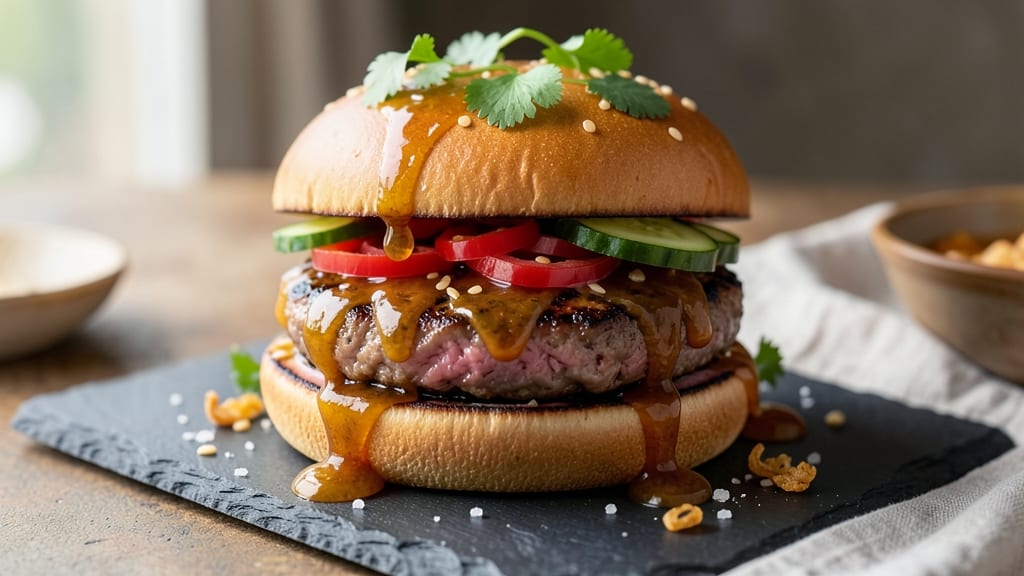
This Asian burger sauce recipe transforms ordinary burgers into restaurant-quality bites with its perfect balance of sweet, spicy, and umami flavors. 🌟 The secret lies in simmering aromatic ingredients like garlic, ginger, and soy sauce until they meld into a rich, glossy sauce that clings beautifully to grilled meats.
I developed this recipe after craving that signature tangy-sweet glaze found in Asian-inspired eateries, but wanted a version I could control at home.
The sauce begins with a simple base of soy sauce, rice vinegar, and a touch of honey or sugar to balance the acidity. Fresh garlic and ginger are sautéed until fragrant, then combined with sesame oil and a splash of water to create a smooth, emulsified drizzle.
The optional chili paste or red pepper flakes add just the right kick, while a splash of lime juice brightens the flavors at the end.
What makes this sauce special is how it elevates every bite—whether drizzled over burgers, slathered on sandwiches, or used as a dipping sauce for spring rolls.
What you’ll end up with is a glossy, aromatic sauce that’s sweet enough to caramelize slightly on the grill, spicy enough to wake up your taste buds, and savory enough to make every bite unforgettable.
The sauce keeps well in the fridge for up to two weeks, making it perfect for batch cooking and meal prep. Once you try this, you’ll never go back to store-bought condiments again.
This versatile sauce works wonders on burgers, grilled chicken, or even as a marinade for skewers. The key to success is patience—letting the flavors develop during the simmering process ensures a depth that’s hard to achieve otherwise. Let’s get started on creating your own perfect drizzle!
Ingredients for asian burger sauce
Sweet, spicy, and umami-packed—this sauce transforms burgers into restaurant-quality bites!
| Ingredient | Amount | Notes |
|---|---|---|
| Soy Sauce 🍶 | ½ cup | High-quality, light soy preferred |
| Rice Vinegar 🍶 | ¼ cup | Seasoned or plain works |
| Honey 🍯 | ¼ cup | Or maple syrup for vegan option |
| Sesame Oil 🫒 | 2 tbsp | Toasted sesame oil for flavor |
| Garlic Cloves 🧄 | 4 cloves | Freshly minced for best aroma |
| Fresh Ginger 🌿 | 1 tbsp | Finely grated, about 1-inch piece |
| Water 💧 | ¼ cup | For thinning if needed |
| Lime Juice 🍋 | 1 tbsp | Freshly squeezed for brightness |
| Red Pepper Flakes 🌶️ | 1 tsp | Adjust for spice preference |
| Salt 🧂 | ½ tsp | Kosher or sea salt |
The soy sauce is the flavor foundation here. Kikkoman or Lee Kum Kee are my go-tos—they’ve got that perfect balance of salt and umami. If you’re using a cheaper brand, add an extra pinch of salt to compensate. Fresh ginger and garlic are non-negotiable for that authentic aroma—Trader Joe’s sells pre-grated ginger if you’re short on time, but I always grab fresh. The honey can be swapped for maple syrup if you’re making this vegan, but honey adds that perfect caramelized touch when it hits the grill. For the sesame oil, Kadoya is my favorite—it’s got that rich, toasted flavor that makes the sauce sing.
No rice vinegar? Apple cider vinegar works in a pinch, though it’ll have a slightly different tang. Short on honey? Brown sugar dissolved in warm water mimics the stickiness. The red pepper flakes can be swapped for gochujang (Korean chili paste) at half the amount—it adds a deeper, fermented heat. If you’re sensitive to spice, start with just a pinch of flakes and taste as you go. The lime juice is optional but adds that bright finish—Mexican Key limes have more punch than regular limes, but any will do. Pro tip: Toast your garlic and ginger in the oil for 30 seconds before adding other ingredients—it deepens the flavor instantly.
This sauce keeps beautifully in the fridge for up to 2 weeks—it actually gets better as the flavors meld. For leftovers, store it in a sealed jar with a thin layer of oil on top to preserve freshness. If it thickens too much, just stir in a splash of water or vinegar. I like to make a double batch because it disappears so fast—perfect for meal prep. Freezes well for 3 months too, though the texture might get slightly grainy after thawing. Just give it a quick whisk to bring it back to perfection.
Why You'll Love This Recipe
- Five-Ingredient Magic: I swear by this combo—soy sauce, rice vinegar, honey, sesame oil, and garlic. That’s it. No fussing with exotic ingredients or last-minute grocery runs. The pantry staples I already had did the heavy lifting.
- Umami Bomb: The garlic hits first—sharp and bright—then the soy sauce deepens into that rich, savory punch. That honey? It’s the secret weapon, cutting through the salt and leaving a sticky-sweet finish that makes you want to dip everything.
- Sauce for Days: Make a double batch and thank me later. It’s the perfect glaze for grilled chicken, a quick stir into noodles, or even a drizzle over fries. Honestly, I’ve used it on takeout burritos, and it turned them into a meal I’d actually cook at home.
- Budget Hack: I spend less than $3 on this sauce, and it lasts weeks in the fridge. No fancy jars or specialty stores—just basic stuff that stretches across meals. My wallet and taste buds win every time.
Step-by-Step instructions for sweet-spicy umami drizzle
This sauce comes together in minutes with bold flavors that'll transform any grilled meat.
🍳 Step 1: Bloom the Aromatics in Sesame Oil
Heat a small saucepan over medium-low heat and add the 2 tablespoons sesame oil. Let it warm for 30 seconds until fragrant—you'll smell that nutty, toasty aroma. Add the 4 minced garlic cloves and 1 tablespoon freshly grated ginger (about a 1-inch piece). Cook for 1-2 minutes until the garlic turns golden and the ginger softens slightly.
Watch the heat carefully—ginger burns fast! If it starts to darken too quickly, reduce to low heat. This step builds the sauce's aromatic foundation, so don't rush it. The garlic should smell sweet and the ginger should release its zesty punch.
🍳 Step 2: Combine Wet Ingredients
Pour in the 0.5 cup soy sauce, 0.25 cup rice vinegar, and 0.25 cup honey. Stir constantly for 2-3 minutes until the mixture begins to simmer gently. You'll see the honey start to dissolve and the sauce thicken slightly—this is when the flavors begin to marry.
Here's where it gets good: the soy sauce's umami, vinegar's tang, and honey's sweetness create a perfect balance. If the sauce thickens too much, add the 0.25 cup water now. The mixture should coat the back of a spoon but still be pourable.
🍳 Step 3: Add Heat and Acid
Reduce heat to low and stir in the 1 tablespoon lime juice and 1 teaspoon red pepper flakes. The lime brightens everything up while the red pepper flakes add just the right amount of heat. Let the sauce simmer for another 1-2 minutes—you'll notice the flavors deepening and the aroma becoming irresistible.
Taste and adjust seasoning with the 0.5 teaspoon salt if needed. The sauce should be sweet, tangy, spicy, and umami-rich all at once. If it's too thick, add a splash more water. If it's too thin, let it simmer uncovered for 1-2 minutes to reduce slightly.
🥘 Step 4: Finish and Strain
Remove the sauce from heat and let it cool for 5 minutes. Then, strain it through a fine-mesh sieve into a clean bowl to remove any garlic or ginger bits. This gives you a silky-smooth sauce without texture. The sauce should be glossy with a vibrant red hue from the red pepper flakes.
Taste again and make any final adjustments—maybe a touch more honey for sweetness or a splash of lime for brightness. Transfer to a jar or container and let it sit at room temperature for 10 minutes before using. The flavors will continue to meld and develop, making it even more delicious when drizzled over your favorite grilled meats!
Pro Tips For Making Asian Burger Sauce
- STRAIN THE GARLIC: I learned this the hard way—mincing garlic cloves into the sauce leaves tiny, bitter bits that ruin the smooth texture. After crushing them with the flat side of your knife, let them sit for 10 seconds before adding to the pan. That extra pause makes all the difference in avoiding grainy mouthfeel.
- WHISK IN THE HONEY: Dumping honey straight into hot oil turns it into sugar syrup before it emulsifies. Warm the oil first, then whisk in the honey after the garlic has cooked for 30 seconds—this lets it blend seamlessly with the vinegar and soy sauce. (Yes, even if you're impatient like me.)
- BALANCE THE ACID: Rice vinegar is sneaky—too much and your sauce tastes harsh. Start with 1 tablespoon, taste, then add another if needed. The honey should mellow it out, but if the sauce still tastes sharp, a pinch of sugar (or more honey) fixes it faster than adding more vinegar.
- TEMPER THE SESAME OIL: Drizzle sesame oil last and off the heat—adding it too early burns its delicate aroma. I skip this when I’m lazy, but the dish is noticeably better when I don’t: the nutty depth hits harder when it’s the final touch. (Your future self will thank you.)
Regional styles of asian burger sauce
Japanese Yakitori Style
For a lighter, more delicate flavor profile, transform this sauce into a yakitori-inspired glaze by reducing the soy sauce to 0.3 cup and adding 1 tablespoon mirin and 1 tablespoon sake in Step 2.
Simmer for an extra 3-4 minutes to caramelize the sauce slightly. This version pairs perfectly with teriyaki-glazed chicken burgers or skewers. 🍗
Korean Gochujang Twist
Swap out the red pepper flakes for 1 tablespoon gochujang (Korean chili paste) in Step 3, and add 1 teaspoon sesame seeds at the end for texture. The gochujang adds a deep, fermented heat that works beautifully on bulgogi-style beef burgers or spicy chicken wraps.
For extra richness, stir in 1 teaspoon toasted sesame oil after straining. 🌶️
Thai Peanut Fusion
Blend this sauce with 2 tablespoons creamy peanut butter and 1 teaspoon sriracha> after Step 4 to create a Thai-inspired peanut sauce. Thin with a splash of water if needed, then drizzle over grilled peanut butter chicken burgers or use as a dipping sauce for spring rolls.
The peanut butter adds a creamy contrast to the tangy-sweet base. 🥜
Vietnamese Nuoc Cham Inspired
For a fish sauce-forward variation, reduce the soy sauce to 0.25 cup and add 1 tablespoon fish sauce and 1 teaspoon sugar> in Step 2. Finish with 1 tablespoon fresh cilantro> blended into the sauce for a fragrant, herby twist.
This works wonderfully on grilled pork or shrimp burgers and even as a dipping sauce for summer rolls. 🌿
Chinese Five-Spice Glaze
Infuse the sauce with warmth by adding ½ teaspoon Chinese five-spice powder (star anise, cinnamon, clove, fennel, and pepper) in Step 1 with the garlic and ginger. The spices add a subtle, aromatic depth that complements char siu-style pork burgers or grilled ribs.
For extra complexity, add 1 teaspoon Shaoxing wine in Step 2. ✨
Spicy Sriracha Mayo Hybrid
Mix ¼ cup mayonnaise with the finished sauce for a creamy, spicy mayo that’s perfect for sandwiches or burger toppings. Stir in 1 teaspoon sriracha> and a pinch of smoked paprika for a Southern-Asian fusion flavor.
This version is ideal for sliders or loaded fries and adds a tangy, creamy contrast to grilled meats. 🌶️🥛
Nutrition facts
Frequently asked questions
Can I make this sauce without honey?
Swap the honey for 2 tablespoons brown sugar or 2 tablespoons maple syrup to keep it vegan. For a fruitier alternative, try 1 tablespoon apricot jam stirred in during Step 2. The key is maintaining that sweet-tangy balance—just taste as you go and adjust with more vinegar if needed.
How spicy should the sauce be?
The recipe calls for 1 teaspoon red pepper flakes as a baseline, but you can adjust to taste. For mild heat, reduce to ½ teaspoon, or go bold with 1-2 teaspoons for a kick. Pro tip: Toast the flakes in the sesame oil for 30 seconds first—they'll release more aroma and flavor.
Can I use this sauce on non-burger dishes?
This versatile sauce works on grilled chicken, pork skewers, or even roasted vegetables! Try it as a dipping sauce for spring rolls or dumplings, or use it to glaze tofu or tempeh for a veggie-friendly option. The balance of sweet, spicy, and umami makes it perfect for Asian-inspired dishes beyond burgers.
Why did my sauce separate?
Sauce separation happens when oil and water ingredients aren't properly emulsified. Fix it by whisking in 1 teaspoon cornstarch mixed with 1 tablespoon water and simmering for 1-2 minutes. For prevention, stir constantly during Step 2 and avoid boiling. If it happens again, try blending the sauce briefly with an immersion blender.
How can I make this sauce thicker?
Simmer the sauce uncovered for 3-5 minutes to reduce the liquid, or mix 1 teaspoon cornstarch with 1 tablespoon water and stir in at the end. For a natural thickener, reduce the water in Step 2 to 2 tablespoons instead. The sauce should coat the back of a spoon but still be pourable.