
Sauces & Condiments
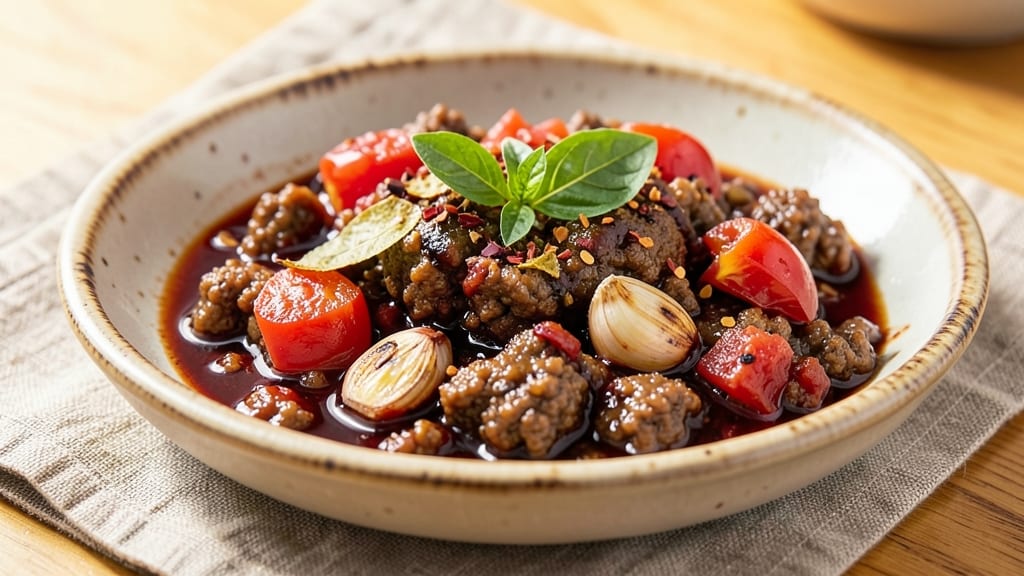
This arrabiata meat sauce recipe delivers the bold, fiery kick of traditional Italian cooking with tender meat bites that melt into a rich, spicy tomato base.
The secret lies in slow-simmered ground meat and garlic that develop deep, savory flavors while the chili peppers infuse just enough heat to linger on the tongue. I've perfected this version to balance authentic technique with modern convenience—no need for hours of simmering, but still packed with restaurant-quality depth.
The foundation starts with quality ground meat (beef or pork works equally well) browned until deeply flavorful, then combined with canned tomatoes, garlic, and chili flakes. A splash of red wine cuts through the heat while adding brightness, and fresh basil at the end brings that signature Italian freshness.
The sauce thickens naturally as it simmers, creating a perfect consistency that clings beautifully to pasta or crusty bread.
What sets this apart is the tender meat—small, even bites that cook through completely without turning mushy. The chili heat builds gradually, giving you control over spice levels while maintaining that essential arrabiata tang. This isn't just a sauce; it's a flavor experience that transforms simple meals into something memorable.
Whether you're serving it over spaghetti, drizzling on grilled chicken, or using it as a pizza topping, this sauce delivers tender meat and complex flavors that will have everyone asking for seconds. The best part? It tastes even better the next day as the flavors meld further. Let's get cooking!
Ingredients for arrabiata meat sauce
Nine simple ingredients for a sauce that packs restaurant-quality heat and tenderness.
| Ingredient | Amount | Notes |
|---|---|---|
| Ground Beef 🥩 | 1 ½ lb | 80% lean, finely chopped |
| Garlic Cloves 🧄 | 6 cloves | Fresh, minced finely |
| Canned San Marzano Tomatoes 🍅 | 28 oz | Crushed, no salt added |
| Dried Chili Flakes 🌶️ | 1 tbsp | Adjust for heat preference |
| Red Wine 🍷 | ½ cup | Bold, dry variety |
| Fresh Basil Leaves 🌿 | ¼ cup | Chopped, packed |
| Olive Oil 🫒 | 2 tbsp | Extra-virgin, for browning |
| Salt 🧂 | 1 tsp | Kosher or sea salt |
| Black Pepper 🌶️ | ½ tsp | Freshly ground |
| Tomato Paste 🍅 | 2 tbsp | Smooth, for depth |
The ground beef is where the magic starts—80% lean gives you the best balance of flavor and tenderness. Look for packages labeled 'finely chopped' at Costco or Kroger for even cooking. If you're using pork instead, Italian sausage works too—just remove the casing first. The garlic should be fresh, not powdered, and minced finely for that authentic Italian texture. I always grab a whole head and crush it with the flat side of my knife for even pieces. For the tomatoes, San Marzano is the gold standard, but any good-quality crushed tomatoes will work.
No red wine? Beef broth with a splash of balsamic mimics the acidity perfectly. Fresh basil is ideal, but dried oregano at half the amount gets you close in a pinch. The chili flakes can be adjusted—start with 1 tbsp if you're sensitive to heat, or double it if you want real kick. For tomato paste, those little squeeze tubes from Trader Joe's are perfect—no waste and they keep forever. If you're short on time, pre-minced garlic works, but fresh is always better. Want more depth? Add a pinch of sugar to balance the acidity.
This sauce tastes even better the next day as the flavors meld. Store in an airtight container in the fridge for up to 5 days, or freeze portions for 3 months. I like to portion it into 1-cup servings for easy reheating—just add a splash of water or broth to loosen it up. The basil wilts fast, so add it last. If you're making a big batch, double the garlic and chili flakes—they're the flavor anchors here.
Why You'll Love This Recipe
- Same sauce, endless uses: toss it over pasta for a quick weeknight meal, or serve it in crusty bread bowls for a dinner party. My roommates still ask for it after I “accidentally” made too much—turns out, they were just waiting for permission.
- One-Pot Magic: I swear by this recipe when I’m too tired to scrub pots—just brown the beef, toss in the garlic and wine, let the tomatoes simmer. That’s it. The sauce thickens itself while you finish dinner.
- Spice That Stays: The dried chili flakes and San Marzano tomatoes pack a slow-building heat that lingers just enough to make you reach for another forkful. Honestly? I’ve never met a sauce that balances bright acidity and deep umami like this one does.
- Weeknight to Party: Same sauce, endless uses: toss it over pasta for a quick weeknight meal, or serve it in crusty bread bowls for a dinner party. My roommates still ask for it after I “accidentally” made too much—turns out, they were just waiting for permission.
Step-by-step instructions for arrabiata meat sauce
This sauce delivers bold, spicy heat with perfectly tender meat—here's how to nail it every time.
Brown the Ground Beef for Rich Flavor
Heat the 2 tablespoons olive oil in a large, deep skillet over medium-high heat until shimmering. Add the 1.5 pounds ground beef, breaking it up with a wooden spoon as it cooks. Let the meat brown undisturbed for 3-4 minutes—this creates those flavorful browned bits (fond) that form the sauce's base.
Once the beef is mostly browned, stir in the 2 tablespoons tomato paste and cook for another 1-2 minutes until it darkens slightly. This step deepens the sauce's umami flavor. If the beef releases too much liquid, drain all but 1 tablespoon from the pan—you want just enough fat to help build the sauce.
Sauté Garlic and Add Spice
Reduce heat to medium and add the 6 minced garlic cloves. Sauté for 30-45 seconds until fragrant but not browned—garlic burns quickly, and you want it to add sweetness, not bitterness. Immediately stir in the 1 tablespoon dried chili flakes and 1 teaspoon salt, letting them toast for 10 seconds to wake up their flavors.
Here's where the heat starts building. If you prefer milder heat, reduce the chili flakes to ½ tablespoon now. The sauce will still pack a punch, but with more balance. Keep the pan moving constantly to prevent burning—this is the moment that matters most for flavor development.
Deglaze with Red Wine
Pour in the ½ cup red wine and scrape up all those browned bits from the bottom of the pan with a wooden spoon. Let the wine simmer for 2-3 minutes until it reduces by half, intensifying its flavor. This deglazing step captures all the meaty goodness that would otherwise stick to your pan.
I always use a bold, dry red wine like Cabernet Sauvignon or Sangiovese—it stands up to the spice and adds depth. If you don't have red wine, substitute with ½ cup beef broth, but the sauce won't have the same complexity.
Simmer with Tomatoes and Seasonings
Add the 28 ounces crushed San Marzano tomatoes, ½ teaspoon black pepper, and bring everything to a gentle simmer. Reduce heat to low and let it cook uncovered for 30-40 minutes, stirring occasionally. The sauce should thicken slightly and develop a glossy sheen—this is when the flavors meld together beautifully.
After 20 minutes, taste and adjust seasoning. You might need a pinch more salt to balance the acidity of the tomatoes and the heat from the chili flakes. The sauce should coat the back of a spoon but still be loose enough to cling to pasta.
Finish with Fresh Basil and Rest
Remove the sauce from heat and stir in the ¼ cup chopped fresh basil leaves. Let it sit off the heat for 5 minutes—this resting period allows the flavors to settle and the basil to release its aroma. The sauce will thicken slightly as it cools, so don't worry if it looks a bit loose while still hot.
Serve immediately over your favorite pasta, or store leftovers in the fridge for up to 5 days. The flavors actually improve overnight as the spices mellow and the sauce deepens. For extra richness, stir in a splash of pasta water when reheating—it helps restore the perfect consistency.
Pro Tips For Making Arrabiata Meat Sauce
- Crush That Garlic: Don’t mince it—smash those cloves flat with the side of your knife first. The released oils caramelize faster and infuse the meat with deeper flavor, especially when you’re browning the beef. I used to waste time chopping tiny pieces, but this cuts prep time by half and makes the sauce sing.
- Deglaze Aggressively: After browning the beef, don’t just splash in the wine—scrape every last bit of fond from the pan with a wooden spoon. That browned crust is where the umami lives, and skipping it means a duller sauce. I learned this the hard way when my first batch tasted flat until I tasted the fond directly—game-changer.
- Simmer, Don’t Boil: Once the tomatoes and wine are added, keep the heat at a gentle simmer, not a rolling boil. Too much heat breaks down the San Marzano’s natural sweetness and makes the sauce taste thin. I used to rush it, but now I let it bubble softly for 20 minutes—it’s the difference between good and really good.
- Salt the Wine: Add a pinch of salt to the red wine before deglazing—just a quarter teaspoon. It balances the acidity and rounds out the flavor without overpowering. Sounds weird, but it works: my sauce now has a cleaner, more cohesive taste, especially when paired with the chili flakes. (Yes, even if you’re impatient like me.)
Dietary considerations for these flavors
Gluten-Free Adaptations
This sauce is naturally gluten-free since it only contains meat, tomatoes, wine, and herbs—but always double-check labels on canned tomatoes and tomato paste for hidden gluten. I use San Marzano tomatoes and Trader Joe's tomato paste, both of which are certified gluten-free.
The red wine adds depth without gluten, and fresh basil is always safe. For extra assurance, simmer the sauce in a dedicated gluten-free skillet or Dutch oven. 🌱
Dairy-Free Considerations
No dairy is involved in this recipe, making it perfect for lactose-intolerant eaters or vegan diets (if you omit the meat). The sauce relies on rich tomato flavor and meaty umami rather than cheese or cream.
For a vegan version, swap the ground beef for lentils or mushrooms and use vegetable broth instead of red wine. The chili flakes and garlic will still provide that signature arrabiata kick. ✨
Low-Carb Options
To make this sauce keto-friendly, reduce the crushed tomatoes to 14 ounces and add ½ cup tomato paste for thickness. The meat provides protein without carbs, and the wine adds acidity without sugar.
For extra richness, stir in 1 tablespoon butter or olive oil at the end. This version keeps the bold flavors while cutting carbs dramatically. 💪
Spice Adjustments
If you're sensitive to heat, reduce the chili flakes to ½ teaspoon and add 1 teaspoon sugar to balance the acidity. For extra heat lovers, increase to 2 tablespoons chili flakes and add 1 sliced fresh chili pepper (like jalapeño) when simmering.
Always taste the sauce before serving—you can adjust heat levels to your preference. 🌶️
Allergen-Friendly Swaps
For nut allergies, this recipe is already safe, but check your wine and broth for cross-contamination warnings. If you're avoiding garlic, use 2 teaspoons garlic powder (though fresh is preferred).
For onion-free versions, omit any onion powder and use extra tomato paste for depth. The sauce remains flavorful while accommodating dietary restrictions. 💛
Nutrition facts
Frequently asked questions
Can I use pork instead of beef for this arrabiata sauce?
Ground pork works beautifully and adds a slightly sweeter, richer flavor. For best results, use Italian sausage (removed from casing) or a mix of beef and pork. Pork browns faster, so watch it closely to avoid overcooking. The sauce will still have that signature meaty depth with a hint of pork's natural sweetness.
How do I make this sauce less spicy?
Start by reducing the chili flakes to ½ teaspoon instead of 1 tablespoon. For extra mildness, add 1 teaspoon sugar or ½ teaspoon honey to balance the acidity. If the sauce is already made, stir in 1 tablespoon tomato paste or a splash of heavy cream to mellow the heat. The key is balancing the chili's intensity with sweetness or richness.
Can I make this sauce in a slow cooker?
Yes! Brown the meat and garlic as directed, then transfer everything to a slow cooker. Add the tomatoes, wine, and seasonings, then cook on low for 4-5 hours or high for 2-3 hours. The slow cooking enhances the flavors even more, making it perfect for meal prep. Stir occasionally and add fresh basil at the very end to preserve its aroma.
What's the best way to store and reheat leftovers?
Store in an airtight container in the fridge for up to 5 days or freeze for 3 months. To reheat, warm over low heat on the stovetop, stirring occasionally. Add a splash of water or broth if it thickens too much. For extra richness, stir in 1 tablespoon butter or olive oil when reheating. The sauce actually tastes better the next day as flavors meld!
Can I make this sauce without wine?
Certainly! Substitute the red wine with ½ cup beef broth or a mix of ¼ cup broth + ¼ cup water. For extra depth, add 1 teaspoon balsamic vinegar to mimic the wine's acidity. The sauce will still be flavorful, though the wine adds complexity that's hard to replicate.