
Sauces & Condiments
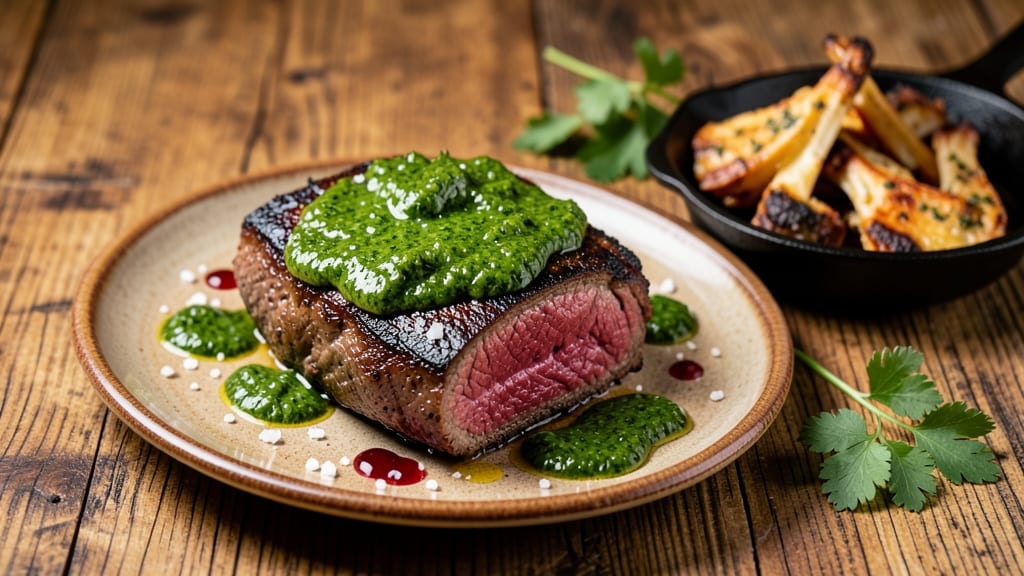
This Argentinian steak with chimichurri sauce recipe delivers the bold flavors and perfect textures that make it a global favorite. The secret lies in a simple yet transformative herb sauce that cuts through the richness of perfectly seared steak—no heavy creams or complicated techniques required.
I've perfected this method over countless grilling sessions, ensuring every bite achieves that ideal medium-rare finish with a caramelized crust.
The chimichurri sauce transforms ordinary steak into something extraordinary, with its vibrant green color and bright, herby notes that balance the meat's richness. What makes this recipe special is the combination of high-heat searing for that coveted crust and proper resting time to maintain juiciness.
The sauce comes together in minutes with just a handful of fresh herbs, garlic, and olive oil—no cooking required.
By the time you're done, you'll have perfectly sliced steak with that signature pink center and a sauce that clings beautifully to each piece. The chimichurri's acidity and fresh herbs create a perfect contrast to the steak's richness, while the texture remains tender and succulent.
This is the kind of meal that feels both restaurant-quality and deeply satisfying at home.
Serve with grilled asparagus, crusty bread, or a simple arugula salad to complete the Argentinian experience. The sauce works equally well on flank steak, skirt steak, or ribeye, making this recipe versatile for any occasion. Let's get started on creating this classic dish.
Ingredients for argentinian steak with chimichurri sauce
Fresh herbs and premium cuts transform simple ingredients into Argentinian restaurant-quality steak with vibrant chimichurri.
| Ingredient | Amount | Notes |
|---|---|---|
| Ribeye Steak 🥩 | 1 ½ lb | Center-cut, 1-inch thick slices |
| Fresh Flat-Leaf Parsley 🌿 | 1 cup | Stems removed, loosely packed |
| Fresh Cilantro 🌿 | ½ cup | Stems removed, loosely packed |
| Fresh Oregano 🌿 | ¼ cup | Loosely packed, stems removed |
| Garlic Cloves 🧄 | 8 cloves | Unpeeled, firm and fresh |
| Red Wine Vinegar 🍷 | ⅓ cup | Dry, not balsamic |
| Extra-Virgin Olive Oil 🫒 | ¾ cup | Fruity, high-quality |
| Kosher Salt 🧂 | 1 ½ tsp | Diamond Crystal preferred |
| Ground Black Pepper 🌶️ | 1 tsp | Freshly ground for best flavor |
| Red Chili Flakes 🌶️ | ½ tsp | Adjust for heat preference |
| Flour 🌾 | 1 tbsp | All-purpose, for dredging |
| Lemon Juice 🍋 | 1 tbsp | Freshly squeezed |
The ribeye is non-negotiable for this dish—center-cut, 1-inch thick slices deliver the perfect marbling and tenderness. Whole Foods or local butcher shops carry the best quality, but any reputable grocery store's premium section will have suitable options. Look for bright red color and visible fat marbling, which ensures juiciness. If you're using flank or skirt steak instead, trim excess fat for even cooking. Fresh herbs are the heart of chimichurri—grab the brightest parsley and cilantro you can find, ideally from a farmer's market where they're harvested daily. Whole Foods or Trader Joe's bulk sections often have excellent quality at reasonable prices. Avoid wilted or yellowing herbs, as they'll compromise the sauce's vibrant color and fresh flavor.
No fresh oregano? Dried oregano at half the amount works in a pinch, though it lacks the bright, slightly bitter note of fresh. Substituting red wine vinegar? White wine vinegar or apple cider vinegar both work, but the flavor profile will shift slightly. For the olive oil, avoid the cheap stuff—this is where you taste the difference. California olive oil brands like Corto or Lucini elevate the dish. If you're short on time, pre-minced garlic saves effort, though freshly minced garlic adds depth. The flour for dredging can be swapped for cornstarch for a lighter crust**, but traditional flour works perfectly fine. Always taste your chimichurri before serving—adjust the salt, vinegar, or herbs to balance flavors.
Steaks should rest at room temperature for 30-45 minutes before cooking for even doneness. Chimichurri keeps best in an airtight container in the fridge for 3-4 days**, though it's best used within 24 hours for peak freshness. For longer storage, freeze the sauce in ice cube trays—thaw and whisk to restore consistency. The steaks reheat poorly, so plan to serve immediately after cooking. If you're making this ahead, prep the chimichurri and marinate the steaks the night before**, then cook fresh the next day. The flavors develop beautifully overnight, enhancing the overall experience.
Why You'll Love This Recipe
- Here’s the truth: the chimichurri stays fresh for days, and the steak reheats like a dream (low and slow, wrapped in foil). I’ve turned this into a meal prep win—sliced steak and extra sauce in jars means zero stress for busy nights.
- No-Fuss Prep: I swear by this recipe because it’s that simple: sear the steak, pulse the herbs, mix. No fancy techniques—just a knife, a food processor, and 15 minutes. The chimichurri comes together while the steak rests, so you’re basically done before the timer goes off.
- Herb Bomb Flavor: That bright, tangy punch of parsley, cilantro, and oregano with raw garlic? It’s like a flavor explosion in your mouth. The sauce cuts through the richness of the ribeye, leaving you wanting to lick the plate clean—no exaggeration.
- Weeknight or Weekend Star: Throw it together for a lazy Tuesday after work or impress guests on Saturday. The same steak and chimichurri work for a quick family dinner or a fancy-ish date night. Just adjust the steak thickness, and you’re golden.
Step-by-step instructions for Argentinian steak with chimichurri sauce
Master this iconic pairing where bold flavors and perfect technique create a restaurant-worthy experience.
Prepare the Chimichurri Sauce
In a food processor, combine the 1 cup fresh flat-leaf parsley, 0.5 cup fresh cilantro, 0.25 cup fresh oregano, 8 cloves garlic cloves (peeled), 0.5 tsp red chili flakes, 1.5 tsp kosher salt, and 1 tbsp lemon juice. Pulse until finely chopped but not pureed—you want visible texture. With the processor running, slowly drizzle in the 0.75 cup extra-virgin olive oil until fully incorporated. Transfer to a bowl and stir in 0.33 cup red wine vinegar. Let the sauce rest for 15 minutes to allow flavors to meld.
This resting period is crucial—it lets the herbs release their oils and the acidity mellow slightly. The sauce should have a vibrant green color with visible herb flecks. If it seems too thick, add 1-2 teaspoons of water to reach a pourable consistency. Taste and adjust seasoning if needed, remembering this will pair with rich steak.
Season and Sear the Ribeye
Pat the 1.5 lb ribeye steak completely dry with paper towels—this ensures maximum crispiness. Season both sides generously with 1 tsp ground black pepper and 1.5 tsp kosher salt, pressing the seasoning into the meat. Let the steak sit at room temperature for 30 minutes while you prepare the grill or skillet.
Heat a heavy cast-iron skillet over high heat until smoking hot. Add the steak and sear for 3-4 minutes per side for medium-rare (adjust time for preferred doneness). Press down gently on the steak during the first minute to prevent curling. You'll know it's ready when a crust forms and the internal temperature reaches 125°F for medium-rare. Transfer to a cutting board and let rest for 10 minutes—this critical step ensures juicy results.
Create the Perfect Crust with Flour
While the steak rests, lightly dust each slice with 1 tbsp flour (about ½ tsp per slice). This creates a delicate crust that complements the chimichurri. The flour should coat the surface evenly but not form a thick layer—just enough to catch the sauce.
This step might seem unnecessary, but it transforms the steak by adding texture contrast. The flour absorbs some of the chimichurri's moisture, creating a subtle crunch that balances the sauce's brightness. Keep the steak covered loosely with foil during this time to maintain warmth.
Assemble and Serve
Slice the ribeye against the grain into ¼-inch thick pieces. Arrange on a warm platter and generously drizzle with the chimichurri sauce, allowing it to pool around the steak. The vibrant green sauce should contrast beautifully with the deep red meat.
For presentation, fan the steak slices slightly and spoon additional chimichurri over the top. Serve immediately with crusty bread or roasted potatoes to soak up any remaining sauce. The perfect bite should deliver tender steak with a crisp crust, followed by the bright, herby chimichurri that cuts through the richness.
Pro Tips For Making Argentinian Steak With Chimichurri Sauce
- SEAR THEN BASTE: The ribeye’s crust isn’t just about flavor—it’s about texture. Hit it with a screaming-hot cast-iron pan (no oil needed if your steak is dry enough), then immediately pull it out and baste with rendered fat while it rests. This locks in juices and builds a second layer of crust—like a proper Argentine parrilla.
- CHOP HERBS COARSE: No food processor. No blender. Roughly chop parsley, cilantro, and oregano by hand—big chunks, not confetti. The chimichurri’s magic comes from those herb bits softening just enough to cling to the steak without turning into a paste. (Yes, it’ll look rustic. That’s the point.)
- SALT THE STEAK TWICE: First, salt it generously an hour before cooking—this seasoning penetrates deep. Then, right before searing, hit it with another layer of flaky salt (like Maldon) while the pan heats. The first salt tenderizes; the second ensures that crust sticks. (I learned this after a dry, bland first attempt.)
- USE COLD GARLIC: Peel and smash the garlic cloves with the flat side of your knife before adding them to the chimichurri. Cold, uncooked garlic has a sharper bite and won’t turn bitter or mushy when mixed with the oil. (Trust me, your chimichurri will taste like it came from a Buenos Aires parrilla, not a sad jar of pre-made sauce.)
Flavor customization for argentinian steak with chimichurri sauce
Classic Chimichurri
The traditional recipe calls for 1 cup parsley, ½ cup cilantro, ¼ cup oregano, 8 garlic cloves, ⅓ cup red wine vinegar, and ¾ cup olive oil.
This balance delivers that signature bright, herby flavor with just the right acidity. I always use Whole Foods fresh herbs for the brightest taste and Corto olive oil for its fruity depth. 🌿
For a more robust version, add ½ tsp red chili flakes and 1 tbsp lemon juice to enhance the complexity. This version works perfectly with ribeye's richness, cutting through the fat beautifully. The key is letting the sauce rest for 15 minutes before serving—this allows flavors to meld completely.
Smoky Chimichurri
Transform your chimichurri into a smoky masterpiece by adding 1 tbsp smoked paprika and ½ tsp liquid smoke to the base recipe. This variation pairs wonderfully with grilled steaks, adding a subtle smokiness that complements the charred crust. I like using Penzeys smoked paprika for its consistent quality. 💨
For an extra layer of depth, char 2 garlic cloves directly over a gas flame or in a dry skillet until blackened, then peel and add to the food processor.
This adds a smoky, slightly bitter note that enhances the overall complexity. The smoky version works exceptionally well with flank steak or skirt steak.
Creamy Chimichurri
Add ¼ cup sour cream or Greek yogurt to the base chimichurri recipe for a creamy variation that adds richness without overpowering the herbs. This version is perfect for those who prefer a thicker sauce that clings beautifully to each steak slice.
I find Fage Greek yogurt works best for its tangy flavor. 🥛
For a lighter option, use ¼ cup crème fraîche instead. The creaminess balances the acidity of the vinegar while maintaining the fresh herb profile. This variation is ideal for serving with thicker cuts like ribeye or tomahawk steak, where extra sauce is welcome.
Spicy Chimichurri
For heat lovers, increase the chili flakes to 1-2 tsp and add 1 chopped serrano or jalapeño pepper to the base recipe. This fiery version adds a kick that pairs perfectly with bold steaks. I recommend Penzeys habanero chili powder for an extra-hot option. 🌶️
Balance the heat by adding 1 extra tbsp lemon juice to brighten the sauce. This variation works exceptionally well with flank steak or skirt steak, where the heat can stand up to the meat's robust flavor. Always taste as you go—adjust the heat level to your preference.
Herb Variations
Swap out cilantro for ½ cup fresh dill or mint leaves for a different herb profile. Dill adds a fresh, slightly sweet note, while mint brings a bright, citrusy flavor. These variations work beautifully with lamb or chicken, but they also pair well with steak for a unique twist. 🌱
For a Mediterranean twist, replace oregano with ½ cup fresh thyme and add 1 tsp dried rosemary. This earthy variation complements steak beautifully and adds a sophisticated depth to the chimichurri. The thyme and rosemary work particularly well with ribeye or New York strip steak.
Nutrition facts
Frequently asked questions
Can I use flank steak instead of ribeye for this recipe?
Flank steak works beautifully with chimichurri. Since it's leaner, slice it thinly against the grain (about ¼-inch thick) and grill for 3-4 minutes per side for medium-rare. The flour crust step becomes even more important to add texture contrast. Marinate the flank steak for 1-2 hours before cooking to tenderize it further.
How do I know when my steak is perfectly medium-rare?
Use a meat thermometer for precision: 125°F for medium-rare. For visual cues, look for a deep red center with a slightly firm touch. Press gently - it should feel like pressing your thumb against your palm (not too soft, not too firm). Remember, the steak will rise 5°F while resting, so pull it out slightly early if needed.
Can I make chimichurri ahead of time?
Yes, but with a few caveats. The sauce keeps in an airtight container in the fridge for 3-4 days, though it's best used within 24 hours for peak freshness. For longer storage, freeze it in ice cube trays, then transfer to a bag. Thaw and whisk to restore consistency. The flavors actually develop better over time, but the herbs may lose some vibrancy.
What's the best way to reheat leftover chimichurri?
Gently reheat in a saucepan over low heat for 1-2 minutes—just enough to warm through. Never boil it, as this can cook the herbs and make them bitter. For best results, stir in 1 tsp fresh lemon juice after reheating to revive the brightness. If the sauce thickens, thin it with 1 tsp water or olive oil as needed.
Why does my chimichurri turn brown or lose color?
This happens when the herbs oxidize or the vinegar reacts with metals (like stainless steel). Use a glass or ceramic bowl for storage, and add 1 tsp lemon juice to maintain vibrancy. The color change doesn't affect flavor, but for that classic bright green, keep the sauce covered and refrigerated. If it browns, stir in ½ tsp baking soda to neutralize acidity.