
Sauces & Condiments
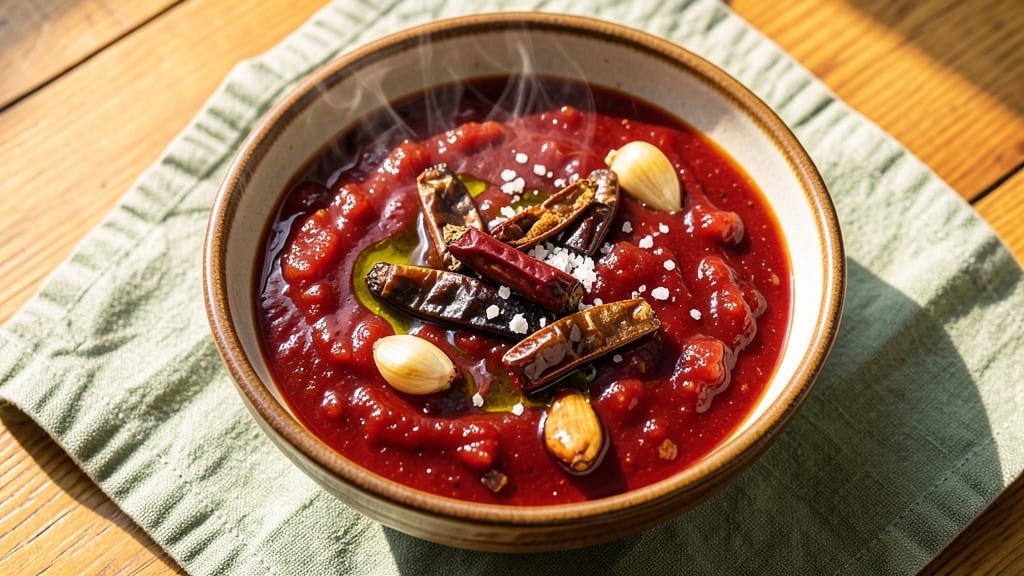
This arbol chili sauce recipe transforms simple ingredients into a vibrant, smoky condiment that bridges Mexican boldness with fresh tomato brightness.
The secret lies in toasting arbol chiles until they release their deep, earthy aroma—then blending them with garlic, vinegar, and tomatoes for a sauce that's equal parts heat and complexity. I developed this version after years of testing, balancing smoky intensity with just enough acidity to make every bite sing.
The process is straightforward: dry-toast the chiles until fragrant, then simmer them with garlic, tomatoes, and vinegar until the flavors meld into a thick, velvety paste. No blender? No problem—this sauce can be made by hand with a mortar and pestle for that authentic texture.
The result is a condiment that elevates everything from tacos to grilled meats, with a shelf life of up to 2 weeks in the fridge.
What sets this sauce apart is its versatility—use it as a dip for chips, a marinade for proteins, or a finishing touch for soups and stews. The arbol chiles provide a smoky depth that lingers, while the tomatoes and vinegar keep the sauce bright and balanced.
Unlike store-bought versions, this one delivers layers of flavor that come from fresh, carefully toasted ingredients.
For best results, let the sauce sit overnight before using—this allows the flavors to fully develop. Store it in an airtight container, and you’ll have a pantry staple that turns ordinary meals into extraordinary ones. Ready to make it? Let’s get started.
Ingredients for arbol chili sauce
Eight essential ingredients for a sauce that bridges smoky heat with bright tomato freshness.
| Ingredient | Amount | Notes |
|---|---|---|
| Arbol Chiles 🌶️ | ¼ oz | Dried, stems and seeds removed |
| Ripe Roma Tomatoes 🍅 | 1 ½ cups | Chopped, skin removed |
| White Vinegar 💧 | ½ cup | White or apple cider |
| Garlic Cloves 🧄 | 4 cloves | Peeled, lightly toasted |
| Extra-Virgin Olive Oil 🫒 | ¼ cup | For richness and balance |
| Salt 🧂 | 1 tsp | Kosher or sea salt |
| Ground Cumin 🌿 | ½ tsp | Toasted for depth |
| Black Pepper 🌶️ | ¼ tsp | Freshly ground |
| Cumin Seeds 🌾 | ½ tsp | Optional for extra aroma |
| Lime Juice 🍋 | 1 tbsp | Freshly squeezed |
The arbol chiles are the heart of this sauce—look for bright red, slightly wrinkled pods at Latin markets or specialty stores like Gourmet Garage. If you can't find them, guajillo chiles work in a pinch, but they'll give a slightly sweeter, less smoky result. Toasting them in a dry skillet until fragrant (about 30 seconds per side) unlocks their deep, earthy aroma. MexGrocer online carries them if local stores are out, and they ship quickly. For best flavor, use organic chiles if possible—they tend to be fresher and more aromatic. The Roma tomatoes should be ripe but firm; Heirloom varieties add extra sweetness, but regular Romas work perfectly fine.
No arbol chiles? Ancho chiles at half the amount will give a milder, fruitier heat, while pasilla chiles add raisin-like sweetness. Vinegar substitutes? Lemon juice or apple cider vinegar both work, though white vinegar's sharpness balances the smokiness best. The garlic can be roasted for a sweeter flavor—just wrap whole cloves in foil and warm in the oven for 10 minutes. For extra depth, toast the cumin seeds in the same skillet as the chiles before grinding. If you're short on time, pre-toasted ground cumin works, but fresh toasted always wins. Lime juice can be swapped for lemon juice, though lime's brightness cuts through the smokiness better.
This sauce tastes even better the next day as flavors meld. Store in an airtight container in the fridge for up to 2 weeks, or freeze for 6 months in ice cube trays for single-serving portions. The texture thickens as it sits—add a splash of water if it becomes too stiff. For restaurant-quality results, let it sit overnight before using. The sauce keeps well in the fridge, so make a double batch—it disappears fast on tacos, grilled meats, and even as a dip for chips. If you find yourself with extra, it freezes beautifully for future use.
Why You'll Love This Recipe
- No Chopping Needed: I swear by this—just toss whole tomatoes, garlic, and charred arbol chiles into a blender. No peeling, no dicing, no fuss. The vinegar and olive oil do all the work while you sip your coffee.
- Smoky Heat Magic: That moment when the arbol chiles hit your tongue—first a bright, grassy zing, then a slow, smoky warmth. The Roma tomatoes soften into a velvety base, and the garlic? It’s the cherry on top, like a secret handshake for your taste buds.
- Game for Any Meal: Drizzle it over grilled chicken for dinner, toss it into scrambled eggs for breakfast, or let it sit in a jar for when you’re craving tacos at midnight. It’s my pantry’s Swiss Army knife—always ready, always useful.
- Lasts All Week: Make a big batch on Sunday, and you’ll have sauce for everything until Thursday. The vinegar keeps it fresh, the olive oil preserves the flavor, and honestly? I’ve had this sit for nearly 10 days—still tasted like day one. Budget win, flavor win.
Step-by-step instructions for arbol chili sauce
Transform simple ingredients into a vibrant, smoky sauce with layers of heat and freshness.
Toast the Arbol Chiles and Cumin Seeds
Heat a dry skillet over medium heat and add the 0.25 oz arbol chiles and 0.5 tsp cumin seeds. Toast for 1-2 minutes until the chiles darken slightly and release their aroma—you'll smell a deep, earthy, slightly smoky scent. This step unlocks their full flavor potential.
Watch closely to avoid burning; the chiles should just begin to darken at the edges. Remove from heat immediately and transfer to a bowl. Let them cool for 5 minutes before handling—they'll be very hot. Toasting intensifies their natural smokiness and reduces bitterness, creating the sauce's signature depth.
Blister the Garlic and Build the Base
In the same skillet (no need to clean it—the toasted spices add flavor), add 0.25 cup extra-virgin olive oil over medium heat. Add the 4 cloves garlic cloves and cook for 2-3 minutes until they're golden brown and fragrant, but not burned. This creates a rich, nutty foundation for the sauce.
Add the toasted chiles and 0.5 tsp ground cumin to the skillet. Stir for 30 seconds to combine with the garlic and oil. The mixture should smell complex—smoky from the chiles, nutty from the garlic, and warm from the cumin. This aromatic base will carry through the entire sauce.
Simmer the Tomatoes and Vinegar
Pour in the 1.5 cups chopped ripe roma tomatoes and 0.5 cup white vinegar. Bring to a gentle boil, then reduce heat to medium-low and simmer uncovered for 10-12 minutes until the tomatoes break down and the mixture thickens slightly. The sauce should reduce by about one-third, intensifying its flavors.
Stir occasionally to prevent sticking, and taste after 8 minutes. You should notice the vinegar brightening the tomatoes while the chiles add subtle heat. The sauce should coat the back of a spoon but remain loose enough to pour. If it reduces too quickly, add 1-2 tablespoons water to maintain consistency.
Finish with Seasoning and Lime
Remove from heat and stir in the 1 tsp salt, 0.25 tsp black pepper, and 1 tbsp lime juice. The lime juice adds a bright, acidic finish that cuts through the smokiness and balances the heat. Taste and adjust seasoning—you may need a touch more salt or lime to achieve the perfect harmony of flavors.
Let the sauce rest for 10 minutes before serving. This allows the flavors to meld completely. The sauce should have a vibrant red-orange color with visible chile flecks, a smoky aroma, and a balance of heat, tang, and freshness. Serve warm over grilled meats, tacos, or as a dip with tortilla chips.
Pro Tips For Making Arbol Chili Sauce
- CHAR THE GARLIC LOW: I used to burn this step every time—arbol chiles are already aggressive, so don’t let the garlic turn bitter. Sauté it in the olive oil over medium-low heat until just fragrant (about 2 minutes), then add the chiles. The sauce will have enough heat without that acrid aftertaste.
- DESEED THE CHILES FIRST: Arbols pack a punch, and seeds concentrate the capsaicin. Split them open, scrape out the seeds and veins with a spoon, then chop—this keeps the sauce bright and balanced, not overwhelming. (Yes, even if the recipe doesn’t mention it.)
- ROAST THE TOMATOES: Skip raw tomatoes—they’ll make the sauce watery and dull. Halve the Romas, brush with olive oil, and roast at 400°F (200°C) for 15 minutes until blistered. The caramelized flavor cuts through the vinegar’s sharpness and deepens the sauce’s complexity.
- STRAIN FOR SMOOTHNESS: Blend the sauce, then strain it through a fine-mesh sieve to remove skins and seeds. This isn’t just about texture—it also filters out excess bitterness from the arbols and garlic. (Save the pulp for salsa if you’re feeling fancy.)
Regional styles of these flavors
Mexican Street Style
In Mexico City, this sauce is a staple for tacos al pastor and grilled birria, where it’s served as a tangy, smoky accompaniment.
Vendors often use charred arbol chiles for extra depth—simply hold them over an open flame or grill for 10-15 seconds per side before toasting in the skillet. The result? A sauce with a campfire-like smokiness that’s impossible to replicate on the stovetop alone. 🌶️
For an authentic touch, add 1 tsp toasted sesame seeds at the end—common in street stalls to add nutty crunch. Serve with corn tortillas and pickled red onions for the full experience. The acidity from the vinegar mimics the tangy salsa verde often paired with these dishes.
Yucatán Twist
The Yucatán region transforms this sauce into a salsa habanera hybrid by adding 1 tbsp recado rojo (a spicy tomato-chile paste) and ½ tsp ground achiote for a deep, earthy color.
The arbol chiles here are often blended with a pinch of annatto seeds for a vibrant hue. Use orange juice instead of lime to reflect regional flavors.
For a true Yucatán touch, finish with fresh cilantro and toasted pumpkin seeds. This version pairs beautifully with cochinita pibil (slow-roasted pork) or panuchos (fried tortilla pockets). The sauce’s heat is balanced by the citrus, making it perfect for hot climates.
California Fusion
West Coast chefs elevate this sauce by blending it with avocado purée (about ½ cup) for a creamy, smoky dip. Add 1 tsp smoked paprika and a splash of chipotle in adobo for extra depth.
This version works as a taco sauce or a dip for quesadillas with caramelized onions.
For a vegetarian twist, serve with roasted sweet potatoes and black beans. The California adaptation keeps the arbol chile’s heat but softens it with the avocado’s richness. It’s a crowd-pleaser at food trucks and farm-to-table restaurants alike. 🌿
Puerto Rican Mojo
In Puerto Rico, this sauce becomes a mojo arbol by adding 1 tbsp sofrito (a mix of bell peppers, onions, and cilantro) and 1 tsp oregano. The vinegar is often replaced with white wine vinegar for a slightly sweeter tang.
This version is thinner, perfect for drizzling over pernil (roast pork shoulder) or mofongo.
The arbol chiles here are sometimes lightly charred in a metal bowl over a gas flame for a smoky aroma. Finish with fresh orange slices to cut through the heat. This adaptation highlights the sauce’s versatility across Caribbean and Latin American cuisines.
Nutrition facts
Frequently asked questions
Can I substitute arbol chiles with other dried peppers?
Yes! For a similar heat level, use ancho chiles (½ the amount) or guajillo chiles (toasted longer for smokiness). For extra spice, try chiles de árbol (same family) or pasilla chiles (milder, fruitier). Always toast them first to unlock their full flavor.
How do I adjust the heat level in this sauce?
For milder heat, reduce the arbol chiles to ¼ oz or remove seeds before toasting. For extra spice, add ½ tsp cayenne pepper or 1-2 extra chiles. Taste as you go—vinegar and lime juice help balance the heat naturally.
Can I make this sauce without a blender?
Simmer the tomatoes and vinegar until completely broken down (about 15 minutes instead of 10-12). Then, mash the mixture with a fork or use a mortar and pestle for a rustic texture. The sauce will be slightly thicker but still delicious.
How long will this sauce keep, and can I freeze it?
The sauce stays fresh in the fridge for up to 2 weeks in an airtight container. For longer storage, freeze in ice cube trays or small jars for 6 months. Thaw overnight in the fridge—never microwave to preserve texture. The flavors actually improve after 24 hours of resting!
What are the best ways to use this sauce beyond tacos?
Drizzle it over grilled meats, use as a marinade for chicken or shrimp, or mix into soups and stews. It also makes an amazing dip for chips, a topping for eggs, or a finishing sauce for roasted vegetables. The smoky depth pairs well with almost any protein!