
Sauces & Condiments
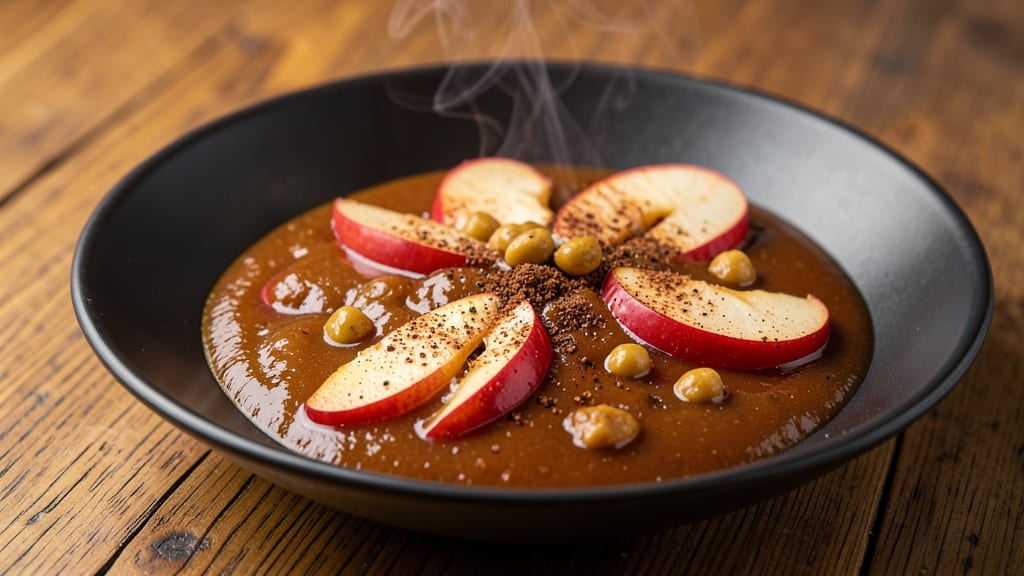
This apple brandy sauce recipe transforms simple ingredients into a velvety, spiced masterpiece that elevates roasts and desserts alike. The caramelized depth from slow reduction creates a sauce that's rich, aromatic, and impossible to resist—perfect for adding warmth to holiday meals or special occasions. I developed this version after years of testing, balancing sweetness and spice to achieve that signature brandy-forward flavor without overpowering the dish.
The secret lies in the reduction technique: simmering apple cider with brandy until it thickens into a glossy, syrupy consistency while developing complex caramel notes. Warm spices like cinnamon and cloves infuse the sauce with cozy autumnal flavors, while a touch of vanilla rounds out the profile.
What makes this sauce truly special is its versatility—it works equally well as a glaze for roasted meats, a drizzle over vanilla ice cream, or a finishing touch for apple tarts.
What you'll end up with is a sauce that's smooth yet textured, with a perfect balance of sweetness and warmth that lingers on the palate. The brandy adds depth that store-bought sauces can't match, while the spices ensure every spoonful feels like comfort in a bottle.
This recipe yields about 2 cups, enough to generously coat a roast or serve as a dessert accompaniment with room to spare.
Storage is simple: refrigerate for up to 2 weeks, where the flavors continue to meld and deepen. For longer storage, freeze in airtight containers for up to 3 months—the brandy content helps preserve the sauce beautifully.
Whether you're preparing for a holiday feast or craving a sophisticated dessert sauce, this apple brandy creation delivers restaurant-quality results with minimal effort.
Ingredients for apple brandy sauce
Nine ingredients elevate holiday roasts and desserts with restaurant-quality brandy-infused richness.
| Ingredient | Amount | Notes |
|---|---|---|
| Apple Cider 🍎 | 2 cups | Unfiltered for deeper flavor |
| Apple Brandy 🍷 | 1 cup | High-quality, 40% ABV minimum |
| Granulated Sugar 🍚 | ½ cup | Light brown preferred for caramel notes |
| Unsalted Butter 🧈 | 4 tbsp | Cold, cut into small cubes |
| Ground Cinnamon 🌿 | 1 tsp | Freshly ground for aromatic intensity |
| Ground Cloves 🌶️ | ½ tsp | Lightly toasted before grinding |
| Vanilla Extract 🍯 | 1 tsp | Pure Madagascar bourbon preferred |
| Orange Zest 🍊 | 1 tbsp | From organic orange, finely grated |
| Orange Juice 🍊 | ¼ cup | Freshly squeezed, no pulp |
| Heavy Cream 🥛 | ¼ cup | Full-fat for velvety texture |
The brandy is non-negotiable—Elijah Craig or Christian Brothers deliver that signature depth. Look for 40% ABV or higher to ensure proper reduction without overpowering. Apple cider should be unfiltered; Woodchuck brand from Vermont has the perfect balance of sweetness and tartness. For the spices, Penzeys Spices offers freshly ground cinnamon and cloves that outshine grocery store options. The vanilla extract matters too—Madagascar bourbon has a richer profile than imitation. If you can't find organic oranges, conventional works, but zest them immediately to preserve the oils.
No brandy? Substitute apple juice with 1 tbsp bourbon—it won't be identical, but close. Running low on heavy cream? Half-and-half with 1 tbsp cornstarch mimics the texture when reduced. The sugar can be swapped for maple syrup at a 1:1 ratio, though it may darken faster. For a non-alcoholic version, replace the brandy with extra apple cider plus 1 tsp apple cider vinegar to mimic acidity. The orange zest is critical—store-bought zest works in a pinch, but fresh is always superior. If you're making this ahead, reduce the sauce slightly more to account for rehydration during storage.
This sauce thickens as it cools, so stir in cold butter at the end to maintain gloss. Store in an airtight container for 2 weeks refrigerated—flavors deepen overnight. For freezing, use glass jars with 1-inch headspace to prevent cracking. Reheat gently on low heat, stirring occasionally. The sauce thickens upon reheating, so add 1-2 tbsp water or cider if needed. Portion into small jars for 3-month freezer life—perfect for holiday prep. The brandy content actually improves with time, making it ideal for making ahead.
Why You'll Love This Recipe
- One-Pot Magic: I swear by this recipe because it’s literally one pot, one spoon, and 15 minutes of simmering. No peeling apples, no straining—just dump the cider and brandy, stir in the sugar and butter, and let the cinnamon work its warmth. The only mess is the good kind (the kind that smells like a fall bakery).
- Warm Spice Bomb: That first sip of brandy hitting the simmering cider? Chef’s kiss. The sugar caramelizes just enough to coat your spoon, while the cinnamon lingers like a hug—dry, cozy, and impossible to resist. Honestly, I’ve drizzled it over vanilla ice cream just to taste it plain. (Don’t judge me.)
- Holiday Hacker: Between us, this sauce is my secret weapon for Thanksgiving leftovers. Drizzle it over roasted turkey, stir it into mashed potatoes, or even glaze a ham—it turns bland into wow without extra effort. And the best part? It’s ready when you are, so no last-minute stress.
- Budget Booster: Apple cider and brandy stretch farther than you’d think, and a little goes a long way. I’ve made this for a crowd of six for under $10, and it still feels fancy. Plus, the leftovers? Freeze them in ice cube trays for a quick flavor boost later—no waste, all win.
Step-by-step instructions for apple brandy sauce
Here's how to create a rich, caramelized sauce with deep spice notes perfect for roasted meats.
Caramelize Sugar and Spices
In a heavy-bottomed saucepan, combine the 0.5 cup granulated sugar and 4 tablespoons unsalted butter over medium-low heat. Let it melt completely, then increase heat to medium and cook without stirring until the sugar turns a deep amber color—about 8-10 minutes. This caramelization forms the sauce's rich base.
While the sugar caramelizes, toast the 1 teaspoon ground cinnamon and 0.5 teaspoon ground cloves in a dry skillet over low heat for 1 minute to enhance their aromatic qualities. Immediately add the toasted spices to the caramel mixture and stir for 30 seconds to distribute evenly. Watch closely—the caramel can burn quickly once it reaches this stage.
Deglaze with Apple Brandy
Carefully pour in the 1 cup apple brandy, stirring constantly to deglaze the pan and incorporate all the caramelized sugar. The mixture will bubble vigorously—reduce heat to medium-low and let it simmer for 3-4 minutes until the alcohol aroma dissipates completely. This step develops the sauce's signature depth and removes any raw alcohol sharpness.
Here's where it gets crucial: Don't rush this reduction. You'll know it's ready when the sauce thickens slightly and the brandy's aroma transforms into warm, spiced apple notes. If the sauce becomes too thick prematurely, add 1 tablespoon apple cider to loosen it gradually.
Build the Sauce Base
Add the 2 cups apple cider, 0.25 cup orange juice, and 1 tablespoon orange zest to the saucepan. Bring to a gentle simmer over medium heat, then reduce heat to low and let it cook uncovered for 10-12 minutes until the volume reduces by about one-third. The sauce should coat the back of a spoon and develop a syrupy consistency.
During this time, the orange zest will infuse its bright citrus notes while the apple cider deepens the sauce's fruity complexity. Stir occasionally to prevent sticking, and taste the sauce—it should balance sweetness with tartness and spice. If needed, adjust with additional sugar or a splash of orange juice to achieve the perfect equilibrium.
Finish with Cream and Vanilla
Temper the sauce by whisking in the 0.25 cup heavy cream in a slow stream while stirring constantly over low heat. This prevents the cream from curdling from the heat. Add the 1 teaspoon vanilla extract and simmer gently for 2-3 minutes until the sauce reaches a velvety texture.
The final step is critical: The sauce should be thick enough to coat a spoon but still pour gracefully. If it's too thick, thin with 1 tablespoon apple cider; if too thin, simmer uncovered for another 2-3 minutes. Remove from heat and let it rest for 5 minutes—this allows flavors to meld completely and the sauce to reach its optimal consistency.
Pro Tips For Making Apple Brandy Sauce
- Reduce Slowly: Simmer the sauce on medium-low heat—rushing it turns the apple cider into glue instead of a glossy sauce. I learned this the hard way when my first batch separated like oil and vinegar, no matter how much I stirred.
- Toast the Cinnamon: Bloom the ground cinnamon in the butter for 30 seconds before adding liquid—it deepens the aroma and cuts the bitterness of cheap brands. Sounds weird, but it works: the sauce tastes richer without extra sugar.
- Deglaze First: After caramelizing the sugar with butter, immediately add a splash of apple cider to scrape up the browned bits. Skipping this step means flavor hiding in your pot instead of coating your sauce.
- Strain for Smoothness: If you’re serving this over delicate dishes (like ice cream or pancakes), strain out the sediment after simmering. A fine-mesh sieve saves you from grittiness—trust me, you’ll notice the difference.
Essential equipment for this dish
Heavy-Bottomed Saucepan
This is my non-negotiable tool for making apple brandy sauce. A 3-quart stainless steel saucepan like the All-Clad Stainless or Le Creuset Dutch oven distributes heat evenly and prevents scorching.
The deep sides give you room to reduce without overflowing. I've tried nonstick pans, but they can't handle the high heat needed for proper caramelization without releasing toxic fumes. 🔥
Fine-Mesh Strainer
For removing any sediment or zest particles before serving, I recommend a 3-inch fine-mesh strainer from OXO. The tight weave catches even the finest bits while letting the smooth sauce pass through.
This is especially important when straining the finished sauce over roasted meats or delicate desserts. I use mine after the final reduction step to ensure a silky texture.
Whisk for Tempering
The Balloon Whisk from Cuisinart is my go-to for tempering the heavy cream into the hot sauce. Its flexible wires incorporate the cream smoothly without creating lumps. I whisk in a slow, steady motion while maintaining low heat to prevent curdling.
A regular spoon just won't give you the same level of control or even distribution. 💡
Measuring Spoons
Precision matters with spices and extracts. I use stainless steel measuring spoons from West Bend because they're durable and accurate. For the 0.5 teaspoon cloves and 1 teaspoon cinnamon, these give me exact measurements that make a noticeable difference in flavor balance.
The magnetic back holds them in place while cooking, so I never lose track of them.
Glass Jars for Storage
For storing your finished sauce, I prefer 16-ounce glass mason jars with airtight lids from Ball. Glass preserves flavors better than plastic and won't absorb odors from your refrigerator. The wide mouth makes it easy to pour and skim off any fat that rises to the top during storage.
I always leave 1-inch headspace to prevent cracking when freezing. ❄️
Digital Kitchen Scale
While this recipe uses volume measurements, I highly recommend a digital kitchen scale like the OXO Good Grips for precise ingredient control. It's particularly useful when adjusting sugar levels or making substitutions.
For example, if you're using maple syrup instead of sugar, the scale ensures you maintain the proper ratio for consistent results. The tare function makes it easy to measure small quantities like spices directly into your saucepan.
Nutrition facts
Frequently asked questions
Can I make this apple brandy sauce without alcohol?
Yes! Replace the 1 cup apple brandy with 1 cup apple cider plus 1 tablespoon apple cider vinegar to mimic the acidity and depth. The sauce will still develop rich caramel notes, though the brandy's signature warmth will be subtler. For extra depth, add 1 teaspoon bourbon or brandy extract if available.
How do I prevent the sauce from curdling when adding cream?
Always temper the cream by whisking it in slowly over low heat while stirring constantly. Never pour cold cream into hot sauce. If you see lumps forming, immediately remove from heat and whisk vigorously. For extra insurance, chill the sauce slightly before adding cream or use half-and-half with 1 tablespoon cornstarch for better stability.
What's the best way to reheat leftover sauce?
Gently reheat over low heat in a saucepan, stirring frequently to prevent scorching. The sauce thickens upon reheating, so add 1-2 tablespoons apple cider if needed. For microwave reheating, use 20-second intervals on low power, stirring between each. Never boil the sauce—just warm until it reaches 165°F for safety.
Can I use this sauce on non-meat dishes?
This sauce pairs beautifully with roasted vegetables like Brussels sprouts or sweet potatoes, and makes an elegant drizzle for vanilla ice cream or pound cake. For desserts, reduce the sauce slightly longer to create a thicker glaze. The warm spices complement both savory and sweet applications wonderfully.
Why did my sauce turn grainy?
Graininess usually occurs when sugar crystallizes from rapid cooling or insufficient reduction. To fix it, gently reheat the sauce while stirring until smooth, then strain through a fine-mesh sieve if needed. For prevention, ensure proper reduction (volume should reduce by one-third) and cool the sauce gradually. Adding a pinch of cream of tartar can also help prevent crystallization.