
Sauces & Condiments
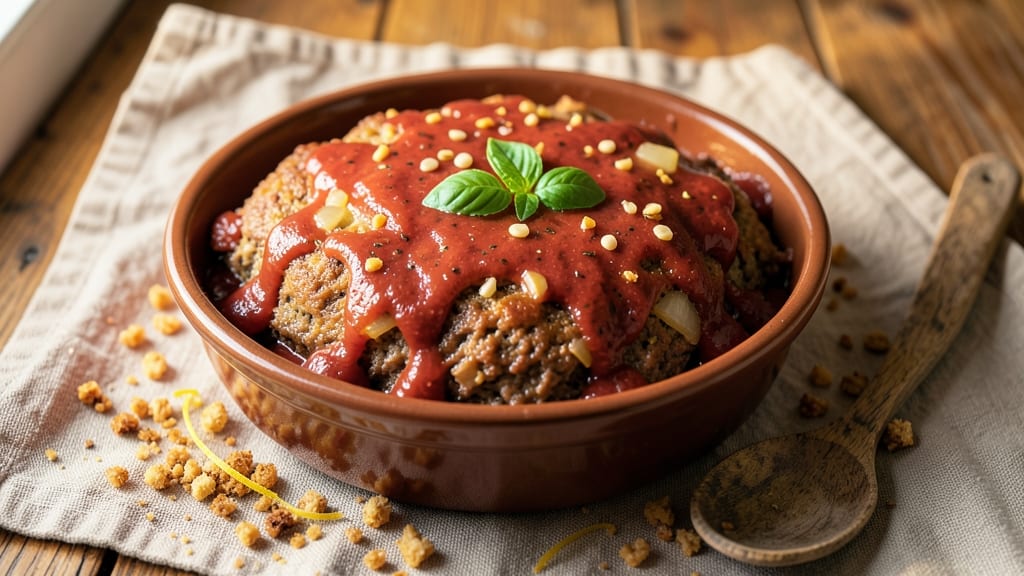
This juicy American meatloaf recipe with tomato sauce brings back memories of my grandmother Nana Mae's kitchen in Atlanta, where the scent of slow-baked meatloaf and simmering tomato sauce filled the air.
The secret lies in balancing tender ground beef with a crispy exterior, all topped with a rich, homemade tomato sauce that ties every bite together. After years of testing and adjusting, I've perfected this recipe to deliver that classic comfort food experience with restaurant-quality results.
The foundation of this dish starts with a simple yet effective meatloaf mixture—ground beef, breadcrumbs, egg, and a blend of savory seasonings that create a flavorful crust without being overpowering.
Meanwhile, the tomato sauce simmers with garlic, herbs, and a touch of sugar to balance the acidity, ensuring it complements rather than competes with the meatloaf.
What makes this recipe stand out is how the two components work together: the meatloaf stays moist and flavorful, while the sauce adds depth and a glossy finish.
What you'll end up with is a dish that's both nostalgic and refined—a meatloaf with a golden-brown crust and tender interior, topped with a velvety tomato sauce that's rich yet balanced. The sauce clings to the meatloaf perfectly, creating a harmonious bite that's impossible to resist.
This recipe is designed to be foolproof, ensuring you achieve that perfect balance of textures and flavors every time, whether you're serving it for a family dinner or a comforting weeknight meal.
Once you try this version, you'll understand why it's become a staple in my kitchen and a favorite among friends and family. The combination of the meatloaf's savory richness and the sauce's tangy sweetness makes it a dish that's always in demand.
Let's get started on creating this classic comfort food masterpiece that's sure to become a new tradition in your home.
Ingredients for american meatloaf recipe with tomato sauce
Pantry staples plus a few specialty touches for that nostalgic meatloaf magic.
| Ingredient | Amount | Notes |
|---|---|---|
| Ground Beef 🥩 | 1 ½ lb | 80/20 fat ratio preferred |
| Yellow Onion 🧅 | 1 whole | Medium-sized, finely chopped |
| Garlic Cloves 🧄 | 3 cloves | Fresh, minced |
| Large Egg 🥚 | 1 whole | Room temperature |
| Plain Breadcrumbs 🍞 | ½ cup | Panko for extra crunch |
| Kosher Salt 🧂 | 1 ½ tsp | Diamond Crystal preferred |
| Ground Black Pepper 🌶️ | 1 tsp | Freshly cracked |
| Dried Parsley Flakes 🌿 | 1 tbsp | Or 1 tbsp fresh chopped |
| Worcestershire Sauce 🍶 | 1 ½ tbsp | Vegetarian if needed |
| Canned Tomato Sauce 🍅 | 1 ½ cups | San Marzano preferred |
| Granulated Sugar 🍚 | 1 tsp | Balances acidity |
| Olive Oil 🫒 | 1 tbsp | For sauce pan |
| All-Purpose Flour 🌾 | 1 tbsp | For sauce thickening |
| Balsamic Vinegar 🍷 | 1 tsp | Optional for depth |
The ground beef is where all the magic happens—80/20 fat ratio keeps it juicy, but don't skimp on the quality. Kroger or Costco usually have the best prices for that perfect blend. Fresh garlic and onion make a difference here, but if you're in a rush, pre-minced jarred garlic works in a pinch. The Worcestershire sauce adds that umami depth—Lea & Perrins is the classic choice. For the tomato sauce, San Marzano cans are worth the splurge if you can find them—they're sweeter and less acidic, which means less sugar needed to balance.
No Worcestershire? Soy sauce plus a pinch of sugar mimics that savory punch. Short on breadcrumbs? Crushed crackers or oatmeal work in a bind, though they won't give the same texture. The tomato sauce can be store-bought too—Rao's or Barilla are solid choices. Want extra richness? Stir in 1 tbsp tomato paste at the end. Fresh parsley is ideal, but dried flakes save time—just don't overdo it. The balsamic vinegar is optional but adds that restaurant-quality depth that makes this sauce stand out.
Meatloaf keeps best 3-4 days in the fridge, wrapped tightly. The sauce reheats beautifully—just warm it gently on the stove. For leftovers, slice and freeze portions for up to 3 months. I always make a double batch of sauce—it's perfect over pasta or as a dip for garlic bread. The meatloaf freezes well too if you wrap it tightly in foil and plastic wrap. Thaw overnight in the fridge before reheating for best results.
Why You'll Love This Recipe
- One-Bowl Magic: I swear by this recipe because it’s all in one bowl—no messy mixing stations or extra dishes. Just brown the beef, toss in the finely diced onion and garlic (I use the food processor for this), crack in that egg, and let the breadcrumbs bind it all. Minimal chopping, zero stress.
- Saucy Comfort: That tomato sauce isn’t just an afterthought—it’s the star. The way it soaks into the meatloaf while baking makes every bite juicy and rich, like a hug from your grandma’s kitchen. (Yes, even on a Tuesday night.)
- Leftovers That Shine: This meatloaf tastes better the next day—seriously. I make a double batch on Sundays, slice it up, and freeze half. Reheat with a splash of water, and it’s like fresh again. Perfect for lazy lunches or last-minute dinners.
- Budget-Friendly Hero: Ground beef, onions, garlic, and breadcrumbs? That’s it. No fancy ingredients, no markup—just honest, hearty flavor. It feeds four for under $10, and I’ve never once regretted the math. (My wallet thanks me.)
Step-by-step instructions for juicy American meatloaf
The secret to tender, moist meatloaf lies in proper mixing and patience. Here's how to create a loaf so juicy it practically oozes flavor.
Mix the Ground Beef and Seasonings
In a large bowl, gently combine the 1.5 lb ground beef with the finely chopped yellow onion and minced garlic cloves. I use my hands for this part—it helps distribute the ingredients evenly without overworking the meat. Add the room temperature large egg, 1.5 tsp kosher salt, 1 tsp ground black pepper, 1 tbsp dried parsley flakes, and 1.5 tbsp Worcestershire sauce. Mix just until everything comes together—don't overmix or you'll end up with a dense, tough loaf.
Here's where it gets important: the texture should be slightly sticky but still hold together when pressed. If it feels too wet, add 1-2 tbsp of the plain breadcrumbs to absorb excess moisture. This step ensures your meatloaf will stay juicy while developing that perfect crust during baking.
Form and Prepare the Loaf
Transfer the meat mixture to a lightly oiled 9x5-inch loaf pan. I like to use my hands to shape it gently, pressing down firmly but not compacting too tightly. The loaf should be about 2 inches thick—this thickness ensures even cooking and a perfect crust. Once shaped, create a slight indentation in the center to hold the sauce later.
Here's a pro tip: don't press too hard when forming. You want to maintain some air pockets in the meat, which helps keep it juicy during baking. If the mixture feels too loose to hold its shape, wet your hands slightly to help it stick together.
Bake the Meatloaf Until Perfectly Done
Preheat your oven to 375°F and let it fully preheat for 10 minutes. Bake the meatloaf uncovered for 45-50 minutes, or until the internal temperature reaches 160°F when measured with an instant-read thermometer. You'll know it's ready when the edges are golden brown and the top springs back slightly when pressed.
Don't open the oven during baking—each time you peek, you lose valuable heat and moisture. If the top starts to brown too quickly, loosely tent it with aluminum foil after 30 minutes to prevent over-browning while still allowing the crust to form.
Prepare the Tomato Sauce
While the meatloaf bakes, heat 1 tbsp olive oil in a saucepan over medium heat. Add 1 tbsp all-purpose flour and stir for 1 minute to create a roux. Slowly whisk in the 1.5 cups canned tomato sauce, 1 tsp granulated sugar, and 1 tsp balsamic vinegar. Let the sauce simmer for 10-15 minutes, stirring occasionally, until it thickens to your desired consistency.
This sauce should coat the back of a spoon when you lift it. If it's too thick, add 1-2 tablespoons of water to loosen it. The sugar balances the acidity of the tomato sauce, while the balsamic vinegar adds depth of flavor that complements the meatloaf beautifully.
Combine and Finish
Once the meatloaf reaches 160°F, carefully pour the prepared tomato sauce over the top, filling the indentation you created earlier. Return the meatloaf to the oven and bake for an additional 10-15 minutes to let the sauce absorb and the flavors meld together.
When you remove it from the oven, let the meatloaf rest for 10 minutes before slicing. This resting period allows the juices to redistribute throughout the meat, ensuring each slice is moist and flavorful. Serve with mashed potatoes or crusty bread to soak up every last bit of that delicious sauce.
Pro Tips For Making American Meatloaf Recipe With Tomato Sauce
- Bake at 350°F—Not Hotter: The oven’s sweet spot for this meatloaf is 350°F. Any higher, and the outside will brown too fast while the inside stays raw. I learned this after pulling out a charred crust with a cold center—now I set a timer for 55–65 minutes (depending on size) and check with a thermometer at 160°F.
- Sweat Onions Low and Slow: Chop that onion into ¼-inch pieces and cook it in the same pan you’ll brown the beef—just 3–4 minutes on medium-low. High heat burns them before they soften, and you’ll taste the bitterness in every bite. A properly sweated onion adds depth without overpowering the beef.
- Mix Breadcrumbs Last: Add the breadcrumbs after combining everything else, then fold them in gently with your hands. Dumping them in early makes the mixture too dry and crumbly. Wet your fingers slightly if needed—they’ll bind better and give that classic meatloaf texture without turning it into a brick.
- Use Cold Eggs and Hands: Whisk that egg cold straight from the fridge—it emulsifies better and won’t scramble into the mix. Then, when shaping the loaf, pack it firmly but don’t overwork it. Overmixing = tough meatloaf. A loose, slightly uneven shape holds together better than a tightly packed cylinder.
Common mistakes when making this dish
Overmixing the Meat
This is the #1 mistake that turns tender meatloaf into a dense brick. When I first started cooking, I'd mix the beef mixture like I was kneading bread dough—big mistake! Overmixing develops gluten in the meat, creating a tough texture.
Instead, handle the mixture gently, just until combined. Think "light and airy" rather than "fully incorporated." If your mixture feels sticky but holds together when pressed, you're golden. 💪
Skipping the Resting Time
I've seen so many people slice meatloaf immediately after baking, and it's a crime against juiciness. That resting period—10 minutes minimum—lets the juices redistribute. If you cut too soon, all that delicious moisture ends up on your plate instead of in your meatloaf.
Trust me, your taste buds will thank you for the patience.
Using Lean Ground Beef
I get it—we all want to watch our fat intake, but lean ground beef (like 90/10) will leave you with dry meatloaf. The fat is what keeps it moist during baking.
Stick with 80/20 fat ratio for that perfect balance of flavor and tenderness. Even if you're health-conscious, this small compromise makes all the difference in the final result.
Neglecting the Sauce Indentation
That little well you create in the center of your meatloaf isn't just for looks—it's functional! Pouring the sauce into this indentation ensures it stays put during baking rather than pooling on the sides.
I've seen many home cooks skip this step, and the sauce often slides off during baking. Take the extra 30 seconds to make that well—it's worth it when your sauce stays perfectly in place.
Baking Without a Thermometer
Guessing when meatloaf is done leads to either undercooked (and potentially unsafe) meat or overcooked (and dry) meat. An instant-read thermometer is your best friend here—aim for 160°F internal temperature.
I keep one in my kitchen specifically for this purpose. The visual cues (golden crust, springy top) are helpful, but the thermometer gives you the definitive answer every time.
Peeking Too Often
Every time you open that oven door, you lose heat and moisture. I've caught myself doing this too—just can't resist checking! But for meatloaf, resist the urge. Let it bake undisturbed for the full 45-50 minutes.
If you're worried about browning, tent it loosely with foil after 30 minutes. The extra 5 minutes of uninterrupted baking makes a world of difference in the final texture.
Nutrition facts
Frequently asked questions
Can I substitute ground turkey or pork for the beef?
Ground turkey works well but needs extra moisture—add 2 extra tablespoons of water to the mix. For pork, use 80/20 ground pork shoulder and reduce baking time to 35-40 minutes since it cooks faster. The fat ratio is key for juiciness, so never go below 20% fat in any substitute.
How do I make this meatloaf gluten-free?
Replace breadcrumbs with ½ cup gluten-free oats or crushed gluten-free crackers, and use a gluten-free Worcestershire sauce. The texture will be slightly different but still delicious. For extra binding, add 1 extra egg to the mixture.
Can I prepare the tomato sauce ahead of time?
Make the sauce up to 3 days ahead and store it in the fridge. Reheat gently on the stove, adding 1 tablespoon water if it thickens too much. The flavors actually improve overnight as they meld together.
What's the best way to reheat leftovers?
Slice the meatloaf and reheat in a 350°F oven for 15-20 minutes with a splash of water or broth in the pan to keep it moist. For microwave reheating, cover with a damp paper towel and heat in 30-second intervals until warmed through.
Why does my meatloaf turn out dry?
Most likely you overmixed the meat or used lean ground beef. Always use 80/20 fat ratio and mix just until combined. Another common issue is cutting into it too soon—always let it rest 10 minutes before slicing to let juices redistribute.