
Sauces & Condiments
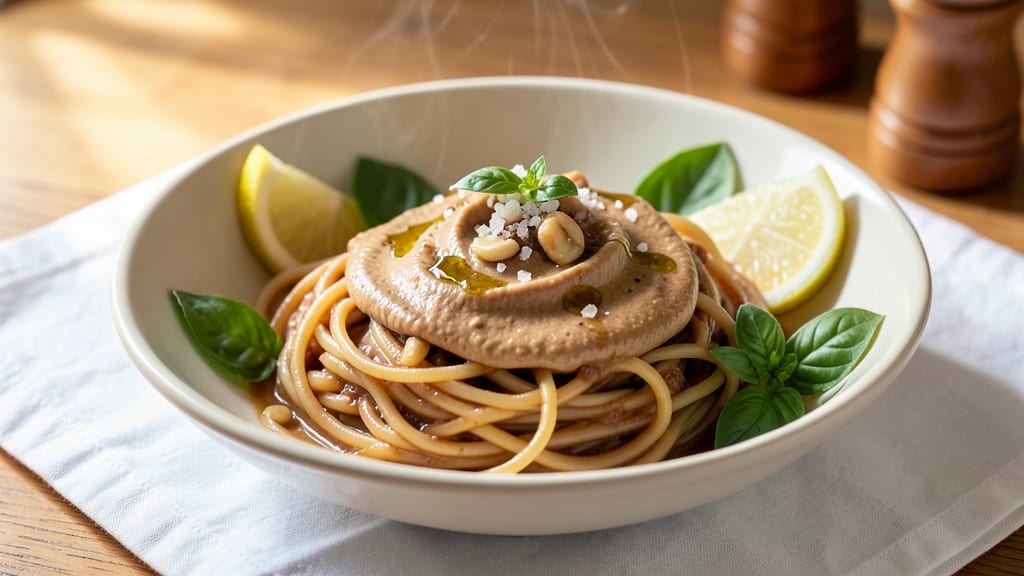
This almond pasta sauce recipe transforms simple ingredients into a rich, velvety sauce that clings perfectly to every noodle without clumping. 💛 The secret lies in blending almond butter with warm broth and a touch of lemon juice, creating a creamy yet light sauce that’s dairy-free but far from bland.
I developed this recipe after struggling to find a nutty sauce that didn’t turn grainy—now it’s my go-to for both vegan and classic pasta dishes.
The magic happens when you whisk the sauce while it’s still warm, allowing the almond butter to emulsify smoothly. A splash of lemon brightens the richness, while garlic and herbs add depth without overpowering.
Unlike traditional cream sauces, this one stays lighter yet equally satisfying, making it ideal for those watching their dairy intake or seeking plant-based options.
What you’ll end up with is a sauce that’s silky, nutty, and packed with flavor—perfect for tossing with penne, fettuccine, or even roasted vegetables. It reheats beautifully and keeps for up to 5 days in the fridge, or you can freeze it for later use.
The best part? It’s ready in just 15 minutes, with no complicated techniques required.
Pair it with grilled chicken, sautéed mushrooms, or fresh basil for a restaurant-worthy meal. The versatility of this sauce makes it a pantry staple—once you try it, you’ll never reach for heavy cream again.
Ingredients for almond pasta sauce
Eight simple ingredients transform into a sauce that's nutty, velvety, and clump-free every time.
| Ingredient | Amount | Notes |
|---|---|---|
| Almond Butter 🥜 | ½ cup | Creamy, unsweetened variety preferred |
| Vegetable Broth 💧 | 1 ½ cups | Low-sodium preferred for balance |
| Lemon Juice 🍋 | 2 tbsp | Freshly squeezed for brightness |
| Garlic Cloves 🧄 | 3 cloves | Minced for even distribution |
| Extra-Virgin Olive Oil 🫒 | ¼ cup | Light fruity variety for balance |
| Fresh Basil Leaves 🌿 | ¼ cup | Chopped, stems removed |
| Dried Thyme 🌿 | ½ tsp | Or 1 tsp fresh thyme leaves |
| Salt 🧂 | ½ tsp | Diamond Crystal preferred |
| Black Pepper 🌶️ | ¼ tsp | Freshly cracked for aroma |
| Pasta Water 💧 | ¼ cup | Reserved from cooked pasta |
The almond butter is the star here—creamy, unsweetened makes all the difference. Trader Joe's and Whole Foods carry the best quality, but any natural brand works. Look for jars with just almonds listed—no added oils or sugars. The garlic? Freshly minced adds depth, but pre-minced in a jar will do in a pinch. I always grab extra basil—half goes in the sauce, half gets torn over the final dish. For the broth, low-sodium is key so you can control the seasoning perfectly.
No almond butter? Cashew butter or tahini works beautifully—just reduce the liquid slightly. Short on fresh basil? Dried basil at one-third the amount gets you close, but the flavor won't be as bright. The lemon juice can be swapped for apple cider vinegar if you're out, but it'll be slightly different. Want more richness? Add 1 tbsp nutritional yeast for that cheesy note. The pasta water is non-negotiable—it's what makes the sauce cling perfectly to every noodle.
This sauce keeps for 5 days in the fridge, sealed tightly. For longer storage, freeze in ice cube trays—just thaw and whisk. It reheats beautifully, so I always make extra. The sauce thickens as it cools, so add a splash of pasta water if it seems too stiff. Perfect for tossing with any pasta, but also amazing over roasted veggies or grilled chicken.
Why You'll Love This Recipe
- No-Fuss Pantry Magic: I swear by this sauce when my fridge is bare—just almond butter, broth, and a splash of lemon. The garlic sizzles in olive oil for 30 seconds, then boom—you’re done. No chopping, no waiting, no stress.
- Tangy Creamy Balance: That lemon juice cuts through the richness of almond butter like a bright summer breeze. The sauce clings to pasta perfectly, with a velvety texture and just enough bite to keep your taste buds guessing.
- Lunchbox Hero: Pack it cold for a picnic or reheat it for a quick dinner—this sauce travels well. My kids actually eat their veggies when I toss in roasted zucchini or spinach; the nutty depth makes everything taste like a restaurant meal.
- Budget-Friendly Luxury: A single jar of almond butter stretches for weeks of sauces, and vegetable broth is cheaper than takeout. Honestly, it’s the kind of recipe that makes me feel fancy without breaking the bank—especially when I drizzle extra olive oil on top.
Step-by-step instructions for almond pasta sauce
Here's how to make this velvety almond sauce that clings perfectly to pasta without clumping.
🍳 Step 1: Bloom the Almond Butter with Olive Oil
Heat the 0.25 cup extra-virgin olive oil in a medium saucepan over medium-low heat. Add the 0.5 cup almond butter and whisk continuously for 3-4 minutes until it becomes completely smooth and glossy. You'll see it transform from grainy to silky—this is your signal it's ready for the next ingredients.
I like to use a whisk here because it creates tiny air pockets that help prevent clumping later. If you notice any lumps forming, press them against the side of the pan with the back of your spoon—the heat will melt them right in. The oil helps emulsify the almond butter, creating that perfect creamy base.
👨🍳 Step 2: Add Aromatics and Broth
Reduce the heat to low and add the 3 minced garlic cloves, 0.5 tsp dried thyme, 0.5 tsp salt, and 0.25 tsp black pepper. Stir for 30 seconds until fragrant—you should smell that warm garlic aroma wafting through your kitchen. Then pour in the 1.5 cups vegetable broth and bring to a gentle simmer.
Here's where the magic happens: the thyme and garlic infuse into the broth while the almond butter continues to melt completely. Let it simmer uncovered for 5 minutes to allow the flavors to meld. If you see the sauce starting to thicken too much, just add a splash of water—we'll adjust the consistency later with pasta water.
🍋 Step 3: Brighten and Balance the Sauce
Remove the pan from heat and stir in the 2 tbsp lemon juice and 0.25 cup chopped fresh basil leaves. The lemon juice will brighten the sauce and cut through the richness of the almond butter, while the basil adds that fresh herbal note. Taste and adjust seasoning—you might need a touch more salt or pepper depending on your broth.
This is the moment that matters: the lemon juice is crucial for preventing clumping. It helps emulsify the sauce and gives it that perfect balance of nutty richness and bright acidity. The basil should be finely chopped—large pieces can make the sauce uneven in texture.
⏰ Step 4: Create the Perfect Consistency
Return the sauce to low heat and slowly whisk in the 0.25 cup pasta water one tablespoon at a time. You're looking for a sauce that coats the back of a spoon but still flows easily—it should be thick enough to cling to pasta but thin enough to drizzle. This might take 2-3 minutes of careful whisking.
I know it seems like too much water, but trust me—this is what prevents clumping. The starch from the pasta water helps stabilize the sauce and gives it that silky texture. If it starts to look too thin, just let it simmer for another minute—the heat will help it thicken slightly.
🍝 Step 5: Finish and Serve Immediately
Once you've reached your desired consistency, remove the pan from heat and let the sauce sit for 2 minutes. This resting period allows all the flavors to truly meld together. Taste one final time and adjust seasoning if needed—remember, you can always add more salt or lemon juice at the table.
Serve this sauce immediately over your cooked pasta. The heat from the pasta will help it cling perfectly to every strand. If you need to reheat leftovers, do it gently over low heat, adding a splash of pasta water if it thickens too much. This sauce is best enjoyed fresh—it's all about that creamy, nutty perfection!
Pro Tips For Making Almond Pasta Sauce
- Bloom the Almond Butter: Heat that almond butter low and slow—just until it’s warm enough to stir smoothly (about 2-3 minutes on medium-low). Rushing it turns the sauce grainy, and nobody wants a gritty almond paste clinging to their pasta. Think "gentle simmer," not "fry it."
- Toast the Garlic Right: Smash those garlic cloves flat with the side of your knife first—it cooks faster and releases more flavor. Then, add them to the oil when it’s shimmering (not smoking) and pull them out the second they turn golden. Burnt garlic ruins the whole dish, and you’ll know it the second it happens.
- Thin Gradually, Not All At Once: Add the vegetable broth a splash at a time while stirring constantly. Dumping it all in at once dilutes the almond butter’s richness, and you’ll end up with a sad, watery glaze. Start with ¼ cup, taste, then adjust—this sauce is forgiving, but only if you play it smart.
- Finish with Cold Lemon: Let the sauce cool slightly before adding the lemon juice—just enough to take the edge off the heat. Cold lemon brightens the sauce without curdling it, and it balances the almond’s creaminess perfectly. (Yes, even if you’re impatient like me.)
Common mistakes when making your almond pasta sauce
Skipping the Warm-Up
One of the biggest mistakes is adding cold almond butter directly to cold ingredients. The butter needs to be warmed with oil first to fully emulsify—otherwise, you'll end up with lumpy, grainy sauce.
Always heat the oil to medium-low heat and whisk continuously for 3-4 minutes until the butter becomes completely smooth. I've ruined more sauces than I'd like to admit by skipping this step. 🔥
Ignoring the Lemon Juice
The lemon juice isn't just for flavor—it's the secret weapon that prevents clumping. Without it, the almond butter's natural oils can separate, creating a seized, grainy texture. Add the 2 tbsp lemon juice off-heat after adding aromatics.
This acidity helps stabilize the sauce's emulsion. I once made sauce without lemon and ended up with something that looked like peanut butter pudding—trust me, it's not pretty.
Overcooking the Broth
Simmering the broth too vigorously can cause the almond butter to curdle or separate. Keep the heat at low and let it gently bubble for just 5 minutes.
If you see the sauce starting to thicken too much before adding pasta water, immediately reduce heat to lowest setting or add 1 tbsp water. I've had to start over when the sauce turned into a thick paste—don't let that happen to you.
Using Low-Quality Almond Butter
Not all almond butters are created equal. Store-bought brands with added oils or sugars can make your sauce taste artificial or separate. Always use 100% almond butter with just almonds as the ingredient.
My go-to is Trader Joe's or Whole Foods 365—both are smooth and free of additives. The difference in texture is night and day compared to cheaper brands.
Forgetting the Pasta Water
This is the most common mistake that leads to clumpy sauce. The starch in pasta water acts as a natural thickener and emulsifier. Never skip the 0.25 cup pasta water—it's what gives the sauce that perfect cling and silky texture.
If you're out of pasta water, you can substitute 2 tbsp cornstarch mixed with 2 tbsp water, but it won't be quite the same.
Rushing the Whisking Process
When adding the pasta water, many people pour it all in at once and give it a quick stir. This is a recipe for disaster. Add the water one tablespoon at a time while whisking continuously.
This gradual approach gives the sauce time to emulsify properly. I've seen sauces that looked perfect one minute and separated completely the next—patience is key here. Take your time and whisk until smooth. ✨
Nutrition facts
Frequently asked questions
Can I make this almond pasta sauce without olive oil?
Yes, but the texture will be slightly different. Substitute 0.25 cup neutral oil like avocado or grapeseed oil for the olive oil, or use 2 tbsp melted coconut oil or vegan butter. The oil helps emulsify the almond butter, so if you omit it, whisk the sauce more vigorously to prevent clumping. For extra richness, add 1 tbsp nutritional yeast to replace the oil's depth.
How do I make this sauce vegan?
This recipe is already vegan-friendly! The almond butter, vegetable broth, lemon juice, and herbs are all plant-based. Just ensure your almond butter contains no honey or added dairy. For extra flavor, stir in 1 tbsp vegan Parmesan or 1 tsp smoked paprika at the end. The sauce pairs beautifully with vegan cheese alternatives or roasted vegetables.
Why did my sauce turn out too thick?
This usually happens when the sauce cools or sits too long. To fix it, whisk in 1-2 tbsp warm pasta water (or vegetable broth) until smooth. If it's still too thick after reheating, add another splash. For prevention, store leftovers in an airtight container and reheat gently, stirring frequently. The sauce thickens as it cools—always adjust consistency right before serving.
Can I use this sauce on other dishes besides pasta?
This versatile sauce works wonderfully beyond pasta. Drizzle it over roasted vegetables, grilled chicken, or tofu. It also makes a fantastic dip for crusty bread or veggie sticks. For extra flair, stir in 1 tbsp tahini or 1 tsp maple syrup to complement different dishes. The nutty flavor pairs surprisingly well with sweet potatoes or even as a marinade for meats.
How long can I store this sauce?
Store the sauce in an airtight container in the fridge for up to 5 days. For longer storage, freeze it in ice cube trays—just thaw and whisk before using. The sauce thickens when refrigerated, so add a splash of water or broth when reheating. To preserve freshness, press plastic wrap directly onto the sauce's surface before sealing the container.