
Sauces & Condiments
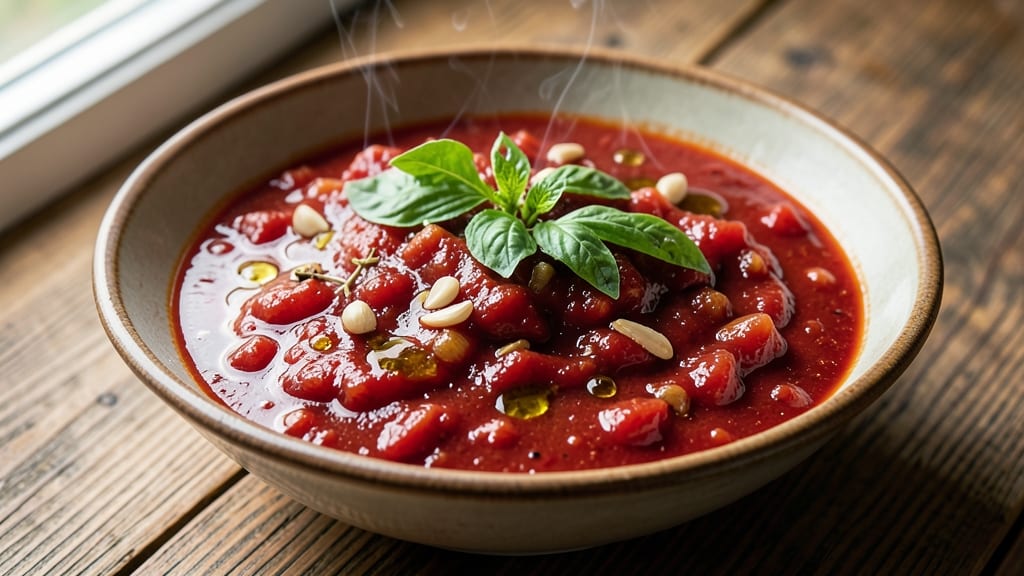
This all-day spaghetti sauce recipe transforms simple ingredients into a rich, umami-packed sauce that only gets better with time. The secret lies in slow simmering—letting flavors meld and deepen over hours, whether on the stovetop or in a slow cooker.
I’ve perfected this method after years of testing, ensuring every batch delivers restaurant-quality depth without requiring constant attention.
What sets this sauce apart is its versatility—it works as a base for spaghetti, lasagna, or even stuffed shells, and the flavors intensify when refrigerated. The key steps involve browning onions and garlic for depth, adding crushed tomatoes and herbs, then letting it simmer until thick and concentrated.
No blender? No problem—this version stays rustic and hearty, with just the right texture for dipping bread or tossing with pasta.
By the time you’re done, you’ll have a sauce that’s rich, slightly sweet, and layered with savory notes—the kind that makes your kitchen smell like an Italian trattoria. The beauty of this recipe is its patience; the longer it cooks, the more complex the flavors become.
Perfect for meal prep, freezer-friendly, and guaranteed to impress even the most critical palates.
Ready to make a batch that’ll last all week? Let’s get started—this sauce is worth every minute of simmering time.
Ingredients for all day spaghetti sauce
Simple pantry staples transform into restaurant-quality sauce with time and patience.
| Ingredient | Amount | Notes |
|---|---|---|
| Yellow Onions 🧅 | 2 whole | Thinly sliced for even browning |
| Garlic Cloves 🧄 | 6 cloves | Minced for aromatic depth |
| Extra-Virgin Olive Oil 🫒 | ½ cup | High-quality for richness |
| Crushed Tomatoes 🍅 | 28 oz | San Marzano preferred for sweetness |
| Tomato Paste 🍅 | ½ cup | Concentrated for thickness |
| Dried Basil 🌿 | 1 tbsp | Or 0.25 cup fresh basil |
| Dried Oregano 🍃 | 1 tsp | Italian oregano preferred |
| Red Wine 🍷 | ½ cup | Bold dry red like Cabernet |
| Vegetable Broth 💧 | 1 cup | Low-sodium preferred |
| Granulated Sugar 🍬 | 1 tbsp | Balances acidity |
| Salt 🧂 | 1 ½ tsp | Diamond Crystal preferred |
| Black Pepper 🌶️ | ½ tsp | Freshly cracked |
The onions and garlic are your flavor foundation—take the time to brown them deeply over medium heat. Whole Foods or Trader Joe's carry the sweetest onions for this. Garlic should be minced finely—a microplane works best. For tomatoes, San Marzano cans give the best balance of sweetness and acidity. If using fresh basil, pack it tightly—you'll need about 4 times the dried amount. The red wine should be bold and dry—Cabernet Sauvignon or Merlot work perfectly. If you don't have wine, extra vegetable broth works in a pinch.
No red wine? Substitute with extra vegetable broth plus 1 tbsp balsamic vinegar for depth. Fresh basil unavailable? Dried oregano at double the amount gets you close. For a meatier flavor without meat, 1 tbsp soy sauce or mushroom powder adds umami. The tomato paste can be swapped for extra crushed tomatoes if you prefer a thinner sauce. If you're using a slow cooker, reduce the broth by half—it'll thicken more during cooking. For extra richness, 1 tbsp butter stirred in at the end makes a noticeable difference.
This sauce improves with time—3-4 days in the fridge lets flavors meld perfectly. For longer storage, freeze in airtight containers for up to 6 months. Portion into 1-cup servings before freezing for easy meal prep. The sauce thickens as it cools, so add a splash of broth if it's too stiff. Leftovers reheat beautifully—stovetop or microwave, just until warmed through. The longer it simmers, the deeper the flavors become—don't rush this process.
Why You'll Love This Recipe
- No Chopping Struggle: I swear by this method—just one onion and a handful of garlic, both sliced thick so they soften fast. No tears, no tiny pieces, and the flavors still melt into something rich and deep.
- Slow-Simmered Magic: That tomato paste and crushed tomatoes? Let them simmer all day (or at least 2 hours) and watch them transform into something velvety and layered. The onions caramelize just enough to give it this subtle sweetness—like a hug in a pot.
- Game for Any Night: I use it for spaghetti, but honestly? It’s my go-to for stuffed shells, lasagna, or even a quick pasta bake. The base stays the same, so I just swap the shape and watch people ask, “What’s in this?” every time.
- Leftovers That Last: Between us, this sauce only gets better after day two. I make a big batch on Sundays, freeze half, and still have jars of it months later. Cheaper than takeout, easier than ordering in, and always a crowd-pleaser.
Step-by-step instructions for slow-simmered umami spaghetti sauce
This method builds rich, complex flavor through patience and technique.
Develop the Base with Onions and Garlic
Heat the 0.5 cup extra-virgin olive oil in a heavy-bottomed pot over medium-low heat. Add the 2 whole yellow onions, sliced thinly, and cook for 10-12 minutes until completely softened and beginning to caramelize at the edges. This slow cooking draws out their natural sweetness and forms the flavor foundation.
After the onions are translucent, add the 6 cloves minced garlic and cook for 1-2 minutes until fragrant but not browned. Watch carefully—garlic burns quickly and turns bitter. If it starts to darken, remove the pot from heat for 30 seconds to cool slightly before continuing. This step ensures aromatic depth without bitterness.
Build Depth with Wine and Tomatoes
Pour in the 0.5 cup red wine and stir to deglaze the pot, scraping up any browned bits from the bottom. Let it simmer for 3-4 minutes until the alcohol smell dissipates completely. This step extracts maximum flavor from the wine and prevents a harsh taste in the finished sauce.
Next, stir in the 28 oz crushed tomatoes and 0.5 cup tomato paste. Add the 1 tbsp granulated sugar, 1.5 tsp salt, and 0.5 tsp black pepper. Bring the mixture to a gentle boil, then immediately reduce heat to low and let it simmer uncovered for 20 minutes. This initial simmer breaks down the tomatoes' acids and begins developing the sauce's texture.
Season and Simmer for Umami Development
Stir in the 1 tbsp dried basil and 1 tsp dried oregano, then add the 1 cup vegetable broth. The sauce should bubble gently but not vigorously. Partially cover the pot and let it simmer for 1.5 to 2 hours, stirring occasionally. The sauce will thicken gradually as moisture evaporates, and the flavors will meld into a cohesive, complex profile.
Here's the key: the longer it simmers, the deeper the flavor. After 1.5 hours, taste and adjust seasoning. You may need an additional 0.25 tsp salt or 0.25 tsp black pepper depending on your tomatoes. The sauce should coat the back of a spoon but still be loose enough to spoon easily. If it thickens too much, add 1-2 tablespoons water to maintain proper consistency.
Finish with Final Seasoning and Texture Adjustment
Once the sauce reaches your desired consistency and depth of flavor, remove it from heat. Let it cool slightly for 5 minutes, then taste again. This final check ensures proper seasoning before serving. The sauce should be rich, slightly sweet, and well-balanced with acidity and umami.
For best results, let the sauce rest at room temperature for 30 minutes before serving. This allows the flavors to fully integrate and the texture to set properly. The sauce will continue developing flavor over time, making it even more complex when reheated or served the next day. Store in an airtight container in the refrigerator for up to 5 days or freeze for 3 months.
Pro Tips For Making All Day Spaghetti Sauce
- COOK ON LOW HEAT: Once your onions and garlic are soft, drop the heat to a simmer—not a boil. I used to keep it high to hurry things along, but now I remember: low and slow lets the flavors meld without burning the tomato paste or turning the garlic bitter. Think "gentle bubble," not "frenzy."
- SWEAT THE ONIONS FIRST: Don’t rush the onions—cook them in olive oil for 8–10 minutes until they’re translucent and just starting to turn golden. I learned this the hard way: skipping this step leaves your sauce tasting raw and sharp, like you’re eating a salad instead of pasta.
- STIR THE TOMATO PASTE: After adding the tomato paste, stir it into the oil for 2–3 minutes before pouring in the crushed tomatoes. This step caramelizes the paste slightly, deepening the flavor. (Yes, it looks like you’re overcomplicating it, but trust me—it makes a real difference.)
- USE A LITTLE WATER: When you add the crushed tomatoes, splash in ¼ cup of water first. It helps the tomatoes blend smoothly and prevents a thick, gloppy sauce. I was skeptical until I tried it—now it’s non-negotiable for a silky texture.
Creative variations of this dish
Meat-Inspired Umami
Skip the meat entirely but still get that deep savory punch by adding 1 tbsp soy sauce or 1 tsp mushroom powder when you stir in the tomatoes.
I also love adding ½ cup finely chopped mushrooms (cremini or shiitake) to sauté with the onions—they absorb flavors beautifully and add meaty texture. For extra richness, stir in 1 tbsp tomato paste mixed with 1 tbsp water at the end for a concentrated umami boost. 🌱
Slow Cooker Adaptation
Transform this into a hands-off masterpiece by transferring all ingredients to your slow cooker after the initial wine deglazing step. Cook on low for 6-8 hours or high for 3-4 hours, stirring occasionally.
The slow cooker's gentle heat enhances the sauce's depth while requiring zero attention. I recommend using a 6-quart slow cooker for optimal results—it gives the sauce room to develop without overflowing. 🍲
Spicy Italian Twist
Add 1-2 tbsp Calabrian chili paste when you incorporate the tomatoes for a slow-building heat that complements the sauce's richness. For extra kick, top with red pepper flakes before serving.
I also love adding ½ tsp fennel seeds when sautéing the onions—they add a subtle licorice note that pairs beautifully with the tomatoes. 🌶️
Creamy Tomato Finish
For a velvety texture, stir in ¼ cup heavy cream or ½ cup ricotta cheese during the final 10 minutes of simmering. This creates a luxurious sauce perfect for pasta or as a dip.
I recommend using full-fat cream for the best mouthfeel, or Greek yogurt for a tangier variation. The cream should be warmed slightly before adding to prevent curdling. 🥛
Herb Variations
Swap out the basil and oregano for different Italian herbs to create distinct flavor profiles. Try 1 tbsp dried rosemary plus 1 tsp thyme for a rustic Tuscan touch, or 1 tbsp fresh parsley plus ½ tsp red pepper flakes for a brighter, fresher sauce.
For a Mediterranean twist, add ½ tsp ground coriander when you incorporate the tomatoes—it adds a subtle citrusy note that balances the acidity. 🌿
Freezer-Friendly Additions
For sauces you'll store long-term, add 1 tbsp lemon juice before freezing to preserve color and prevent off-flavors. I also recommend dividing the sauce into 1-cup portions in silicone molds or freezer bags—this makes it easy to thaw just what you need.
For extra insurance, place a parchment paper square between layers to prevent freezer burn. Thaw overnight in the fridge before reheating. ❄️
Nutrition facts
Frequently asked questions
Can I make this sauce in a Dutch oven instead of a regular pot?
A Dutch oven is perfect for this recipe—its heavy base distributes heat evenly and prevents scorching. The deep sides also give your sauce more room to develop without spilling. Just use the same cooking times, but stir more frequently to prevent sticking on the bottom.
How do I know when the sauce is done simmering?
Your sauce is ready when it coats the back of a spoon smoothly but still has a loose, spoonable consistency. After 1.5-2 hours, it should smell deeply aromatic with no raw tomato taste. Taste frequently after 1 hour—the longer it simmers, the richer it becomes, but it can't overcook.
What's the best way to reheat leftover sauce?
Gently reheat on the stovetop over low heat with a splash of water or broth to prevent thickening. Microwave in 30-second bursts while stirring. Never boil—this breaks down the delicate flavors. For frozen portions, thaw overnight in the fridge before reheating.
Can I use fresh tomatoes instead of crushed?
Fresh tomatoes work but require extra prep: peel, seed, and chop 3-4 large tomatoes (about 2 cups) to match the crushed tomato volume. Simmer them first for 10 minutes to break down their texture, then proceed with the recipe. Fresh tomatoes add brightness but lack the concentrated sweetness of crushed.
Why does my sauce taste thin after refrigerating?
Sauces naturally thicken as they cool, but refrigeration can make them appear watery. Stir in 1-2 tablespoons tomato paste or a splash of broth while warm, then reheat gently. For future batches, simmer uncovered for 5 extra minutes to reduce moisture before storing.