
Sauces & Condiments
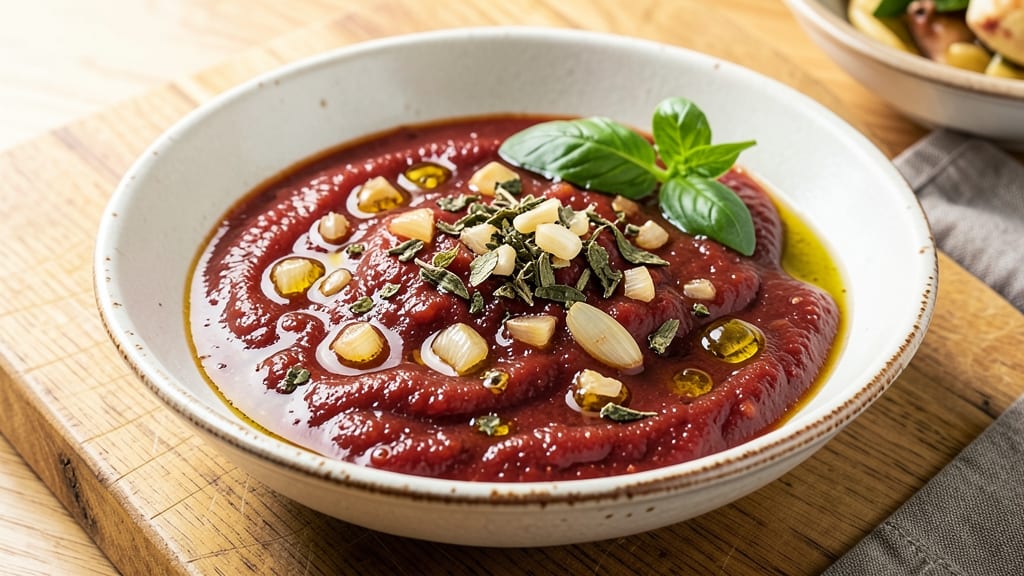
This all-day pasta sauce recipe transforms simple ingredients into a rich, layered sauce with deep umami flavor and a secret garlic boost that develops over time. The key lies in slow simmering—allowing the tomatoes, garlic, and herbs to meld into a velvety, complex sauce that only gets better with resting.
I've perfected this version to balance sweetness, acidity, and savory depth, making it versatile enough for any pasta dish while keeping it simple enough for weeknight cooking.
The sauce builds its intensity through a 4-hour simmer, where the garlic infuses without overpowering, and the tomatoes break down into a smooth yet textured consistency. No fancy techniques are needed—just patience and a heavy-bottomed pot to prevent scorching.
The result is a sauce that's rich enough for creamy pasta but bright enough to complement grilled meats or roasted vegetables. It also freezes beautifully, so you can make a big batch and have sauce ready for weeks.
What makes this sauce truly special is its adaptability. Use it as-is for a classic marinara, or blend it smooth for a velvety texture. The hidden garlic power comes from slow-cooked cloves that dissolve into the sauce, adding layers of flavor without a harsh bite.
This isn't just a sauce—it's a flavor foundation that elevates any meal, whether you're serving it with al dente spaghetti or tossing it with hearty meatballs.
Once you taste the depth of flavor that develops over time, you'll never settle for quick, store-bought versions again. The sauce keeps well in the fridge for up to a week and freezes for months, so you can always have a jar of restaurant-quality pasta sauce on hand.
Let's get started on creating this versatile, umami-packed sauce that will become your new kitchen staple.
Ingredients for all day pasta sauce
Simple pantry staples transform into restaurant-quality sauce with just time and patience.
| Ingredient | Amount | Notes |
|---|---|---|
| Extra-Virgin Olive Oil 🫒 | ½ cup | High quality, fruity flavor |
| Yellow Onion 🧅 | 1 whole | Medium size, finely chopped |
| Garlic Cloves 🧄 | 8 cloves | Peeled, left whole for slow cooking |
| Canned San Marzano Tomatoes 🍅 | 28 oz | Crushed, high-quality |
| Tomato Paste 🍅 | 2 tbsp | Smooth, no sugar added |
| Dried Basil 🌿 | 1 tbsp | Or 1/4 cup fresh basil |
| Dried Oregano 🍃 | 1 tsp | Mexican oregano preferred |
| Red Wine 🍷 | 1 cup | Dry, bold variety |
| Vegetable Broth 💧 | 1 cup | Low-sodium preferred |
| Sea Salt 🧂 | 1 ½ tsp | Diamond Crystal preferred |
| Black Pepper 🌶️ | ½ tsp | Freshly ground |
| Sugar 🍬 | 1 tsp | Balances acidity |
The tomatoes are the heart of this sauce, so San Marzano cans make all the difference—they're sweeter and less acidic than regular tomatoes. Trader Joe's or Whole Foods carry them, and they're worth the splurge. The garlic cloves stay whole during cooking, slowly dissolving into the sauce for that hidden depth. For the red wine, any bold, dry variety works—Cabernet Sauvignon or Merlot are my go-tos, but whatever's open in your fridge will do. The vegetable broth adds body without overpowering, and I always use low-sodium to control the seasoning better.
No red wine? Substitute extra vegetable broth with 1 tsp balsamic vinegar for depth. Fresh basil is ideal, but if you're using dried, reduce to 1/4 tsp—it's potent stuff. The sugar might seem odd, but it rounds out the acidity from the tomatoes. No sugar? Skip it or add a pinch of honey (though that's not vegan). For the tomato paste, those little squeeze tubes from Trader Joe's are perfect—they're mess-free and keep for months. The onion and garlic can be prepped ahead and stored in the fridge for up to 2 days before cooking.
This sauce only gets better with time, so make a big batch. It keeps in the fridge for up to 1 week and freezes beautifully for 3 months. I always double the recipe—half goes on pasta, the other half gets frozen for lazy nights. When reheating, add a splash of water or broth to loosen it up. The flavors meld even more overnight, so if you can, let it sit at room temperature for 30 minutes before serving. Trust me, the wait is worth it.
Why You'll Love This Recipe
- Here’s what sold me: I make a double batch on Sundays, and it lasts all week. Toss it with fresh pasta for dinner, use it in a frittata the next day, or even drizzle it over grilled chicken. The onions caramelize over time, so the longer it sits, the better it gets—no sad, watery leftovers here.
- No-Chop Nightmare: I swear by this sauce because it’s the only one I can make when I’m exhausted—just one onion, roughly chopped, and a handful of garlic. The San Marzano tomatoes do all the heavy lifting, so you’re left with a rich, velvety base that tastes like it simmered for hours (even though it didn’t).
- Tomato Paste Magic: That little can of tomato paste? It’s the secret weapon. A spoonful at the start deepens the flavor so fast, you’ll wonder why you ever skipped it. The sauce thickens just enough to cling to pasta without being gluey—perfect for when you’re in a rush but still want restaurant-quality taste.
- Weeknight Meal Prep: Here’s what sold me: I make a double batch on Sundays, and it lasts all week. Toss it with fresh pasta for dinner, use it in a frittata the next day, or even drizzle it over grilled chicken. The onions caramelize over time, so the longer it sits, the better it gets—no sad, watery leftovers here.
Step-by-step instructions for simmered umami pasta sauce
This sauce builds flavor gradually—let the garlic and tomatoes work their magic over time.
Sauté Onion and Garlic Until Translucent
Heat the 0.5 cup extra-virgin olive oil in a large, heavy-bottomed saucepan over medium-low heat. Add the 1 whole yellow onion, chopped into small dice, and cook for 8-10 minutes until the onions soften and become translucent. Stir occasionally to prevent browning.
Once the onions are tender, add the 8 cloves garlic cloves (peeled but left whole). Cook for another 2-3 minutes until the garlic is fragrant but not browned—this prevents bitterness. The key here is patience; garlic burns quickly, so keep the heat gentle. You'll know it's ready when the aroma fills your kitchen and the garlic just begins to turn golden around the edges.
Build the Sauce Base with Tomatoes and Wine
Reduce the heat to low and stir in the 2 tbsp tomato paste, spreading it evenly over the bottom of the pan. Cook for 1-2 minutes until the paste darkens slightly and loses its raw taste. This step deepens the sauce's richness and balances acidity.
Pour in the 28 oz canned San Marzano tomatoes and the 1 cup red wine, scraping up any browned bits from the bottom of the pan with a wooden spoon. Bring the mixture to a gentle simmer, then reduce the heat to low and let it cook uncovered for 20-25 minutes. This slow cook time allows the flavors to meld and the sauce to thicken naturally. Stir occasionally to prevent sticking, but don't over-stir—you want those flavors to develop undisturbed.
Season and Simmer for Umami Depth
Add the 1 cup vegetable broth, 1 tbsp dried basil, 1 tsp dried oregano, 1.5 tsp sea salt, 0.5 tsp black pepper, and 1 tsp sugar. Stir well to combine, then return the sauce to a gentle simmer. Let it cook uncovered for another 30-40 minutes, stirring occasionally. The sauce should reduce slightly, becoming thicker and more concentrated in flavor.
Here's where the magic happens: the garlic cloves will soften and infuse the sauce with their subtle sweetness without overpowering it. Taste the sauce after 30 minutes—it should be rich, balanced, and full of umami. If it needs more depth, let it simmer longer. If it's too acidic, add a pinch more sugar. The goal is a sauce that's vibrant but not tart, with layers of flavor that develop even more when tossed with pasta.
Finish and Adjust Consistency
Once the sauce reaches your desired consistency (it should coat the back of a spoon but still be smooth), remove the pan from heat. Use a slotted spoon to fish out the garlic cloves—discard them or save them for another use. If the sauce is too thick, thin it with a splash of hot water or broth. If it's too thin, simmer it uncovered for another 5-10 minutes to reduce it.
Taste and adjust seasoning one last time. The sauce should be balanced—sweet from the tomatoes and sugar, tangy from the wine, and savory from the garlic and herbs. Let it sit at room temperature for 10-15 minutes before serving. This resting time allows the flavors to fully integrate, resulting in a sauce that's even more delicious when tossed with al dente pasta.
Pro Tips For Making All Day Pasta Sauce
- CRUSH THE ONIONS: Dice the onion small—no bigger than ¼-inch pieces—so they dissolve into sweetness instead of lingering as chewy bits. I used to cut them too big, and they’d turn to mush without ever softening properly. A sharp knife and quick, even strokes make all the difference.
- SWEAT THE GARLIC LOW: Once the onions are translucent, turn the heat down to medium-low before adding the garlic. Too much heat burns it in seconds, and that bitter flavor sneaks into the sauce. Stir constantly—yes, even if you’re impatient like me—and pull the pan off the heat if it starts to brown too fast.
- STIR THE PASTE FIRST: Mix the tomato paste into the oil before adding anything else. This creates a smooth, emulsified base that blends seamlessly with the tomatoes later. I learned this the hard way—skipping it leads to clumpy, uneven sauce, no matter how long you simmer.
- SIMMER UNTIL THICK: Let the sauce cook uncovered for at least 45 minutes, stirring occasionally, until it reduces to a syrupy consistency. The longer it cooks, the deeper the flavor, but don’t walk away—check it every 15 minutes to prevent scorching. (Your future self will thank you.)
Troubleshooting this dish
Sauce Too Thin?
If your sauce ends up too thin after simmering, don't panic! The simplest fix is to return it to medium-low heat and simmer uncovered for an additional 10-15 minutes, stirring occasionally. This evaporates excess liquid while concentrating flavors.
For a quicker solution, mix 1 tbsp cornstarch with 2 tbsp cold water, stir into the sauce, and simmer for 2-3 minutes until thickened. 💡
Sauce Too Thick?
Over-reduced sauce? No problem! Thin it by adding hot water or vegetable broth, starting with ¼ cup and stirring well. Heat gently if needed, but avoid boiling to prevent skin formation.
For a smoother texture, blend briefly with an immersion blender. Remember, the sauce should coat the back of a spoon but still flow easily when tossed with pasta.
Garlic Too Strong?
If your garlic flavor feels overpowering, remove the pan from heat and stir in 1-2 tbsp fresh basil or parsley to mellow the intensity. A splash of lemon juice (1 tsp) also brightens the sauce and balances the garlic.
For a subtle adjustment, simmer with the lid slightly ajar for 5 minutes to let some of the volatile garlic oils dissipate.
Sauce Too Acidic?
Excessive tomato acidity? Balance it by adding ½ tsp sugar or 1 tsp honey while the sauce simmers. For a savory fix, stir in ½ tsp tomato paste and cook for 2 minutes to deepen the umami.
A pinch of balsamic vinegar (¼ tsp) can also add complexity without sweetness. Taste as you go—small adjustments prevent over-correcting.
Flavor Fading Too Quickly?
To extend freshness, store your sauce in an airtight glass container in the fridge and always use a clean spoon to avoid contamination. For longer storage, freeze in 1-cup portions with parchment between layers to prevent freezer burn.
When reheating, add 1 tbsp broth or water per cup to restore moisture and prevent sticking. 🥫
Skin or Scorching?
Prevent skin formation by keeping the sauce uncovered during simmering and stirring occasionally. If scorching occurs, immediately remove the pan from heat and stir in 1 tbsp olive oil to coat the bottom.
For future batches, use a heavy-bottomed pot (like Le Creuset or All-Clad) to distribute heat evenly and prevent hot spots. Always simmer on low heat—patience is key! 🔥
Nutrition facts
Frequently asked questions
Can I make this sauce without red wine?
For a wine-free version, substitute the 1 cup red wine with 1 cup vegetable broth plus 1 tsp balsamic vinegar to maintain depth. The sauce will still develop rich umami flavors—just without the wine's tangy complexity.
How do I adjust this sauce for a meaty pasta dish?
For added richness, stir in ½ cup ground beef, Italian sausage, or mushrooms during the final 10 minutes of simmering. Brown the meat first for extra flavor, then add it to the sauce. For a vegetarian option, blend in ½ cup cooked lentils for heartiness.
Can I use fresh tomatoes instead of canned?
Fresh tomatoes work but require extra prep: Peel, seed, and chop 4 large ripe tomatoes (about 2 cups20 minutes to break down their texture. Add them after the wine stage, then proceed as written. Canned tomatoes are ideal for consistency, but fresh ones add a brighter, slightly sweeter taste.
How long can I store this sauce in the freezer?
This sauce freezes beautifully for up to 3 months in an airtight container. Portion it into 1-cup servings for easy use, and thaw overnight in the fridge. When reheating, add 1 tbsp water or broth per cup to restore moisture and prevent thickening. Label with the date for tracking!
Why does the recipe call for whole garlic cloves?
Leaving the garlic cloves whole prevents them from burning while allowing their flavors to infuse gently over time. As the sauce simmers, the cloves soften and dissolve, adding subtle sweetness without harshness. Remove them before serving—they'll be mushy but won't overpower the dish.