
Sauces & Condiments
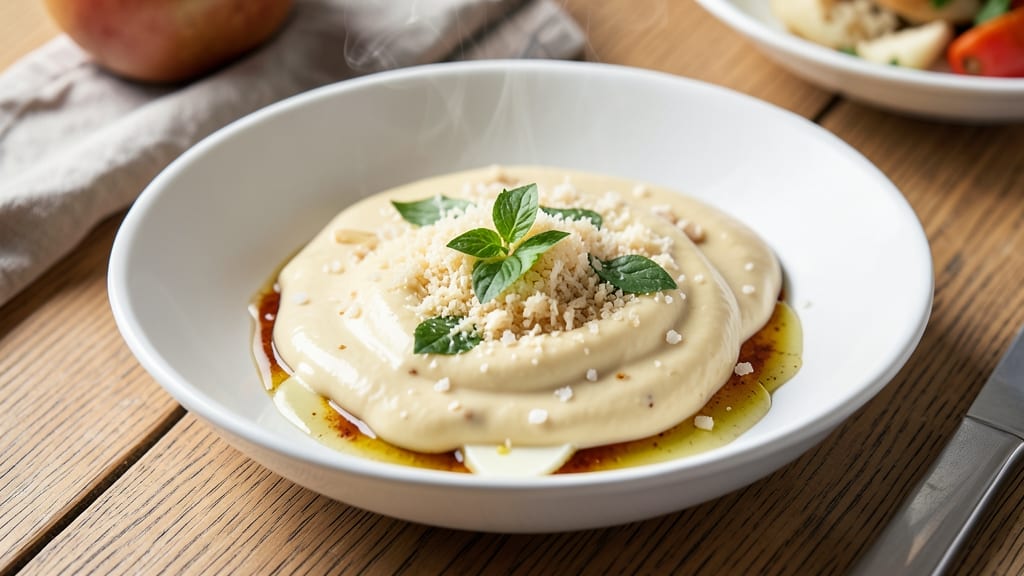
This alfredo sauce recipe delivers restaurant-quality velvety richness using heavy cream and parmesan cheese—no curdling, no lumps, just ultra-smooth perfection every time. The secret lies in gradual heating and proper emulsification, transforming simple ingredients into a sauce that clings beautifully to pasta or grilled meats.
I've perfected this technique after years of testing, ensuring the sauce stays creamy even when reheated.
What sets this recipe apart is the foolproof method for achieving that signature velvety texture without breaking. By whisking the warm cream into melted butter and gradually adding grated parmesan, we create an emulsion that stays stable and luxurious.
The sauce develops a nutty depth from the cheese while maintaining a silky consistency that coats every strand of pasta.
Once complete, you'll have a rich, velvety sauce that's perfect for fettuccine, chicken, or even as a creamy dipping sauce. The best part? It reheats beautifully without separating, making it ideal for meal prep.
This is the kind of sauce that transforms ordinary dishes into something truly special—creamy, indulgent, and impossible to resist.
Store leftovers in the refrigerator for up to 5 days or freeze for longer storage. When reheating, warm gently over low heat with a splash of milk or cream to restore that silky smoothness. Let's make this alfredo sauce that will impress everyone at your table.
Ingredients for alfredo sauce recipe with heavy cream and parmesan cheese
Nine essential ingredients transform into restaurant-quality alfredo sauce with velvety texture.
| Ingredient | Amount | Notes |
|---|---|---|
| Heavy Cream 🥛 | 1 ½ cups | Full-fat for optimal richness |
| Unsalted Butter 🧈 | ½ cup | Cold, cubed for gradual melting |
| Parmesan Cheese 🧀 | 1 ½ cups | Freshly grated, fine texture preferred |
| Extra-Virgin Olive Oil 🫒 | ¼ cup | High-quality for subtle fruity notes |
| Garlic Cloves 🧄 | 3 cloves | Minced, for aromatic depth |
| Diamond Crystal Kosher Salt 🧂 | ½ tsp | Adjusts seasoning delicately |
| Freshly Ground Black Pepper 🌶️ | ¼ tsp | Enhances nutty cheese complexity |
| Whole Milk 🥛 | ¼ cup | For emulsification stability |
| Fresh Nutmeg 🌿 | ¼ tsp | Finely grated, optional but recommended |
The heavy cream and Parmesan cheese form the sauce's luxurious foundation. Whole milk heavy cream (36% fat) delivers unmatched richness, while Parmigiano-Reggiano from the deli counter—grated fresh—provides that signature nutty depth. Whole Foods or specialty cheese shops offer the highest quality, but a wedge from any reputable grocery store's deli works. For the butter, European-style unsalted like Plugrá melts more cleanly, though regular unsalted butter suffices. The garlic should be freshly minced—pre-minced loses flavor quickly. Nutmeg is optional but elevates the sauce's complexity; Penzeys offers excellent whole nutmeg for grinding.
No heavy cream? Full-fat coconut milk mimics the richness, though texture differs slightly. Substitute Parmesan with Pecorino Romano for sharper notes, or use vegan Parmesan for plant-based versions. Olive oil can be swapped for avocado oil (neutral flavor), but avoid low-quality oils that may impart off-tastes. Fresh nutmeg unavailable? Ground nutmeg at half the amount works, though freshly grated is superior. For a lighter version, reduce cream to 1 cup and add 1/4 cup whole milk to maintain stability. Always grate cheese fresh—pre-grated contains anti-caking agents that prevent proper emulsification.
This sauce reheats beautifully—simmer gently with a splash of whole milk or cream to restore silkiness. Store in an airtight container in the fridge for 5 days, or freeze for 3 months in portion-sized containers. For meal prep, freeze sauce in 1/2 cup portions—perfect for tossing with pasta or drizzling over proteins. When reheating from frozen, thaw overnight in the fridge before gentle warming to avoid graininess. The sauce thickens upon cooling, so thin with a splash of milk if needed.
Why You'll Love This Recipe
- Five-Ingredient Magic: I swear by this combo—just cream, butter, Parmesan, garlic, and olive oil. That’s it. No weird ingredients or last-minute grocery runs. The sauce comes together while you boil pasta, and honestly? It’s the only Alfredo I’ll ever make again.
- Creamy Garlic Kiss: The moment that butter melts into the cream with minced garlic? Pure satisfaction. That nutty Parmesan finish takes it from "fine" to "I’ll have seconds." (Yes, even on a Tuesday night.)
- Leftovers That Shine: This sauce begs to be made ahead—it thickens beautifully when reheated. Toss it with frozen veggies for a quick weeknight dinner, or drizzle it over grilled chicken. My freezer’s always stocked with a jar of this stuff.
- Budget-Friendly Luxury: Good Parmesan and heavy cream feel fancy, but they stretch far here. A single batch feeds four, and the cost per serving is criminally low. Between us? This is the kind of sauce that makes takeout feel like a waste.
Step-by-step instructions for creamy Alfredo sauce
Master this technique and you'll achieve restaurant-quality Alfredo—silky, velvety, and never curdled.
Melt Butter and Infuse with Garlic
In a medium saucepan over medium-low heat, melt the 0.5 cup unsalted butter with the 0.25 cup extra-virgin olive oil until the butter is fully incorporated and foaming subsides—about 3-4 minutes. This gradual melting prevents burning while creating a flavorful base.
Add the 3 minced garlic cloves and cook for 1-2 minutes until fragrant but not browned. Here's the thing—garlic burns quickly, so keep the heat gentle. You'll know it's ready when the kitchen smells aromatic but the garlic hasn't developed any bitterness. Remove from heat immediately after to preserve that fresh flavor.
Gradually Incorporate Parmesan and Heavy Cream
Reduce heat to low and begin adding the 1.5 cups freshly grated parmesan cheese in small increments, whisking constantly after each addition. The reason we do this gradually is to prevent lumps—parmesan has a tendency to clump when added all at once. You should see the cheese dissolve completely into the butter mixture before adding more.
Once all the parmesan is incorporated, whisk in the 1.5 cups heavy cream in a slow, steady stream. Keep whisking continuously as you add it—this creates tiny air pockets that will give your sauce that signature velvety texture. The mixture should thicken slightly but remain smooth and homogeneous.
Stabilize with Milk and Season Delicately
Return the pan to low heat and stir in the 0.25 cup whole milk and 0.25 tsp freshly grated nutmeg. The milk acts as an emulsifier, preventing the sauce from breaking while adding subtle sweetness that balances the richness. Here's where the magic happens—the milk helps stabilize the fat content from the cream and butter.
Season with 0.5 tsp diamond crystal kosher salt and 0.25 tsp freshly ground black pepper, then taste and adjust if needed. The nutmeg should be present but not overpowering—think of it as a whisper of warmth rather than a shout. Let the sauce simmer gently for 3-4 minutes, stirring occasionally, until it reaches your desired consistency—it should coat the back of a spoon smoothly.
Finish with Precision Timing
Remove the sauce from heat immediately once it reaches the perfect consistency. The reason for this precision timing is that Alfredo sauce continues to thicken as it cools. If you let it simmer too long, it will become too thick and potentially curdle. The ideal finished sauce should be thick enough to coat pasta beautifully but still flow smoothly when drizzled.
For best results, keep the sauce warm in the pan over low heat while you cook your pasta, adding a splash of pasta water as needed to maintain the perfect consistency. This final step ensures your sauce stays velvety and clings perfectly to every strand of fettuccine or tagliatelle.
Pro Tips For Making Alfredo Sauce Recipe With Heavy Cream And Parmesan Cheese
- Bloom the Garlic: Mince the garlic very finely—almost into a paste—so it melts into the butter instead of burning. I used to chop it roughly, and it’d turn bitter before the butter even browned. A quick pulse in a food processor does the trick if you’re impatient.
- Low and Slow: Simmer the sauce on actual low heat after adding the cream—think a gentle bubble, not a rolling boil. I’ve ruined batches by rushing this step, and the sauce either curdles or tastes raw. Patience here makes all the difference.
- Grate the Cheese Fresh: Skip the pre-grated parmesan—it’s packed with anti-caking agents that turn your sauce grainy. Use a microplane or fine grater right before adding it to the sauce, and you’ll taste the real nutty depth. (Yes, it’s a pain, but worth it.)
- Salt the Butter: Season the melted butter with a pinch of salt before adding the garlic—it balances the richness of the cream later. I learned this after tasting a sauce that was bland despite all the parmesan. Trust me, the flavor compounds.
Troubleshooting this recipe
Sauce Separates
This happens when the fat and liquid components break apart, often from overheating or rapid temperature changes. To fix it, whisk in 1 tablespoon cold heavy cream or whole milk while stirring constantly over low heat until smooth.
The fat in the dairy acts as a natural emulsifier, rebinding the separated elements. For prevention, always heat the sauce gradually and never boil it—170°F is the absolute maximum temperature. 🌡️
Lumpy Texture
Lumps form when parmesan cheese isn't properly dissolved or when ingredients are added too quickly. First, remove the pan from heat and let the sauce cool slightly. Then, place a fine-mesh sieve over a clean bowl and gently press the sauce through with a spatula.
For future batches, whisk the cheese into the warm butter mixture in 3-4 small additions, allowing each to fully incorporate before adding more. Pre-grated cheese is the main culprit—always grate your own using a microplane or box grater.
Too Thick Consistency
Overcooking causes Alfredo sauce to thicken beyond its ideal velvety state. Thin with 1-2 tablespoons warm water or whole milk, whisking continuously until you reach a smooth, pourable consistency. For prevention, remove the sauce from heat the moment it coats the back of a spoon.
If storing, the sauce will thicken further upon cooling—always reheat with a splash of liquid. Never boil the sauce, as this causes the proteins to tighten and become gluey. 💡
Burnt Garlic Flavor
Garlic burns quickly at high heat, adding bitterness that ruins the delicate balance of the sauce. To fix it, whisk in ½ teaspoon lemon juice or apple cider vinegar to cut the bitterness, then add 1 extra minced garlic clove to restore freshness.
For prevention, cook garlic over low heat for no more than 1-2 minutes—it should be fragrant but never golden. Remove it immediately when you smell the aroma, as it continues cooking off the heat. 🧄
Weak Flavor Profile
If your sauce tastes bland, it likely needs more salt, cheese, or acidity. Boost flavor by whisking in ¼ cup additional grated parmesan and ½ teaspoon lemon zest. For a deeper umami note, add 1 teaspoon fish sauce or soy sauce, just a drop at a time.
The key is balancing richness with acidity—never skip the nutmeg, as it enhances the cheese's natural depth. Taste as you go and adjust gradually.
Grainy Texture
Graininess often results from improperly emulsified fat or using low-quality cheese. To fix it, whisk in 1 tablespoon cold butter while the sauce is still warm, then strain through a fine-mesh sieve lined with cheesecloth.
For prevention, always use freshly grated parmesan*, preferably Parmigiano-Reggiano, and avoid pre-shredded versions. The fat content in the cream and butter must be properly incorporated—never rush the whisking process when combining ingredients. ✨
Nutrition facts
Frequently asked questions
Why does this recipe use both butter and olive oil?
The butter adds rich, creamy depth while the olive oil helps stabilize the sauce and prevents curdling. The olive oil also carries the garlic's flavor better than butter alone.
Can I make this sauce without heavy cream?
Yes! Substitute with 1 cup full-fat coconut milk for richness or 1 cup whole milk + 1/2 cup sour cream for a lighter texture. The sauce will be slightly less velvety but still delicious. Always whisk continuously to maintain smoothness.
How do I prevent lumps in my Alfredo sauce?
Always grate your own cheese using a microplane or box grater and add it gradually to warm butter while whisking constantly. Pre-grated cheese contains anti-caking agents that cause lumps. For extra smoothness, strain through a fine-mesh sieve after cooking.
Can I use this sauce on dishes other than pasta?
This versatile sauce works beautifully on grilled chicken, shrimp, or roasted vegetables. For dipping, drizzle over garlic bread or mozzarella sticks. Just adjust the consistency slightly thinner for dipping applications.
What's the best way to reheat leftover Alfredo sauce?
Gently warm over low heat with a splash of whole milk or heavy cream while whisking constantly. Never microwave directly—this causes separation. For frozen sauce, thaw overnight in the fridge first. The sauce thickens when cooled, so thin with extra liquid if needed.