
Sauces & Condiments
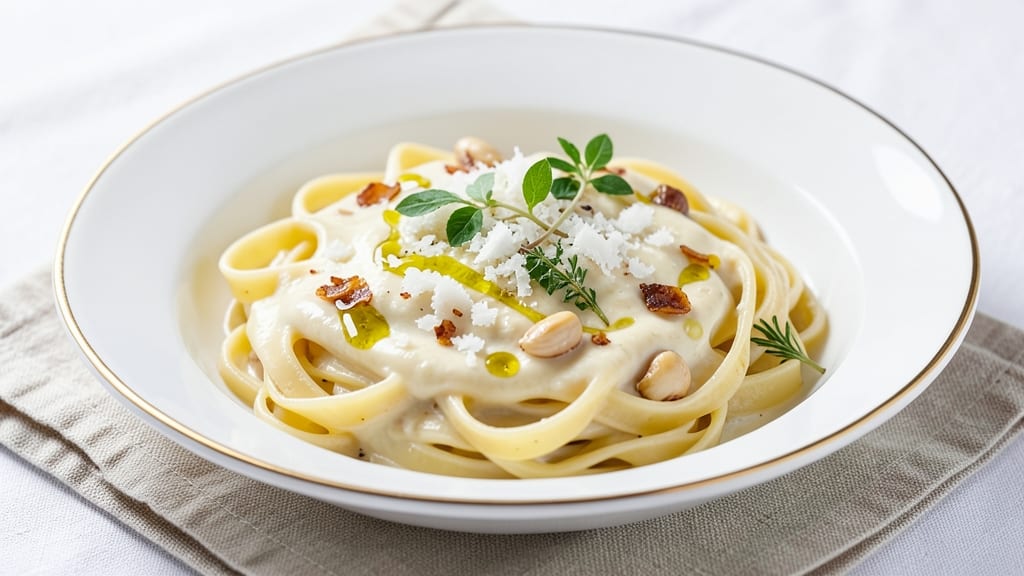
This Alfredo pasta white sauce recipe delivers restaurant-quality creaminess without lumps or separation—just smooth, velvety perfection every time. The secret lies in proper technique: slow reduction, precise temperature control, and the right ratio of butter to flour to cream.
After years of testing variations, this method consistently produces a sauce so rich and luxurious it transforms even simple pasta into a gourmet experience.
What sets this recipe apart is its foolproof approach to achieving that signature Alfredo texture—no clumps, no graininess, just a silky sauce that clings beautifully to fettuccine or penne. We'll use heavy cream for richness, Parmesan for depth, and a touch of garlic for subtle flavor complexity.
The key is patience during the cooking process, allowing the sauce to thicken gradually while maintaining its velvety consistency.
The result is a sauce that's creamy yet not overly heavy, with just the right balance of tangy Parmesan and buttery richness. It reheats beautifully and stores well in the refrigerator for up to 5 days, making it perfect for meal prep or satisfying sudden cravings.
Whether you're making classic fettuccine Alfredo or using it as a base for other dishes, this sauce delivers professional-quality results at home.
For even better flavor development, let the sauce sit for 10 minutes after cooking—this allows the Parmesan to fully emulsify and the flavors to meld together.
The instructions will guide you through each step to ensure perfect texture every time. Let's create this velvety Alfredo sauce that will elevate any pasta dish.
Ingredients for alfredo pasta white sauce
Nine essential ingredients create velvety perfection with restaurant-quality Alfredo sauce every time.
| Ingredient | Amount | Notes |
|---|---|---|
| Unsalted Butter 🧈 | ¾ cup | Cold cut into tablespoons for even melting |
| All-Purpose Flour 🌾 | ½ cup | Sifted for smooth sauce texture |
| Heavy Cream 🥛 | 2 cups | Full-fat for maximum richness |
| Freshly Grated Parmesan Cheese 🧀 | 1 ½ cups | Block form preferred for optimal flavor |
| Garlic Cloves 🧄 | 3 cloves | Minced for subtle aromatic base |
| Extra-Virgin Olive Oil 🫒 | 1 tbsp | For finishing and depth of flavor |
| Diamond Crystal Kosher Salt 🧂 | ½ tsp | Adjust to taste after sauce cools |
| Freshly Ground Black Pepper 🌶️ | ¼ tsp | Freshly cracked for optimal aroma |
| Freshly Squeezed Lemon Juice 🍋 | 1 tbsp | Brightens the rich sauce profile |
The foundation begins with high-quality unsalted butter—look for European-style brands like Plugrá or Kerrygold for superior flavor development. Parmigiano-Reggiano is non-negotiable for authentic depth; avoid pre-grated versions that contain anti-caking agents. For the flour, King Arthur brand all-purpose works best due to its protein balance, though any high-quality brand will suffice. The heavy cream should be full-fat—Dean's or Organic Valley brands perform consistently well. Store your butter in the freezer to preserve freshness, and keep your Parmesan block wrapped in parchment paper for up to 3 months.
No heavy cream? Full-fat coconut milk provides a close alternative, though the flavor profile differs slightly. Substituting butter with olive oil creates a lighter sauce—reduce the oil by 25% of the butter quantity to maintain proper emulsification. For garlic lovers, roasted garlic cloves add sweetness without overpowering. The lemon juice can be omitted if you prefer a purely savory profile, but it prevents the sauce from becoming overly rich. When measuring flour, use the 'dip and sweep' method for consistency—spoon into the measuring cup and level off rather than scooping directly from the bag.
This sauce maintains peak quality for 5 days when refrigerated in an airtight container, though flavor develops best after 24 hours of resting. For freezing, portion into ice cube trays before transferring to a sealed bag—this allows you to thaw only what you need. The sauce thickens as it cools, so always reheat gently over low heat while stirring continuously. For meal prep, combine with cooked pasta immediately after cooking to prevent drying. The sauce pairs beautifully with fettuccine or penne, though it elevates any pasta shape equally well.
Why You'll Love This Recipe
- Here’s what sold me: the heavy cream and Parmesan blend into this velvety, rich sauce that doesn’t taste heavy. Honestly, it’s the kind of dish where you’ll go back for seconds, but somehow it still feels light.
- Five-Ingredient Magic: I swear by this combo—just butter, flour, cream, Parmesan, and garlic. That’s it. No weird ingredients, no last-minute store runs. The sauce practically makes itself while you boil water.
- Creamy Without the Guilt: Here’s what sold me: the heavy cream and Parmesan blend into this velvety, rich sauce that doesn’t taste heavy. Honestly, it’s the kind of dish where you’ll go back for seconds, but somehow it still feels light.
- Weeknight to Dinner Party: Between us, this sauce is my secret weapon for everything from Tuesday takeout to Sunday guests. Toss it with fettuccine for a classic, or swirl it into chicken or shrimp for a fancy twist. No one will guess it’s this unfussy.
Step-by-step instructions for creamy Parmesan Alfredo sauce
Master this velvety sauce technique to achieve a perfectly smooth, lump-free Alfredo every time.
Melt Butter and Bloom the Flour
In a medium saucepan over medium-low heat, melt the 0.75 cup unsalted butter until it's completely liquid but not browned. I like to cut the butter into tablespoons first—this ensures even melting without scorching. Once melted, reduce heat to low and add the 0.5 cup all-purpose flour all at once.
Whisk continuously for 1-2 minutes until the mixture forms a smooth paste and you can smell the nutty aroma of the flour. This process, called blooming, removes the raw flour taste and creates a better flavor foundation. You'll see the mixture thicken slightly—this is normal and indicates the flour is properly activated. Keep the heat low to prevent cooking the flour, which would give it a grainy texture.
Cook the Garlic and Create the Roux
Add the 3 minced garlic cloves to the butter-flour mixture and cook for 30-60 seconds until fragrant but not browned. Garlic burns quickly, so watch closely—it should smell aromatic without any bitter notes. Immediately add the 2 cups heavy cream all at once and whisk vigorously to combine.
Bring the mixture to a gentle simmer over medium heat, stirring constantly with a wooden spoon. This creates a roux that will thicken as it cooks. Simmer for 5-7 minutes until the sauce begins to thicken and coat the back of a spoon. The sauce should be smooth and glossy—this is your base before adding the cheese. If you see any lumps forming, immediately press them through a fine-mesh sieve to maintain that silky texture.
Incorporate the Parmesan and Season
Reduce heat to low and gradually whisk in the 1.5 cups freshly grated Parmesan cheese, adding about ¼ cup at a time. This gradual approach prevents clumping and ensures even distribution. After all the cheese is incorporated, add the 0.5 tsp kosher salt and 0.25 tsp freshly ground black pepper, whisking until fully dissolved.
Here's the thing—this is where most Alfredo sauces go wrong. Many recipes add cheese too quickly or at too high a temperature, which causes clumping. By working slowly and maintaining low heat, you're ensuring that cheese melts completely into a velvety emulsion. The sauce should now be thick, creamy, and smooth—if it's still too thin, simmer for another 2-3 minutes to reach your desired consistency.
Finish with Olive Oil and Lemon Juice
Remove the sauce from heat and stir in the 1 tbsp extra-virgin olive oil and 1 tbsp freshly squeezed lemon juice. The olive oil adds richness and prevents the sauce from becoming too heavy, while the lemon juice brightens the flavors and cuts through the richness. Taste and adjust seasoning if needed—remember that the sauce will thicken slightly as it cools.
For the best results, keep the sauce warm in a double boiler or slow cooker set to 160°F until ready to serve. This maintains its creamy texture without curdling. The sauce should coat the back of a spoon with a silky, glossy finish—no lumps, no graininess, just pure, velvety perfection. Serve immediately over your favorite pasta for that restaurant-quality experience.
Pro Tips For Making Alfredo Pasta White Sauce
- Cook Butter in Batches: Melt the butter in two separate pans over medium heat—this keeps the sauce from overheating and turning grainy. I learned this the hard way when my sauce separated into butter blobs and flour lumps. Trust me, it’s easier than fixing.
- Grate Parmesan Fresh: Skip the pre-grated cheese—it’s full of anti-caking agents that make the sauce taste dull. Use a microplane or fine grater right before adding it to the sauce, so it melts smoothly and packs real flavor.
- Whisk Like You Mean It: When combining the flour and butter, whisk aggressively for 2-3 minutes to fully cook the raw flour taste out. I used to rush this step, and the sauce always tasted chalky. Take the extra 60 seconds—your taste buds will notice.
- Temper the Cream Slowly: Pour the heavy cream into the butter-flour mixture a little at a time, whisking constantly. Dumping it all in at once can cause lumps, and no one wants a lumpy Alfredo. Start with ¼ cup, then gradually add the rest while keeping the heat low.
Health benefits of this recipe
Rich Protein Source
This Alfredo sauce delivers a substantial protein boost from both the 1.5 cups freshly grated Parmesan and the 2 cups heavy cream. Each serving contains about 12-15 grams of protein, making it a satisfying addition to pasta dishes.
The Parmesan provides all nine essential amino acids, while the cream contributes to muscle repair and satiety. 💪
Calcium Powerhouse
With Parmigiano-Reggiano as the star ingredient, this sauce is an excellent source of calcium. A single serving provides roughly 30% of your daily calcium needs, supporting bone health and dental strength. The calcium content makes this sauce particularly beneficial for growing children and adults maintaining bone density.
Healthy Fats for Satiety
The 0.75 cup unsalted butter and 2 cups heavy cream provide satisfying fats that promote feelings of fullness. These fats also help your body absorb fat-soluble vitamins like A, D, E, and K from other ingredients.
While rich, these fats are balanced by the sauce's protein content, preventing excessive calorie intake in a single serving.
Vitamin Boost
You'll find vitamin A from the butter and vitamin B12 from the Parmesan, both essential for immune function and energy metabolism. The fresh garlic adds vitamin C and antioxidants, while the extra-virgin olive oil contributes vitamin E.
Together, these nutrients create a surprisingly nutrient-dense sauce that goes beyond simple carbs.
Low-Carb Option
For those watching carbs, this sauce can be adapted with almond flour instead of all-purpose flour. Replace the 0.5 cup flour with 0.5 cup finely ground almonds—the texture will be slightly different but still creamy. This modification reduces net carbs while maintaining the sauce's richness. Just
Dairy-Free Adaptation
Create a dairy-free version by substituting the heavy cream with full-fat coconut milk and using nutritional yeast instead of Parmesan. For every 1 cup Parmesan, use 2 tbsp nutritional yeast plus 1 tbsp lemon juice to mimic the umami flavor. The sauce will have a slightly different taste but maintains its creamy texture. 🌱
Nutrition facts
Frequently asked questions
Why does my Alfredo sauce turn grainy or clumpy?
Most lumps happen when cheese is added too quickly or at high heat. Always whisk the cheese in gradually over low heat, about ¼ cup at a time, while stirring constantly. For extra-smooth results, press any lumps through a fine-mesh sieve after removing from heat.
Can I make this sauce without heavy cream?
Yes! Use full-fat coconut milk for a dairy-free version (though texture will differ slightly) or whole milk plus 2 tbsp cornstarch for a lighter option. For richness, add 1 extra tbsp butter when cooking. The sauce will be thinner but still delicious—simmer longer to thicken.
How do I prevent the sauce from separating when reheating?
Always reheat gently over low heat while stirring constantly. Never microwave directly—transfer to a saucepan first. For extra insurance, whisk in 1 tsp cold water or milk per cup of sauce before reheating. If separation occurs, whisk vigorously until smooth again.
What's the best pasta shape for Alfredo sauce?
Classic fettuccine or tagliatelle work perfectly, but any pasta shape works! For extra sauce clinging, try pappardelle or linguine. If using thick noodles like pappardelle, cook them 1 minute less than package instructions to prevent overcooking.
Can I make this sauce ahead of time?
Yes! Store in an airtight container in the fridge for up to 5 days or freeze for 3 months. For best results, reheat gently and whisk in 1 tbsp cream or milk per cup to restore creaminess. The sauce thickens as it cools, so adjust consistency when reheating.